
How automated are Amazon’s warehouses in 2026?
The future of retail is here, and the Amazon Warehouse Automation Strategy is leading the charge with over 750,000 robots. While the technology is impressive, the Amazon Warehouse Automation Strategy is designed to assist, not just replace, the 1.5 million humans still powering the global network.
The logistics industry is witnessing a massive shift as the Amazon Warehouse Automation Strategy integrates over 750,000 robots into its daily operations.
But here’s the thing most coverage gets wrong about Amazon’s automation. It’s not about replacing people entirely. Amazon still employs over 1.5 million people worldwide. The robots take the repetitive physically demanding stuff. People handle the work that needs actual thinking.
The real picture is more complicated than either the “robots stole all the jobs” narrative or the “automation is totally fine” one.
Core Technologies of the Amazon Warehouse Automation Strategy
The workhorse is the drive unit, those little wheeled robots that slide under product shelves and deliver them to human pickers. Instead of workers walking miles through a warehouse every shift to find items, the shelves come to them. Amazon says that cut fulfilment time by roughly 25%.
A key part of the Amazon Warehouse Automation Strategy is the use of drive units to deliver shelves directly to human pickers, saving miles of walking.
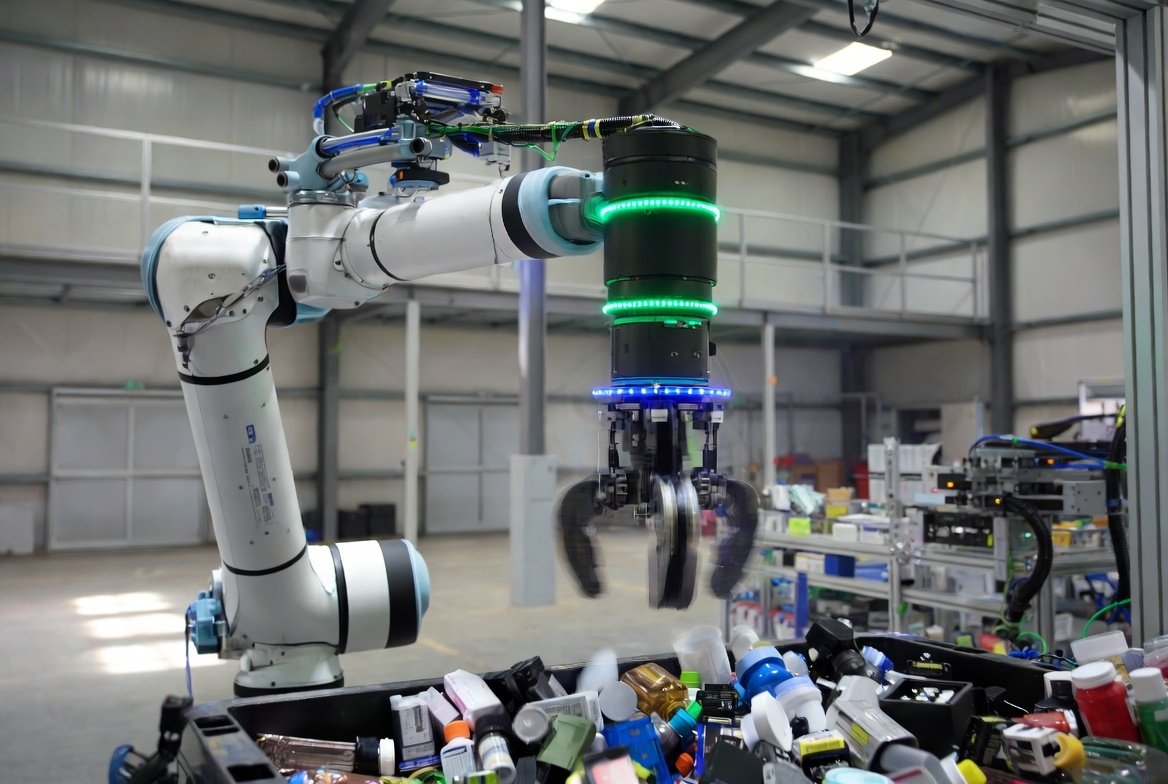
Sparrow is a robotic arm that can identify, grab, and sort individual items out of a jumbled bin. That’s harder than it probably sounds because products vary wildly in shape and weight and packaging. Sequoia is an integrated system that handles inventory storage and retrieval, cutting the time to process incoming stock by up to 75%.
Cardinal lifts heavier packages, up to 50 pounds, and places them precisely into carts for shipping.
What Happened to the Workers?
While critics worry about job loss, the Amazon Warehouse Automation Strategy focuses on shifting humans toward more complex, analytical roles like systems monitoring.
Amazon’s total headcount has gone up and down but hasn’t collapsed. The company says automation creates new kinds of roles, robot technicians, systems monitors, data analysts. Critics point out that these roles need different skills and often come with different pay.
The physical toll has improved in automated facilities. Fewer repetitive strain injuries from all that walking and lifting. Amazon’s overall injury rate is still a sore point but automated sites do report lower numbers.
The bigger question is what happens as the robots get better. If Sparrow eventually handles 95% of picking instead of current levels, the math on human jobs changes. Amazon hasn’t said much publicly about that timeline.
Global Impact of the Amazon Warehouse Automation Strategy
Slowly. Amazon’s scale lets them invest in custom robotics that smaller operations can’t justify financially. Third-party logistics companies are picking up some automation, mobile robots, automated packing lines, but they’re years behind Amazon’s level of integration.
Smaller retailers often struggle to keep up because a full-scale Amazon Warehouse Automation Strategy requires massive capital investment that few can match.
Frequently Asked Questions
How many robots does Amazon use?
Over 750,000 across the global fulfilment network.
Did robots replace the workers?
Not entirely. Over 1.5 million people still work for Amazon. Robots handle repetitive physical tasks, humans handle complex ones. But the balance is shifting.
What is Sparrow?
A robotic arm that identifies and picks individual items of different shapes and sizes from mixed bins.
Are the automated warehouses safer?
Reports suggest lower injury rates for repetitive strain and lifting injuries in automated facilities.
Can smaller companies do this?
Some elements are available through third-party robotics suppliers. The full Amazon-level setup needs very significant investment though.
Conclusion
In summary, the Amazon Warehouse Automation Strategy showcases a complex blend of cutting-edge robotics and human labour. Systems like Sparrow and Sequoia have drastically cut fulfilment times, yet the need for human oversight remains critical as roles evolve into technical and analytical positions. While the Amazon Warehouse Automation Strategy has improved physical safety in many areas, the long-term balance between human jobs and increasing robotic efficiency is still unfolding. As we look ahead, Amazon’s blueprint will likely set the standard for the entire logistics industry.