TL;DR: Mainstream films typically wait 35-45 days after release before streaming. This Bollywood OTT theatrical window protects theatre revenue. It’s been shrinking gradually, and some flop films now bypass the rule entirely. Understanding this rule matters because it determines exactly when you can stream new releases at home.
The Bollywood OTT theatrical window is one of those industry rules that directly affects you as a viewer, even if you’ve never heard of it. It’s the reason you can’t watch a new blockbuster film on Netflix or JioHotstar the week after it hits theatres. In 2026, this rule is evolving in ways that could change how and when you watch films. Let me explain how it works.
What Is the Theatrical Window?
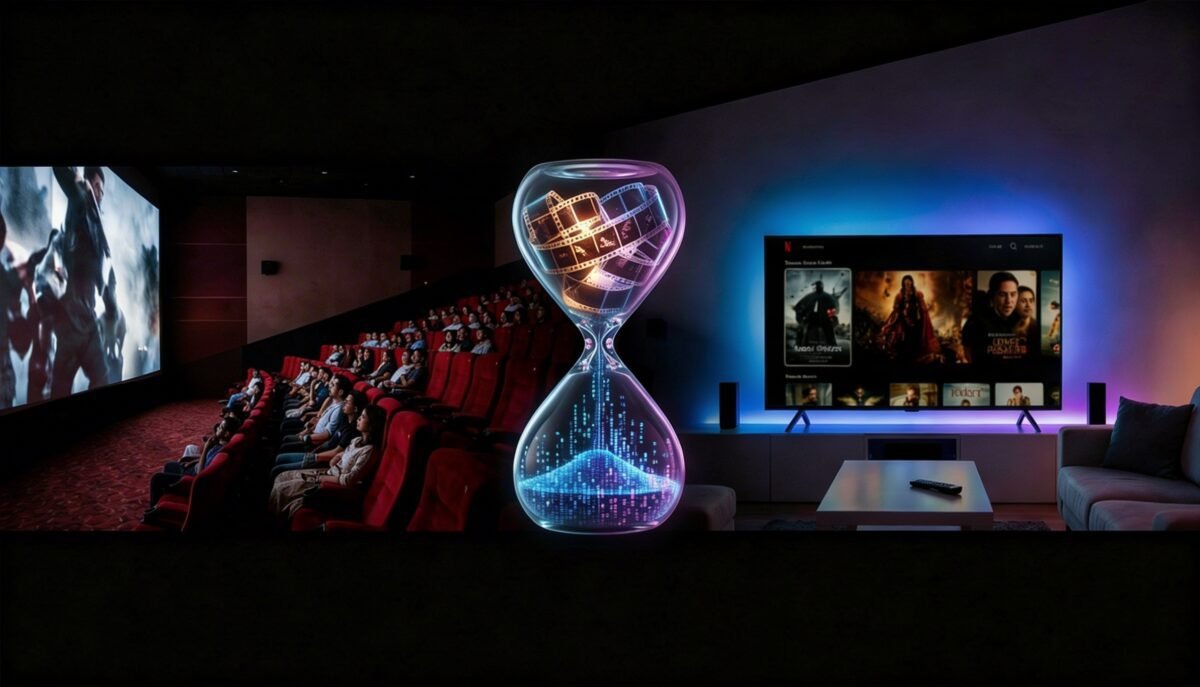
Simple version: it’s the gap between when a film releases in theatres and when it appears on a streaming platform.In India, this window has typically been around 35-45 days for mainstream Bollywood films. So if a film releases on January 23 in theatres, you’d expect it on OTT around early March. That’s the standard.The window exists to give theatres exclusive access to a film’s audience. If a movie were available on Netflix the same day it hit theatres, a huge chunk of the audience would just stay home and stream it. Theatre owners would lose footfall, and the entire theatrical business model collapses.It’s basically a negotiated truce between two industries that need each other but also compete for the same audience.What Is the Bollywood OTT Theatrical Window?
In simple terms: it’s the required gap between when a film releases in theatres and when it appears on a streaming platform.
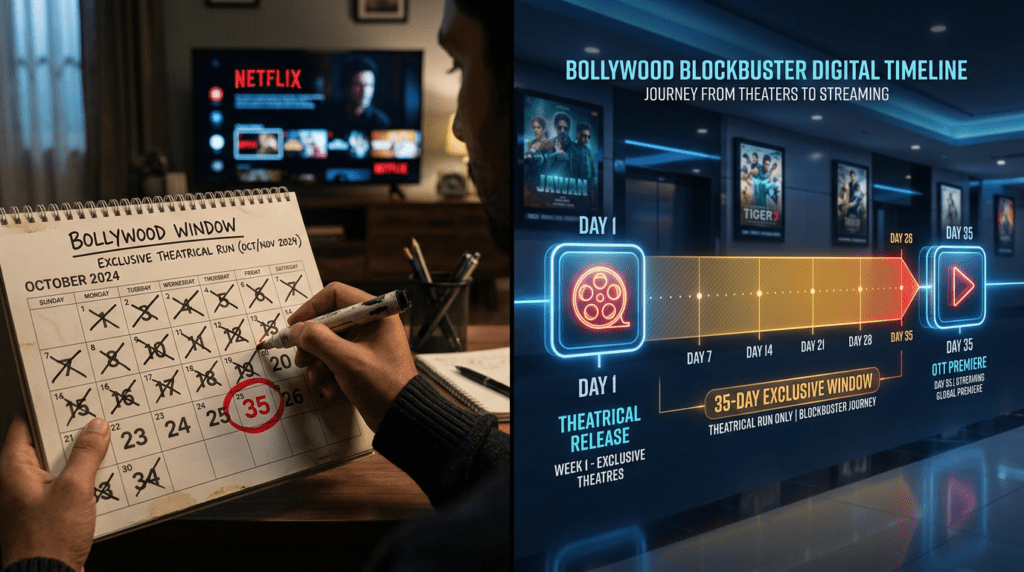
In India, the standard Bollywood OTT theatrical window has typically been around 35-45 days for mainstream films. So if a film releases on January 23 in theatres, you’d expect it on OTT around early March. This window exists to give theatres exclusive access to a film’s audience. If a movie were available on Netflix the same day, theatre owners would lose massive footfall, and the entire theatrical business model would collapse.
It’s basically a negotiated truce between two industries that need each other but also compete for the same audience.
How Does the Bollywood OTT Theatrical Window Actually Work?
Here’s the step-by-step process for how the Bollywood OTT theatrical window plays out for a typical 2026 release:
Week 1-3: Theatrical release on the announced date. The film plays exclusively in cinemas. Most box office revenue comes here.
Week 4: Screen count drops as multiplexes allocate space to newer releases.
Day 35-45: The OTT platform (which typically buys streaming rights pre-release) announces its premiere date.
OTT Premiere: The film becomes available for streaming.
Month 3-4: Satellite TV premiere follows on channels like Sony MAX or Zee Cinema.
Why Has the Bollywood OTT Theatrical Window Been Shrinking?
In 2019, the standard wait was 8 weeks (56 days). By 2023, it had shrunk to 6 weeks. Now in 2026, we’re seeing the Bollywood OTT theatrical window compress to 4-5 weeks for several reasons:
Flops move faster: If a film bombs at the box office, there’s no reason to keep it out of OTT. Several 2026 films hit streaming within 25-30 days to offset theatrical losses.
Streaming platforms pay big: Services negotiate aggressively for shorter windows because fresher content drives subscriptions.
Audience behaviour shifted: Post-pandemic, many viewers are fine waiting a month to stream a film. Studios are adjusting the Bollywood OTT theatrical window to capture those viewers before they lose interest.
Curious about the latest digital drops? Check out our guide on the Psycho Saiyaan Web Series to see how major TV stars are pivoting directly to OTT.
Who Benefits From the Bollywood OTT Theatrical Window?
It depends entirely on where you sit in the industry.
Theatre owners love it; it’s their lifeline. Big-budget film producers want a long Bollywood OTT theatrical window because box office revenue is still their primary income. However, OTT platforms want the shortest window possible. Ideally, they’d love simultaneous releases, but the theatre lobby has been strong enough to prevent this for mainstream Hindi films.
This shift in revenue models is exactly why the industry relies heavily on safe bets now. Read our breakdown on Bollywood Sequels in 2026 for more context.
The Future of the Bollywood OTT Theatrical Window
A few scenarios could change the Bollywood OTT theatrical window forever:
Premium Video on Demand (PVOD): Paying a premium price (₹499-799) to stream a new film at home within its first two weeks.
Dynamic windows: Instead of a fixed 35-day rule, a blockbuster doing well gets a longer window, while a struggling film gets pushed to OTT faster.
Theatre-owned streaming: If multiplex chains launch their own platforms, they could offer shorter windows internally while maintaining strict rules elsewhere.
The Simultaneous Release Experiment
A few Bollywood films have tried releasing in theatres and OTT simultaneously. The results have been mixed at best.The problem is straightforward: when a film is available to stream at home on day one, the theatrical audience shrinks dramatically. Opening weekends suffer. And if the opening weekend is weak, theatres pull the film faster, which means even people who wanted to see it on the big screen can’t.It’s a death spiral for theatrical revenue. Which is why most major producers have backed away from simultaneous releases in 2026. The experiment happened, the data came back, and the conclusion was: protect the theatrical window for big-budget films.For smaller films with limited theatrical potential, simultaneous or OTT-first releases make more sense. There’s no point holding a film in theatres for 35 days if it stops earning after week one.The broader business model shift is worth understanding here because it connects to how studios make money from different windows.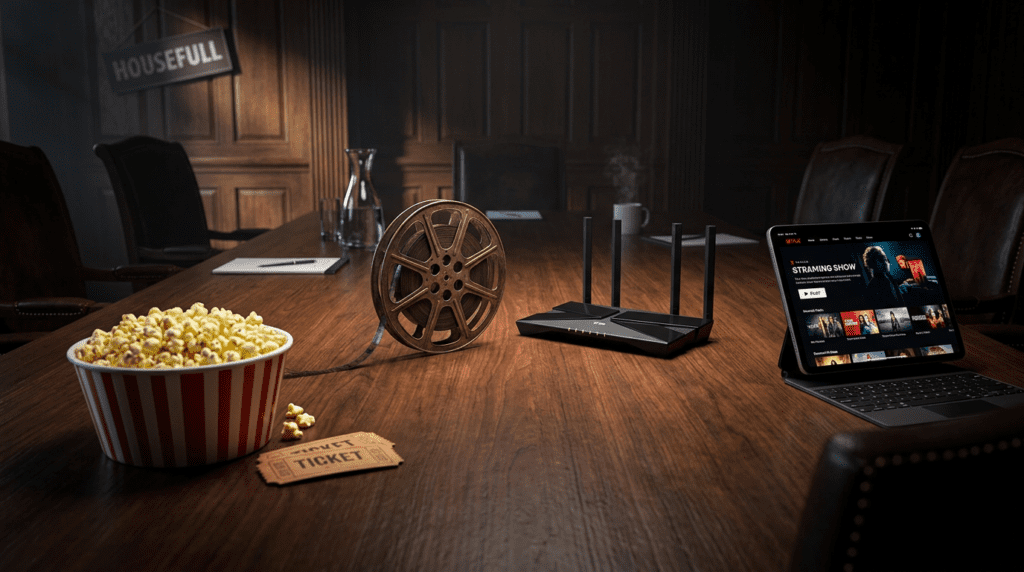
What This Means for You as a Viewer
Practically speaking, here’s what the window rule means for your viewing habits.If you want to see a Bollywood film on OTT, expect to wait about 5-6 weeks after theatrical release for hits, and 3-4 weeks for flops. If a film is doing really well at the box office, the window might extend to 7-8 weeks.Follow trade tracking sites like Sacnilk to see which films are nearing the end of their theatrical run. That’s your signal that the OTT announcement is coming soon.And check our weekly OTT guide for confirmed dates.
FAQs
What is the Bollywood OTT theatrical window? It is the mutually agreed-upon time gap (usually 35-45 days) between a movie’s release in cinemas and its premiere on streaming platforms.
Do flop films have a shorter Bollywood OTT theatrical window? Yes, typically. Films that stop earning at the box office often get pushed to streaming platforms within 3-4 weeks (25-30 days) to recover costs faster.
Why can’t films release on OTT and theatres together? Simultaneous releases hurt theatrical revenue significantly. The Bollywood OTT theatrical window protects the massive investments made by theatre chains and big-budget producers.
Is the 35-day rule a law? No, it is an industry convention and standard practice, not a legal requirement. Individual studio deals can vary.
Will Bollywood ever do day-and-date streaming?For smaller films, it’s already happening. For big-budget releases, it’s unlikely in the near term because the economics don’t support it.Sources: Trade publications, exhibitor reports, and box office tracking from Sacnilk.Final Thoughts
Practically speaking, the Bollywood OTT theatrical window rule means you should expect to wait about 5-6 weeks for hits, and 3-4 weeks for flops. It’s shrinking, it’s flexing, and it’s being renegotiated with every major release. Within two years, we’ll likely see dynamic windows become the norm. The current system is a compromise, and compromises don’t last forever.