
The AI landscape has quietly but fundamentally changed. In this Gemma 4 AI Explained overview, we see that running a capable AI model no longer requires heavy reliance on cloud servers or constant internet connectivity. In 2026, the kind of processing power that once filled server racks now fits in your pocket—and Google’s latest release, Gemma 4, is one of the clearest examples of just how far things have come.
Built on the same research foundation as their flagship Gemini models, this Gemma 4 AI Explained guide highlights an open-weights model that’s reshaping what local, on-device AI actually looks like in practice. From developers building privacy-focused health apps to gamers enjoying dynamic NPC dialogue without a millisecond of lag, Gemma 4 is making a strong case that the future of AI isn’t exclusively in the cloud.
TL;DR: The Gemma 4 AI Explained Fact Sheet
- Developer: Google DeepMind.
- Availability: Open-weights (available on Hugging Face, Kaggle, and Vertex AI).
- Sizes: 2B, 9B, 27B, and the newly introduced 50B MoE (Mixture of Experts).
- Context Window: 512k token context window for edge devices.
- Key Breakthrough: Native multimodal processing (vision, audio, and text) with near-zero latency on consumer-grade neural processing units (NPUs).
What Makes Gemma 4 So Different?
The jump from Gemma 1 to Gemma 2 brought better reasoning. Gemma 3 introduced early multimodality. To understand the Gemma 4 key features and the Gemma 4 AI Explained methodology, one must look at the full architectural overhaul—built from the ground up for the 2026 hardware ecosystem.
1. The Mixture of Experts (MoE) architecture within the Gemma 4 AI Explained framework
For the first time in the Gemma family, Google has introduced a 50B parameter Mixture of Experts model. Rather than firing up all 50 billion parameters for every single query, the model routes your question to specific “expert” subnetworks within itself. The result is the intelligence of a very large model with the compute demands—and battery draw—of a much smaller one. For high-end laptops and local servers, this is a meaningful step forward.

2. True On-Device Multimodality
As our Gemma 4 AI Explained analysis shows, the model doesn’t just handle text—it sees and hears natively. Earlier models had to rely on external vision encoders bolted on after the fact, which introduced latency. the Gemma 4 AI Explained engine can process a live video feed from your smartphone camera or follow a live conversation in real time, all without sending a single byte of data to a remote server.

Real-World Case Study: The Rise of “Agentic” Apps
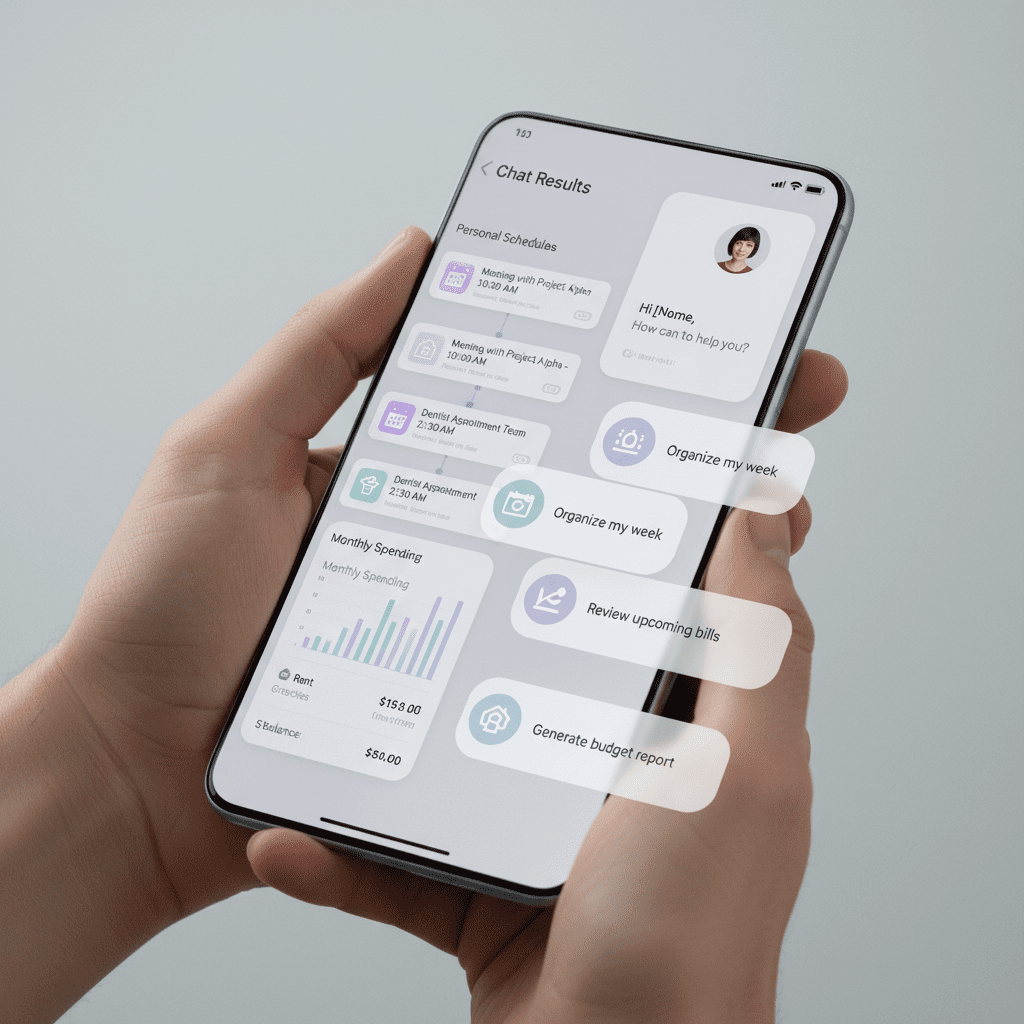
To get a sense of Gemma 4’s real-world impact, look at the rapid growth of Agentic AI in 2026. Developers aren’t just building chatbots anymore—they’re building AI agents that actually do things. A growing category of local personal assistant apps runs the 9B version of Gemma 4 entirely on the user’s device. Because nothing leaves the phone, these apps can be granted permission to read messages, check the calendar, and process sensitive financial documents to build budgets—with no risk of that data being intercepted or stored by a third party. Privacy isn’t a selling point here; it’s just how the model works.
What the Experts Are Saying
“the Gemma 4 AI Explained architecture represents a tipping point for next-gen open source AI models. By fitting a 512k context window and multimodal reasoning into a model that runs on a standard 2026 smartphone NPU, Google hasn’t just released a model—they’ve handed developers a way to bypass the cloud entirely.”
“The 2B and 9B variants, as seen in this Gemma 4 AI Explained review, are efficient enough to be embedded directly into game engines, letting NPCs hold limitless, unscripted, context-aware conversations powered entirely by the player’s local GPU.”
Comparing the Gemma Family Evolution
| Model Generation | Release Year | Architecture Type | Context Window | Primary Use Case |
|---|---|---|---|---|
| Gemma 2 | 2024 | Dense (Text Only) | 8k tokens | Basic chatbots, text summarization |
| Gemma 3 | 2025 | Dense (Text + Vision) | 128k tokens | Image analysis, document Q&A |
| Gemma 4 | 2026 | MoE (Native Multimodal) | 512k tokens | Real-time local agents, privacy-first computing |
Developer Tip: If you’re planning to run the Gemma 4 27B or 50B models locally, you’ll want at least 32GB of unified memory or VRAM. For mobile development, the heavily quantized 2B model via Google’s MediaPipe framework is your best bet for smooth 60fps inference.
A Unique Insight: The End of Cloud Dependency?
For the better part of a decade, the industry pushed everything toward the cloud. the release of Gemma 4 AI Explained feels like a significant swing in the other direction. Models at this capability level are now good enough for roughly 95% of everyday tasks—writing emails, reviewing code, identifying objects in photos—which means the average user no longer needs a subscription-based cloud AI service to get things done. That shift matters particularly in parts of the world where internet access is expensive or unreliable. The most powerful AI, it turns out, is often the one that works completely offline.

Frequently Asked Questions (FAQs)
Is Gemma 4 AI Explained truly open-source?
Gemma 4 is best described as “open-weights.” The weights are freely available for developers and researchers to use, modify, and deploy—including commercially, within Google’s terms of use. The training data and underlying code, however, aren’t fully public, so it doesn’t meet the strict definition of open-source.
Can I run the Gemma 4 AI Explained model on my personal laptop?
Yes. The 2B and 9B models are built for consumer hardware. Tools like LM Studio and Ollama, along with Google’s own supported frameworks, make running them on a modern laptop fairly straightforward.
What makes the Gemma 4 AI Explained 512k context window important?
It means the model can hold hundreds of pages of text, entire books, or hours of transcribed audio in a single session without losing track of earlier content. Earlier models would effectively “forget” the beginning of a long conversation—that’s much less of a problem here.
How does Gemma 4 compare to Llama 4?
Meta’s Llama series is still a strong contender, but Gemma 4 is tuned specifically for Google’s developer ecosystem—Android, Keras, JAX—and currently leads on efficiency-to-parameter ratio for edge devices.
Conclusion: Building the Future Locally
Google’s release of Gemma 4 AI Explained signals something broader than a single model launch. The direction is clear: AI is becoming decentralized, multimodal, and built around user privacy. The barrier to building capable, local AI applications has dropped considerably—whether you’re running experiments on a laptop or building a full-scale assistant for a startup. the Gemma 4 AI Explained platform gives you a genuinely powerful place to start.
Sources
- Official Google DeepMind Research Blog (2026 Releases).
- Hugging Face Open LLM Leaderboard Data.
- Developer benchmark reports from Kaggle and GitHub.
Related Articles