Last Updated: 6 August 2026, 05:20 PM IST | Fact Checked By: SpotlightersPost Editorial Team
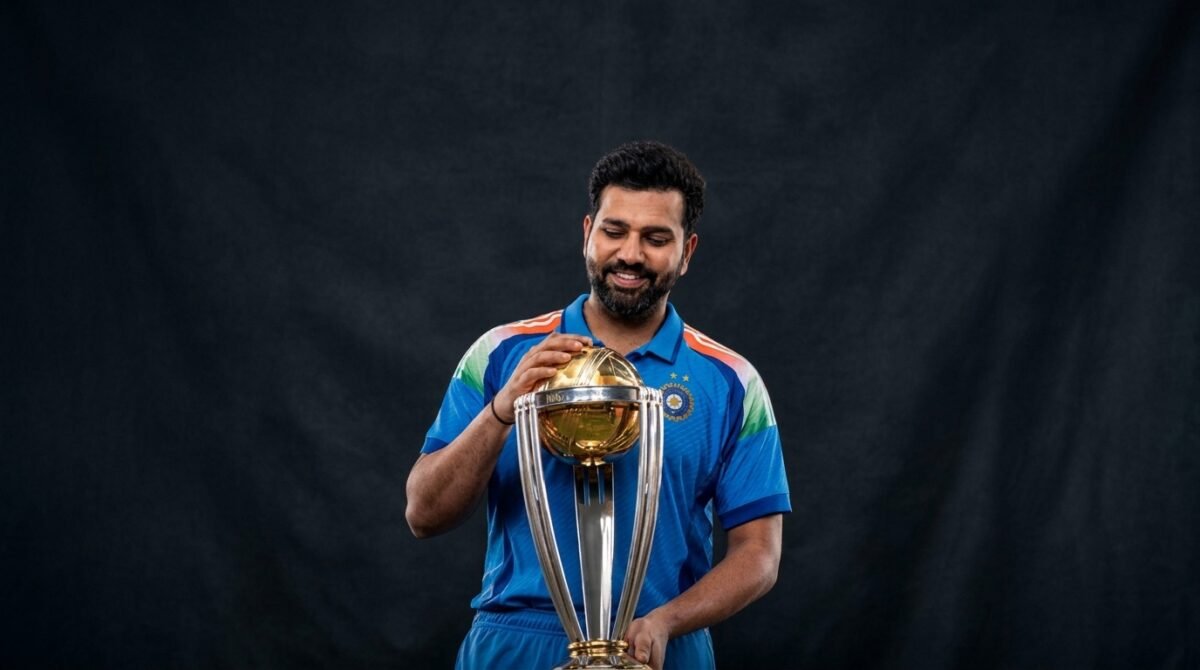
Indian cricket leadership is currently split in two. While head coach Gautam Gambhir’s coaching staff and chief selector Ajit Agarkar’s panel want a fresh start with younger talent for the 2027 ODI World Cup, the BCCI top leaders have openly chosen to back senior opener Rohit Sharma. This division has fractured communication inside the administration, turning player transition planning into a public controversy.
The recent Rohit Sharma ODI future plan has exposed a major rift in Indian cricket. Following BCCI selection committee leaks, the selection panel felt betrayed after the board publicly backed the opener. This has fueled speculation about VVS Laxman taking over the VVS Laxman chief selector role to manage the squad’s transition.
Rohit Sharma’s ODI Future Plan: Decoding the Administrative Crisis
A serious administrative standoff has broken out at the BCCI over team succession. It started last month before the Afghanistan ODI series, when chief selector Ajit Agarkar and coach Gautam Gambhir sat down with Rohit Sharma. This meeting set the stage for the Rohit Sharma ODI future plan. In those talks, the management explained their goal, they want to start moving toward younger talent, such as Yashasvi Jaiswal, with an eye on the 2027 ODI World Cup.
But executing this blueprint immediately ran into a wall. After Rohit registered low scores of 11 and 26 in the opening two ODIs against England, reports leaked to the media asserting that the third ODI at Lord’s on July 19 would be his final international match. One selector had reportedly taken a senior BCCI official into confidence over the phased transition. This sudden exposure revealed a deep structural divide between the selection committee and the board’s top brass.
The situation reached a breaking point on July 17, as BCCI Secretary Devajit Saikia publicly put an end to the retirement speculation. He stated that the board had not decided to remove the experienced star and confirmed that Rohit continues to be a regular part of the Indian squad as long as he is part of the current plan.
This sudden policy shift left key members of Agarkar’s panel feeling deeply undermined after board executives shifted their stance in response to social media pressure. While board administrators prefer to let the seasoned campaigner determine his own timeline, team management maintains the firm belief that India requires new direction to win the 2027 ODI World Cup.
The Lord’s Statement: How a Defiant Century Reshaped the Transition Timeline
On July 19, Rohit delivered his response where it mattered most—on the Lord’s turf. Chasing England’s massive total of 387 for 3, the seasoned opener produced a masterclass under immense pressure, proving that the ongoing Rohit Sharma ODI future plan would not be easily resolved on paper.
Even while battling with severe physical cramps, Rohit Sharma scored a brilliant 138 runs off 110 balls hitting 17 fours and 5 sixes. By building strong partnerships with Shubman Gill and Virat Kohli, he sent a clear message about his determination to continue playing.
This innings was historic for several reasons. Rohit became the first Indian player to score an ODI century at the famous Lord’s ground, earning a spot on the Honours Board. At 39 he became the oldest Indian cricketer to score a century in international cricket. This incredible performance completely changed the conversation around the Rohit Sharma ODI future plan, effectively ruining the selection committee’s immediate timeline and putting the selectors on the defensive.
The Srikkanth-Dhoni Parallel: Deconstructing the 2012 Transition Crisis
The public debate over the captain’s future has sparked immediate comparisons to one of Indian cricket’s most famous transition conflicts. Experts are looking at the history of the Rohit Sharma ODI future plan, highlighting a clear Dhoni Laxman Srikkanth 2012 parallel. Just like the team’s current transition, 2012 was a time of big goodbyes for Indian cricket. It was the end of a golden age, marked by Rahul Dravid walking away from Test cricket and Sachin Tendulkar reaching the final stages of his incredible ODI career.
The real shock came in August 2012. Hurt by media leaks that he was blocking youth and told that the upcoming New Zealand series would be his last, VVS Laxman decided to dictate his ending. Laxman suddenly announced his retirement from international cricket. It was a proud, defiant move that essentially said, “You aren’t firing me—I am leaving on my own.” He wanted to decide how his career ended rather than letting the selection panel force him out.
Today, the similarities are hard to ignore. In a deep twist of irony, the very man who pulled off that act of defiance in 2012 is now the primary candidate being considered to take over the VVS Laxman chief selector role to manage future player transitions, adding another layer of intrigue to the Rohit Sharma ODI future plan.
Committee Under Pressure: Ajit Agarkar’s Job Vulnerability and the Impending September Review
The fallout from these public rifts has placed immense pressure on chief selector Ajit Agarkar. The board was reportedly unhappy with the BCCI selection committee leaks that emerged after India’s Cardiff ODI defeat. In response, the BCCI instructed selectors to avoid any form of communication with the media.
Although Ajit Agarkar’s contract was originally meant to finish in June 2026, he was granted a short extension through September. It was widely believed that he would be signed for a longer term, but the drama of the Rohit Sharma ODI future plan has now left his position in serious doubt. The board is currently exploring the idea of replacing him with VVS Laxman, and they are scheduled to make their final decision at the Annual General Meeting (AGM) in September.
Public Reactions: What Fans and Former Cricketers are Saying on X
The public response to the selection controversy has been massive, creating a visible split across social media platforms.
Fans of the “Hitman” have flooded X to celebrate his Lord’s century, arguing that Rohit has earned the right to dictate his own retirement timeline.
On the other hand, cricket purists are calling for strict transition planning, pointing to Yashasvi Jaiswal’s rising credentials and the team’s poor recent record in Europe.
BCCI Secretary Devajit Saikia rubbishes rumours of Rohit Sharma’s retirement at Lord’s.
RO-KO’s quest for ODI World Cup glory continues. 🇮🇳🏆
(Disclaimer: Image created using AI) pic.twitter.com/B0iu4epPS0
— CricTracker (@Cricketracker) July 18, 2026
Frequently Asked Questions (FAQs)
1. What is the latest Rohit Sharma ODI future plan about?
The Rohit Sharma ODI future plan refers to the severe administrative conflict between India’s selection committee, which wanted to phase Rohit out of the squad, and the BCCI top brass, who publicly backed him.
2. Why do the selectors feel “betrayed” by the BCCI top brass?
The selectors felt betrayed when the board publicly backed Rohit, overriding their internal plan to phase him out.
3. What did Devajit Saikia state regarding Rohit Sharma’s retirement?
BCCI Secretary Devajit Saikia publicly dismissed the retirement speculation, stating that Rohit is a regular ODI player and the Lord’s match would not be his last.
4. What are the details of Rohit Sharma’s Lord’s century?
On July 19, 2026, Rohit smashed 138 off 110 balls with 17 fours and 5 sixes while battling physical cramps, becoming the first Indian batter to register an ODI century at Lord’s.
5. Is Ajit Agarkar’s job as chief selector in danger?
Yes. Following communication rifts and BCCI selection committee leaks, Agarkar’s position has come under severe pressure, with VVS Laxman considered as his replacement.
6. When does Ajit Agarkar’s selector contract expire?
Agarkar’s contract was extended by three months and is set to expire in September 2026, coinciding with the BCCI’s AGM.
7. Who is VVS Laxman and what is his current role in the BCCI?
VVS Laxman is a legendary former India batsman who currently serves as the head of the Centre of Excellence (CoE) in Bengaluru.
8. How does the current crisis mirror the Dhoni Laxman Srikkanth 2012 parallel?
In 2012, Laxman abruptly retired after feeling pushed out by Srikkanth’s panel and finding captain MS Dhoni unreachable. Today, Rohit faces a similar push from Agarkar but has chosen to defy selectors.
9. What were VVS Laxman’s reasons for his sudden 2012 retirement?
Tired of leaks that he was standing in the way of youth, Laxman retired early to control his own departure.
10. What is Yashasvi Jaiswal’s role in India’s long-term ODI transition?
The committee has picked Jaiswal to take over the opening role leading up to the 2027 ODI World Cup
The Final Verdict: Balancing Legacy with Future Succession
The debate surrounding the team’s leadership in fifty over cricket highlights a classic dilemma in Indian sports administration. On one side, the selection committee and team management want a strategy that prioritizes young players, arguing that getting ready for the 2027 World Cup requires investing in new talent right now.
Ultimately, the unresolved Rohit Sharma ODI future plan serves as a major test of how Indian cricket handles its changing generations.
If Ajit Agarkar’s panel is indeed replaced, the incoming chief selector will face the monumental challenge of standardizing these delicate farewells. To maintain its position as a global powerhouse, the BCCI must resolve this boardroom to field disconnect, ensuring that future squad successions are driven by objective performance metrics rather than public relations crises.
Read More
- Sharmila Dhankar Wins India’s First CWG Para Athletics Gold as Day 5 Surge Secures Historic High Jump SilverIndian Sports Historic Sunday: Jadeja, CWG Gold, & Norris Win
- BCCI Forced into Major Selection Shakeup: Eight Stars Missing for West Indies ODIs Due to Asian Games ClashSunny Deol’s Batwara 1947 Censor Rating and Independence Day Release Clash
- East Zone’s New Direction: Ishan Kishan Leads with Teen Vice-Captain Vaibhav Sooryavanshi