Last Updated: 9 September 2026, 4:55 PM IST | Fact Checked By: SpotlightersPost Editorial Team
Indian sports leaders are returning to tradition as teams prepare for big Asian competitions. Major multi-sport events need clear and familiar team colors, making national identity very important for both players and officials. Hockey India’s latest announcement ends months of public discussion by bringing back the country’s classic jersey colors as teams finish preparing for the Nagoya-Aichi games.
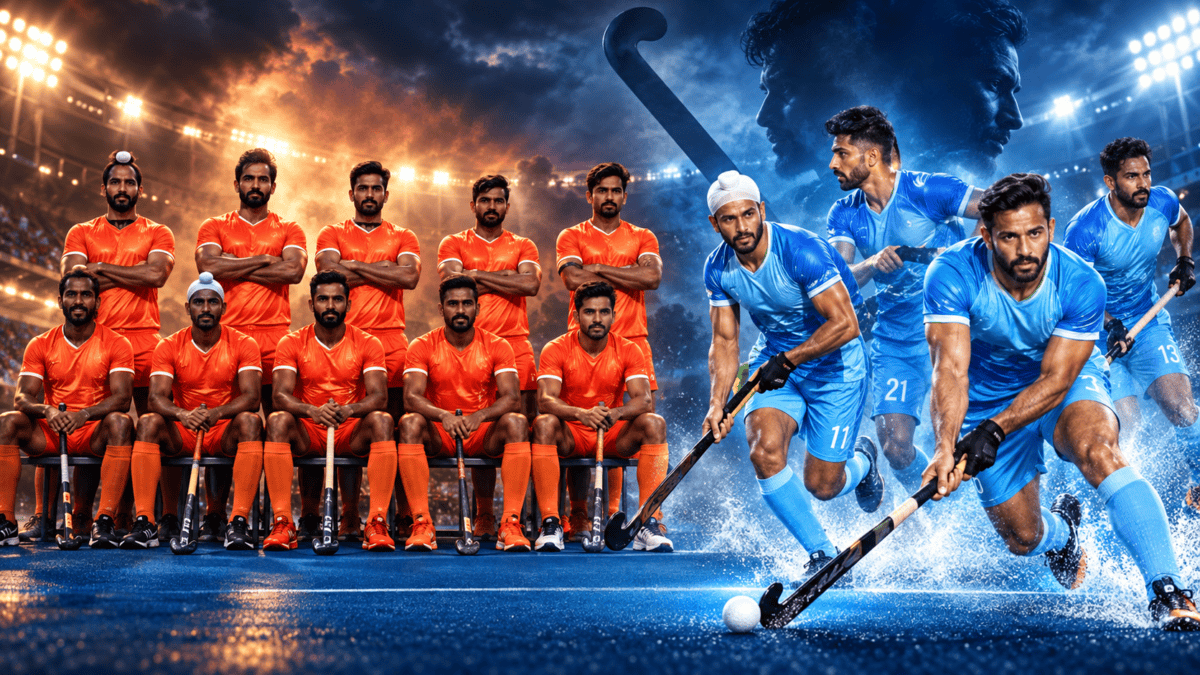
Fans and players can celebrate because The Hockey India blue jersey return in the Asian Games decision officially reinstates India’s iconic primary kit for the 2026 Nagoya-Aichi Games. Following governance reviews and player feedback after wearing saffron at the 2026 FIH World Cup, Hockey India President Dilip Tirkey confirmed that blue remains the core sporting identity of Indian hockey.
Tactical Reversal: Why Hockey India Reinstated the Blue Jersey for the Asian Games
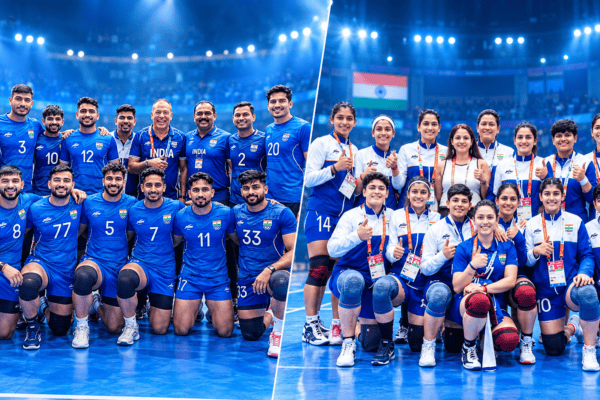
At an Asian Games event in New Delhi, Hockey India confirmed that national teams will return to their traditional identity. Both the men’s and women’s teams are set to wear iconic blue uniforms for the 2026 Asian Games in Japan. According to coverage of the team’s jersey decision, Hockey India officially requested blue as the primary kit and orange as the secondary option to the Indian Olympic Association (IOA), as reported in NDTV Sports analysis of the Asian Games jersey U-turn.
Clearing up confusion that followed the team’s appearance in orange during the 2026 FIH World Cups in Belgium and the Netherlands, Tirkey emphasized that the previous redesign was never permanent. He made it clear that blue remains the primary visual identity of Indian hockey, stating: “Now, blue is back for the Asian Games. The team will play in blue jerseys”.
The timing of this Hockey India blue jersey return is key for the national team. The 2026 Asian Games give teams a direct chance to earn a spot in the 2028 Los Angeles Olympics. Winning gold in Japan means instant Olympic qualification, which makes stability and a recognizable team appearance especially important right now.
Governance Rifts & Executive Board Lapses: Inside Dilip Tirkey’s Email Trail
Beyond the aesthetic shift, Hockey India blue jersey return brought to light significant administrative friction within Hockey. Internal messages showed that President Dilip Tirkey only learned about the Indian hockey team saffron jersey through a WhatsApp text from Executive Director R.K. Srivastava on July 27, 2026, at 8:47 AM, just two hours before the official 11:00 AM media launch, as detailed in an investigative report by The Indian Express on Dilip Tirkey’s governance emails.
The sudden message led Tirkey to send official emails to the Hockey India Executive Board, asking if standard rules had been ignored. He pointed out serious management issues, asking why board members were not informed before such a major design change was approved and whether the players were ever consulted. He emphasized that Hockey India must stay politically neutral and follow clear, transparent processes.
Dilip Tirkey Hockey India jersey decision, Contradictions also emerged regarding the justification for the initial color change. While federation officials publicly claimed that coaches and senior players had requested an alternative color due to visibility challenges on blue synthetic turfs, national team players privately confirmed that they were never consulted prior to the public announcement.
Technical Turf Contrast vs. Cultural Identity: The Player & Captain Reaction
The debate over Indian hockey team saffron jersey colors created a sharp divide between technical arguments and historical sentiment. Administrators originally defended the saffron kit by pointing to visual contrast on synthetic turfs, arguing that dark blue uniforms could blend into blue turf surfaces during rapid passing movements.
However, sports equipment experts and former international athletes noted that lighter shades of blue offer plenty of contrast without discarding the country’s sporting heritage. The move to replace blue drew immediate pushback from former national captains. In a widely cited social media post, former captain Viren Rasquinha (@virenrasquinha) voiced strong criticism over abandoning the traditional uniform, stating: “The legacy and identity of the Indian team has always been BLUE. I wore the Blue jersey with pride for many years. Fans want to see our Indian team in blue. What is the logic of orange?” Legendary captains Pargat Singh, Dhanraj Pillay, and Ajit Pal Singh also voiced concern over unnecessary distractions ahead of major tournaments.
While Indian hockey team saffron jersey debates were going on, the national teams had mixed results on the field at the 2026 FIH World Cups—the men finished in eighth place in Belgium, while the women secured a solid fifth place. Hockey India blue jersey return clears away these management issues, letting the team put all its energy into preparing for the Nagoya-Aichi games.
98-Year Kit Evolution: From Amsterdam 1928 to Nagoya-Aichi 2026
The connection between Indian hockey and the color blue stretches back nearly a century. India’s connection to blue began during its Olympic hockey debut at the 1928 Amsterdam Games, where players wore dark navy jerseys with light blue highlights chosen alongside the Patiala royal family, according to a report by Business Standard on India’s hockey jersey evolution. That historic tournament launched years of international success and established blue as India’s iconic sports color.
As time went on, the team updated its look once in a while, but India hockey kit history evolution blue always remained the main color. At the 1960 Rome Olympics, athletes paired dark grey formal blazers with their traditional blue shirts. Later on, lighter shades were introduced, such as the sky-blue uniforms at the 2000 Sydney Games, which also included a bright yellow secondary kit to make sure teams were easy to tell apart.
While alternate away jerseys were used once in a while—like the bright yellow kits at the 2014 World Cup in The Hague, blue was always the primary choice until saffron briefly replaced it at the 2026 World Cup. so, classic Hockey India blue jersey return for the 2026 Asian Games keeps India’s iconic color at the heart of its hockey legacy.
Hockey India Kit Evolution & Performance Matrix (1928–2026)
| Era / Tournament | Primary Kit Colors | Secondary / Alternate Kit | Historical Context & Rationale | Tournament Performance Verdict |
|---|---|---|---|---|
| Amsterdam 1928 Olympics | Dark Navy Blue & Light Blue | White with Blue Trims | Selected with Patiala Royal Family input; established blue identity | Gold Medal (Olympic Debut) |
| Rome 1960 Olympics | Classic Royal Blue | Grey Blazers (Formal) | Traditional blue shirt paired with dark formal delegation blazers | Silver Medal |
| Sydney 2000 Olympics | Sky Blue & Royal Blue | Bright Yellow with Blue Shorts | First modern synthetic fabric redesign with alternate yellow option | 7th Place Finish |
| The Hague 2014 World Cup | Deep Navy Blue | Bright Yellow Shirt & Socks | Alternative away kit designed for contrast against dark turfs | 9th Place Finish |
| Belgium/Netherlands 2026 World Cup | Primary Saffron / Orange | Navy Blue Secondary | Executive decision citing blue turf contrast; faced heavy public backlash | Men 8th / Women 5th Place |
| Nagoya-Aichi 2026 Asian Games | Reinstated Classic Blue | Saffron / Orange Secondary | Reversal following governance review; restored traditional sporting identity | Direct LA 2028 Olympic Qualifier |
Frequently Asked Questions (FAQs)
1. Why did the Hockey India blue jersey return for the Asian Games?
Hockey India reverted to blue as its primary kit color following widespread criticism from former captains, fans, and internal governance reviews regarding the shift to saffron at the World Cup.
2. What did Hockey India President Dilip Tirkey say about the jersey change?
Dilip Tirkey confirmed that blue is India’s first-choice jersey color for the Asian Games, clarifying that the saffron kit used at the World Cup was never permanent.
4. What rationale was given for using an Indian hockey team saffron jersey at the World Cup?
Officials argued that blue jerseys merged visually with synthetic blue turf, causing visibility issues for players during rapid passing movements.
5. Did players support the change to the Indian hockey team saffron jersey?
While HI claimed coaches and players requested the change, multiple national team players stated anonymously that they were never consulted prior to the announcement.
6. How did former Indian hockey captains react to the saffron kit?
Legendary captains including Viren Rasquinha, Pargat Singh, Dhanraj Pillay, and Ajit Pal Singh criticized the decision, stating blue represents India’s long-standing sporting identity.
7. When did India first wear blue jerseys in international hockey?
India has played primarily in blue since making its Olympic hockey debut at the 1928 Amsterdam Games.
8. Has the Indian hockey team ever worn colors other than blue or saffron?
Yes. India wore yellow alternative jerseys at the 2000 Sydney Olympics and 2014 World Cup in The Hague, pale blue in 2010, and white alternative kits across multiple tournaments.
9. How did India perform at the 2026 World Cup in saffron jerseys?
The men’s team finished eighth, while the women’s team achieved a historic fifth-place finish, their best in over 50 years.
10. What is at stake for the Indian hockey teams at the 2026 Asian Games?
Winning gold at the Asian Games in Nagoya-Aichi, Japan, provides direct qualification for the 2028 Los Angeles Olympic Games.
Read More
- BCCI Forced into Major Selection Shakeup: Eight Stars Missing for West Indies ODIs Due to Asian Games ClashSunny Deol’s Batwara 1947 Censor Rating and Independence Day Release Clash
- East Zone’s New Direction: Ishan Kishan Leads with Teen Vice-Captain Vaibhav Sooryavanshi
- Boardroom War: How the Rohit Sharma ODI future plan Exposed a Broken Selection System
- Sonal Dinusha India Test Century: Historic Twin Hundreds Save Sri Lanka in Colombo
- Staging the Spectacle: India Confirmed to Host Inaugural Women’s Champions Trophy 2027 After Sri Lanka Shift