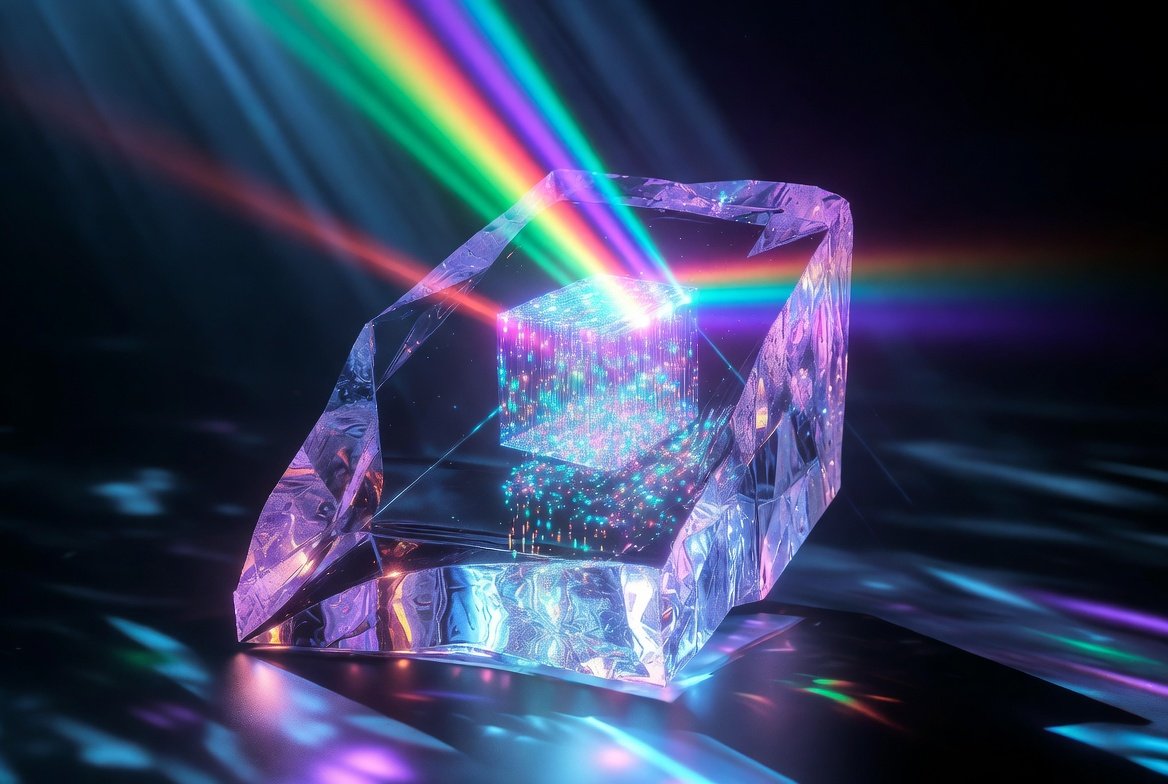
Can data really be stored on glass for thousands of years?
5D Optical Data Storage on Glass is no longer just a concept of the future; it is a reality that can store data for billions of years. Imagine fitting thousands of years of human history into a small shard—this is exactly what 5D Optical Data Storage on Glass achieves by using ultrafast lasers.
I’ll admit that “billions of years” sounds ridiculous but the underlying science is solid. The technology is called 5D optical storage. Regular CDs use two spatial dimensions. This adds three more by encoding data through the size, orientation, and position of tiny nanostructures created inside the glass.
To appreciate why this matters, think about how fragile our current storage options are. Hard drives fail in 5 to 10 years. SSDs degrade. Magnetic tape lasts maybe 30 years in ideal conditions. Archival-grade optical discs have a shelf life too. Basically everything we use to store data right now has an expiration date. Glass doesn’t have that problem because silica is resistant to heat, water, and electromagnetic interference.
How 5D Optical Data Storage on Glass Actually Works
While digital technology continues to change, 5D Optical Data Storage on Glass is providing a revolutionary way to preserve our history for billions of years without any risk of data loss.
A femtosecond laser, one that fires pulses lasting quadrillionths of a second, creates nanoscale structures inside a piece of fused quartz glass. Each structure sits at a specific location with a specific orientation and size. A reader system using polarised light can extract the data by measuring how light passes through each nanostructure.
The combination of position, orientation, and size gives each data point five separate dimensions of information, which is where the name 5D storage comes from. Recent work at Southampton pushed the writing speed way higher than earlier versions, which were painfully slow. Newer laser setups are getting fast enough to make practical archival storage feasible.
Why 5D Optical Data Storage on Glass is the Future
While digital technology continues to change, 5D Optical Data Storage on Glass is providing a revolutionary way to preserve our history for billions of years without any risk of data loss.
Archival storage is the obvious use case. National records, cultural heritage, scientific datasets that need to survive centuries or longer. The kind of information that currently lives in underground vaults or gets carved into stone.
Microsoft has been exploring glass storage through their Project Silica programme, though their approach differs somewhat from what Southampton is doing. Both are aiming at the same fundamental goal though, a storage medium that outlasts everything else we have.
Consumer use is probably years away if it ever happens. The equipment is expensive and the write speeds, while improving, aren’t going to compete with SSDs for everyday files anytime soon.
The rise of 5D Optical Data Storage on Glass marks the end of data expiration dates. While current SSDs fail, 5D Optical Data Storage on Glass remains resilient. As 2026 progresses, expect 5D Optical Data Storage on Glass to become the gold standard for global archives.
Frequently Asked Questions
How long does data last on glass?
Theoretically billions of years. The glass is essentially immune to the things that degrade other storage media.
How is data written to it?
Ultrafast femtosecond lasers create tiny nanostructures inside silica glass. Each one encodes data through its position, size, and orientation.
How much data fits?
Researchers have demonstrated hundreds of terabytes on a disc-sized piece of quartz.
Can I buy one?
Not yet. The tech is still in the research and early-archival stage.
Who’s working on this?
University of Southampton leads the 5D research. Microsoft’s Project Silica is a parallel effort with a more commercial focus.