
How was the eastern imperial eagle saved from extinction?
The Eastern Imperial Eagle Conservation Success is a testament to what thirty years of dedicated work can achieve. Today, we celebrate the Eastern Imperial Eagle Conservation Success as the species moves from Vulnerable to Near Threatened. Understanding the key pillars of the Eastern Imperial Eagle Conservation Success provides a blueprint for saving other raptors worldwide.
The eastern imperial eagle recovery was down to around 100 breeding pairs in Central Europe by the early 1990s. Habitat destruction, deliberate killing, and pesticide poisoning had brought it right to the edge. Today populations are recovering in several countries and in 2024 the IUCN reclassified the species from Vulnerable to Near Threatened. Real measurable progress.
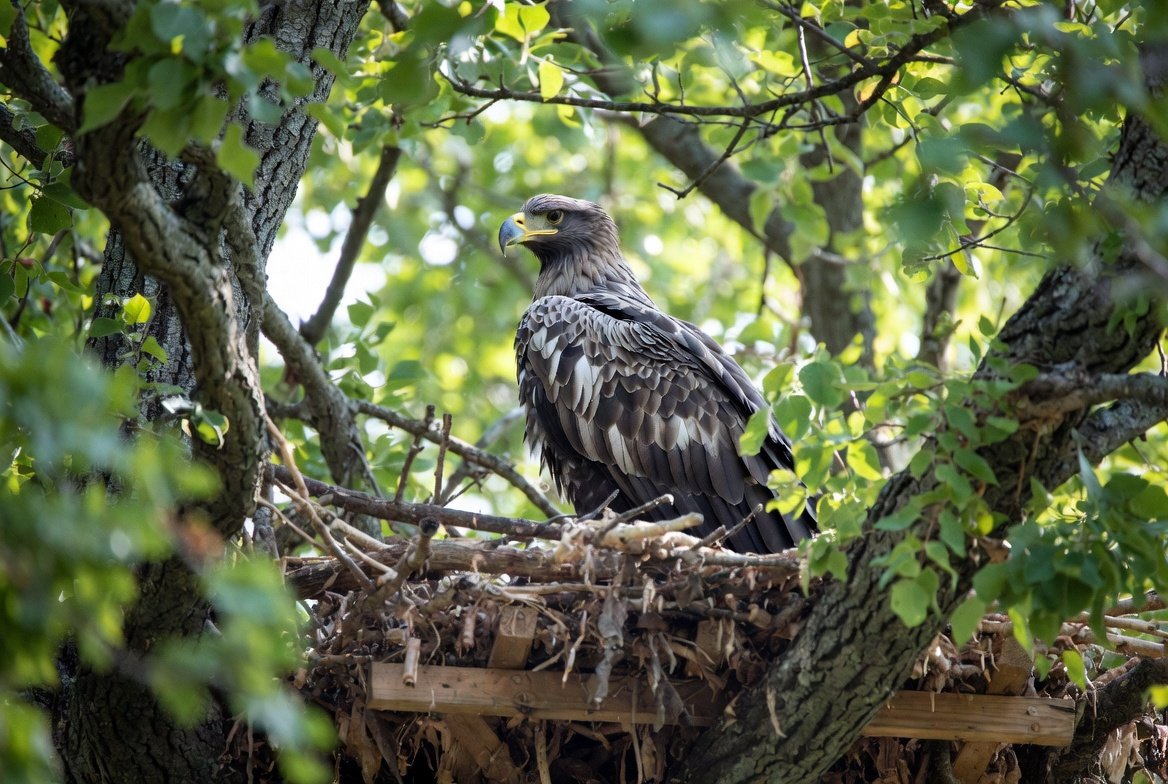
Key Actions for Eastern Imperial Eagle Conservation Success
While many species face an uncertain future, the Eastern Imperial Eagle Conservation Success serves as a powerful blueprint for how science and international cooperation can pull a predator back from the brink of extinction.
Nest protection came first. Teams identified nesting sites and set up buffer zones that restricted farming and forestry activity during breeding season. In areas where natural nesting trees had been destroyed, they installed artificial platforms. Straightforward but it worked.
Power line retrofitting was next because electrocution on badly designed infrastructure was killing a significant number of birds. Conservation groups, BirdLife International especially, worked with utility companies to insulate dangerous pylons and add perch deterrents. In Hungary alone they modified thousands of pylons. The technical planning required for this massive electrical retrofitting is as detailed as the logic in Practical Quantum Computing Applications, where every precise calculation prevents a failure in the system.
Poisoning was harder to solve because it was a human behaviour problem. Some farmers and gamekeepers were putting out poisoned bait to kill what they saw as pest predators. Anti-poisoning patrols, legal enforcement, and community education gradually brought incidents down. Gradually being the key word, it wasn’t fast.
There was supplementary feeding too. Providing safe food at established stations reduced poisoning risk and helped breeding success during years when natural prey was hard to find.
Factors Driving the Eastern Imperial Eagle Conservation Success
While many species face an uncertain future, the Eastern Imperial Eagle Conservation Success serves as a powerful blueprint for how science and international cooperation can pull a predator back from the brink of extinction.
Because the threats were specific and fixable. Electrocution is an engineering problem, you insulate the pylons. Nest disturbance is a land management problem, you create buffer zones. Poisoning is an enforcement and education problem. None of it required genetic rescue or recreating habitats on a continental scale.
Having around a hundred breeding pairs was precarious but it was enough genetic diversity to support a recovery once the pressure was removed. Some species get to a point where even removing the threats isn’t enough because the population is too small or too fragmented. The imperial eagle got conservation attention before it hit that point.
International coordination mattered too. The rise of eco-tourism to see these majestic birds is a perfect example of the Purposeful Travel Trend, where travelers prioritize the protection of local biodiversity over simple leisure. The eagle’s range crosses multiple countries. EU species protection directives and Natura 2000 habitat designations gave individual countries a shared legal framework to build on.

Is the Species Actually Safe Now?
Safer, not safe. Near Threatened is better than Vulnerable but it means monitoring needs to continue. Power lines still kill birds. Poisoning still happens. Development keeps eating into nesting areas. Conservation funding has to be sustained because the recovery took thirty years and Cutting support now would risk losing those gains. In conclusion, the Eastern Imperial Eagle Conservation Success story proves that extinction is not inevitable. By focusing on the Eastern Imperial Eagle Conservation Success model, we can address specific threats like poisoning and habitat loss. Ultimately, the Eastern Imperial Eagle Conservation Success remains a beacon of hope for global wildlife preservation.
Frequently Asked Questions
How many are there now?
Populations recovered significantly from about 100 Central European breeding pairs in the 1990s. Regional counts vary by survey.
What caused the decline?
Habitat loss, electrocution on power lines, deliberate poisoning, pesticide contamination.
Which countries led the recovery?
Hungary was central. Austria, Serbia, Slovakia all played important roles.
What’s the current conservation status?
Near Threatened as of 2024, reclassified from Vulnerable.
Can these methods help other birds of prey?
Yes. Power line retrofitting and nest protection have worked for multiple raptor species across Europe.
Conclusion
In summary, the Eastern Imperial Eagle Conservation Success is a testament to what can be achieved when conservationists focus on solving practical problems. By addressing electrocution, illegal poisoning, and habitat loss through a unified European framework, we have seen this species double its population in key regions. While the status of “Near Threatened” reminds us that the work is never truly finished, the recovery of the Imperial Eagle proves that with persistent effort and legal protection, we can rewrite the future for our planet’s most vulnerable wildlife.