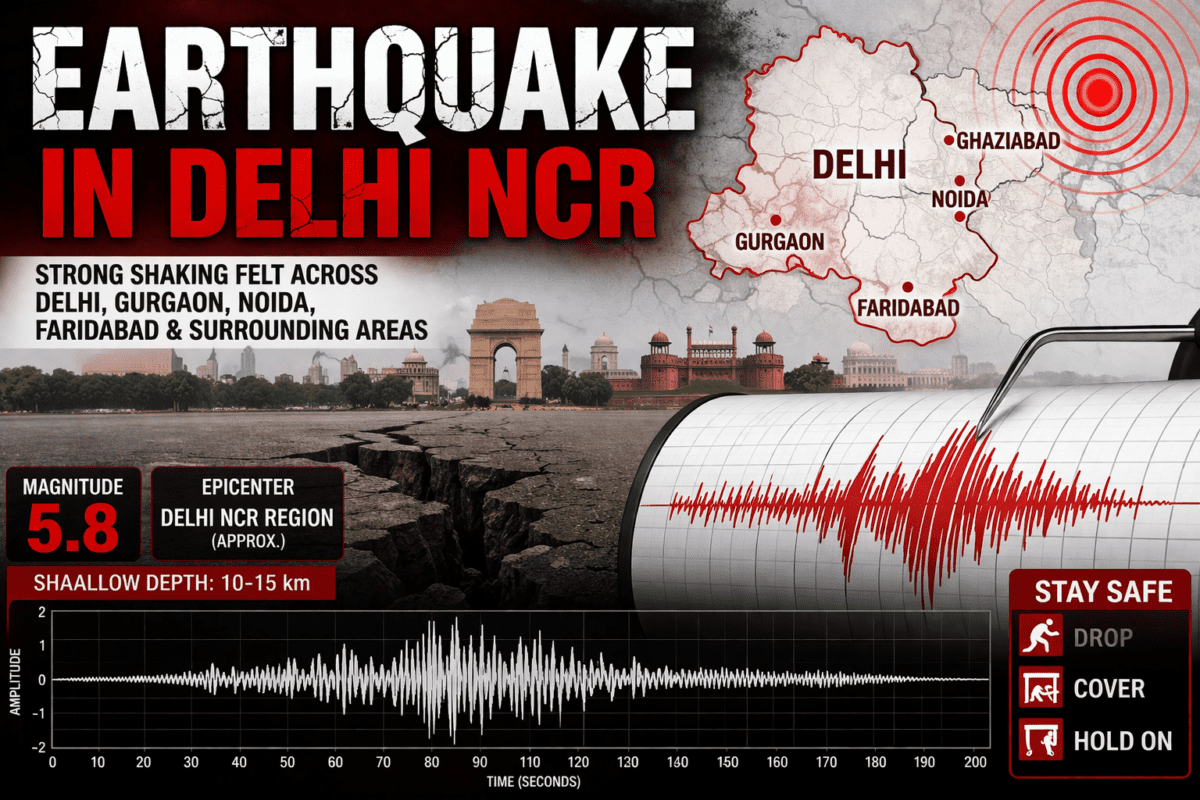


If you were sitting on your couch yesterday or lying in bed scrolling through your phone, you probably felt it—a sudden jolt, ceiling fans swaying, and that immediate urge to check X (formerly Twitter) just to confirm you weren’t imagining things. Yes, a noticeable Delhi NCR Earthquake Yesterday hit the region, sending residents rushing out of high-rise apartments and into the streets. While discussions regarding tremors felt in Delhi Gurgaon today continue to dominate social media feeds, here is a clear breakdown of what happened, where it started, and why our capital region keeps shaking.
TL;DR: Delhi NCR Earthquake Yesterday Fact Sheet
- Affected Areas: Delhi, Gurugram, Noida, Faridabad, and surrounding NCR districts.
- Epicenter Location: Rohtak, Haryana (typical shallow fault line activity).
- Magnitude: Around 4.2 to 4.5 on the Richter Scale.
- Depth: Very shallow (approx. 5–10 km), which is why the surface shaking felt more intense than expected.
- Damage Report: No major structural damage or casualties reported so far.
Delhi NCR Earthquake Yesterday: Analyzing the Epicenter
According to the latest National Center for Seismology updates, the Delhi NCR Earthquake Yesterday originated near Rohtak, Haryana—an area known for regular low-to-moderate seismic activity. Since Rohtak sits less than 70 kilometers from central Delhi, the seismic waves reached the capital almost immediately, with little energy lost along the way.
What made this tremor feel more unsettling than the recorded earthquake magnitude in Delhi NCR might suggest was its depth. It originated at a shallow depth of roughly 5 kilometers below the surface. Shallow earthquakes tend to produce stronger ground shaking compared to deeper ones, even when the overall magnitude isn’t exceptionally high.
Why Does Delhi NCR Feel So Many Earthquakes?
If you live in the NCR, you’ve probably noticed that earthquakes seem to happen fairly often. That’s not your imagination; there is a clear geological reason behind the frequent seismic activity North India witnesses.
1. The Fault Lines Underneath Us
Delhi sits above several major fault lines, including the Sohna Fault, the Mathura Fault, and the Delhi-Moradabad Fault. When tectonic stress builds up along these weak zones in the earth’s crust, it releases that energy as sudden tremors, much like the Delhi NCR Earthquake Yesterday.
2. High-Risk Seismic Zone
The Bureau of Indian Standards (BIS) divides the country into four seismic zones (II to V). Delhi NCR falls under Seismic Zone IV—classified as a “High Damage Risk Zone.” We’re essentially sitting next door to the Himalayas, where the Indian tectonic plate constantly pushes into the Eurasian plate. That massive continental collision is what drives nearly all seismic activity across the northern belt.
Real-World Impact: Life in High-Rises
The experience of an earthquake varies a great deal depending on where you are. For residents in independent houses in older parts of Delhi, it may have felt like a heavy truck rolling by. But for those living on the 15th or 20th floors of high-rise societies in Gurugram and Noida, the swaying was noticeably amplified.
“I was watching TV when the water in my glass started rippling. Within seconds, the hanging lamps were swinging. Living on the 18th floor, you feel the building move—which is terrifying, but apparently that’s exactly how these structures are built to handle it.” — A resident of Sector 43, Gurugram.
Modern high-rises are built with flexible foundations designed to sway with seismic waves rather than crack under them. It feels alarming, but that flexibility is precisely what keeps the building standing during tremors.
Comparing Recent Tremors in the Region
| Date / Period | Epicenter | Magnitude | Primary Impact Area |
|---|---|---|---|
| Yesterday | Rohtak, Haryana | 4.5 (Approx) | Delhi, Gurugram, Noida |
| November 2023 | Nepal (Jajarkot) | 6.4 | North India (Prolonged tremors) |
| March 2023 | Hindu Kush, Afghanistan | 6.8 | Entire Delhi NCR & Punjab |
| New Year’s Day 2023 | Jhajjar, Haryana | 3.8 | Delhi NCR |
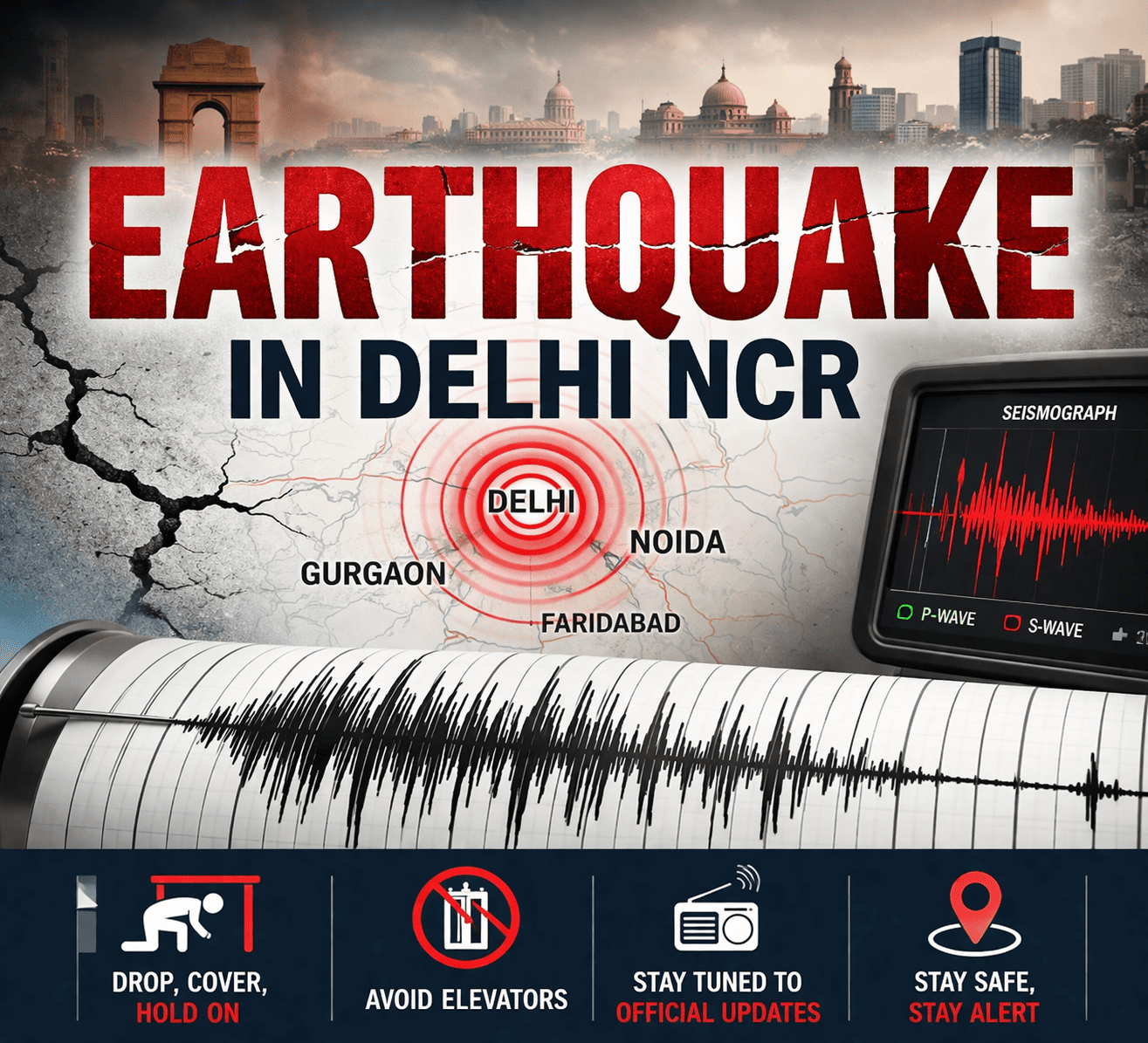
Safety Reminder: During an earthquake, the golden rule still holds—Drop, Cover, and Hold On. Get under a sturdy table or desk, avoid elevators entirely, and if you’re outside, move away from buildings, streetlights, and utility wires.
Frequently Asked Questions (FAQs)
Can earthquakes in Delhi be predicted?
No. Despite significant advances in geology and technology, predicting exactly when and where an earthquake will strike remains impossible. We can only identify which zones carry the most risk.
Are Delhi buildings safe from a major earthquake?
It’s a mixed picture. Newer commercial buildings and high-rise apartments built after the early 2000s generally follow Zone IV seismic codes. Older, densely packed neighborhoods—like parts of Old Delhi and various unauthorized colonies—remain at higher risk if a serious quake were to hit.
Why do earthquakes from Nepal affect Delhi?
Seismic waves travel remarkably well through the alluvial soil of the Indo-Gangetic plain. When a major earthquake strikes the Himalayas—in Nepal or Afghanistan—the energy ripples outward, and Delhi’s soft soil tends to amplify the shaking further.
Conclusion: Living on Shaky Ground
The Delhi NCR Earthquake Yesterday was a reminder, however brief, of the geological reality of living in the region. While minor tremors from local fault lines around Rohtak or Faridabad are mostly harmless, they’re also nature’s way of nudging us to stay prepared. Keep an emergency kit ready, know your building’s evacuation routes, and always choose safety over panic.
Sources:
- National Center for Seismology (NCS) real-time data.
- Bureau of Indian Standards (BIS) Seismic Zoning Map of India.
- The Geological Survey of India reports on the Indo-Gangetic Plain.