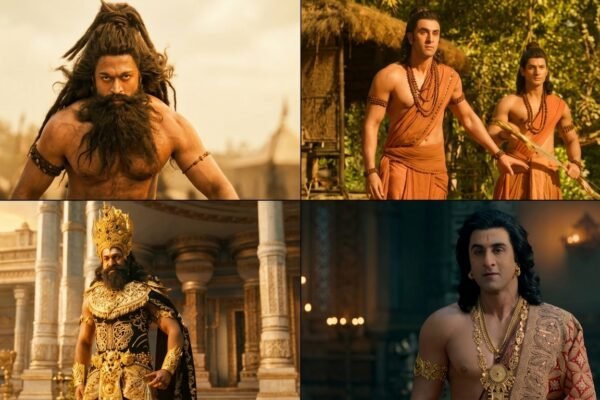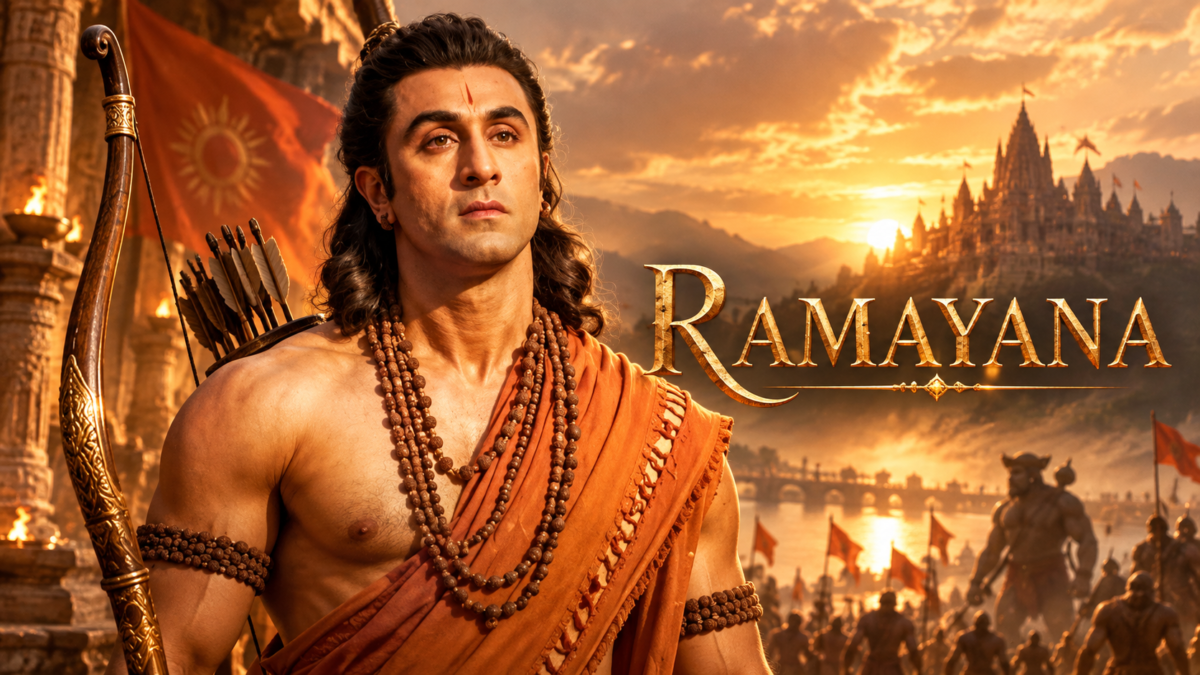
Examining the Ramayana vfx AI bollywood study offers a clear look at how new technology and traditional filmmaking come together in high-profile Indian cinema. Following early footage from Nitesh Tiwari’s upcoming mythological epic Ramayana, online debates flared up over the visual effects, with critics accusing the production of using automated artificial intelligence instead of actual visual effects work.
To answer the criticism head-on, director Nitesh Tiwari, leading man Ranbir Kapoor, and producer Namit Malhotra shared details about the film’s visual effects. As noted by The Times of India, the team emphasized that Ramayana relied on extensive manual 3D design and animation by DNEG. While full AI generation wasn’t used to build the scenery, specific AI programs only helped out with small background physics and multi-language dubbing tasks.
Analyzing the ramayana vfx AI bollywood study momentum shows that understanding this distinction matters as Indian cinema scales up its visual ambitions. Far from replacing artists, AI tools in Ramayana work as editing and localization assistants, helping match lip movements across languages and clean up lighting without altering the real performances of the cast.
Attribute Details Box
| Attribute | Verified Value |
|---|---|
| Film Project | Ramayana (Directed by Nitesh Tiwari; Produced by Namit Malhotra) |
| Primary VFX Studio | DNEG (7-time Academy Award-winning visual effects powerhouse) |
| Lead Performers | Ranbir Kapoor (Lord Ram), Sai Pallavi (Sita) |
| AI Localization Engine | Brahma AI’s Vaani Technology (Neural Lip-Sync and Voice Mapping) |
| Primary AI Use Cases | Multilingual Lip-Syncing, Lighting Consistency, Physics & Skin Texture Refinement |
| Filmmaker Stance | Traditional 3D CGI forms core world-building; AI used as an editing/refinement tool |
| Release Horizon | Part 1 Scheduled for Diwali 2026 Global Release |
Manual CGI Artistry vs. Generative AI: Setting the Record Straight on Ramayana
DNEG’s Oscar-Winning Pipeline and Filmmaker Defense
In tracing the ramayana vfx AI bollywood study visual landscape, when early promotional footage for Ramayana hit the internet, viral commentators quickly labeled the digital visuals as “cheap AI generation.” However, producer Namit Malhotra, who expanded his career from a modest Mumbai garage to heading seven-time Oscar-winning studio DNEG, pushed back against internet nitpicking. Analyzing the Ramayana vfx AI bollywood study production record, in detailed coverage from TheBetterIndia, Malhotra emphasized that DNEG’s global team spent years constructing custom 3D assets, environment maps, and digital lighting rigs specifically for the film.
Director Nitesh Tiwari and star Ranbir Kapoor similarly pointed to the sheer volume of manual labor invested in the project. Instead of using quick AI computer prompts, digital artists spent many months carefully adjusting background details like sky colors, natural lighting, and building styles to create a realistic movie world.
AI-Assisted Physics, Lighting, and Texture Refinement
Modern VFX and AI-assisted workflows are increasingly being used across filmmaking for digital clean-up, facial work, background elements, environment building, and other post-production tasks. Analytics Insight notes that AI can support several stages of the VFX pipeline, while texture, depth, and natural lighting remain essential for making digitally created environments feel convincing.
In the case of Ramayana, available VFX analysis highlights the extensive combination of practical foreground elements, CGI environments, compositing, and carefully matched lighting. The film’s digital environments must reproduce the direction and intensity of light used on the live-action performers so that characters and computer-generated surroundings appear to belong in the same scene. VFX analysis of the trailer also points to challenges involving character scale, believable body movement, texture, and photorealistic integration.
Global Localization: How Brahma AI’s Vaani Achieved Flawless Lip-Sync
Neural Voice Mapping and Cross-Language Facial Dynamics
Looking at Ramayana vfx AI bollywood study technical milestones, one of the key features shown in the Ramayana promotional campaign involved foreign-language audio sync. A major element of ramayana vfx AI bollywood study global localization was preparing the epic for international markets, where the production team used Brahma AI’s Vaani technology for the film’s English and regional trailers.
As detailed by Sai Pallavi Canvas, Vaani uses neural voice mapping to analyze an actor’s vocal patterns and facial movements. The software then subtly adjusts the lip movements of actors like Ranbir Kapoor and Sai Pallavi to match translated dialogue. This removes the distracting misalignments common in traditional dubbing while keeping the actors’ original emotional performances intact.
The Economic and Creative Reality of AI in Bollywood Cinema
Balancing Cost Efficiency with Artistic Integrity in 2026
When examining ramayana vfx AI bollywood study industry trends, using AI in Ramayana reflects a broader trend across Indian cinema. According to ramayana vfx AI bollywood study trade data, reporting from ET AI shows that Indian studios are adopting digital tools to manage rising production costs and speed up delivery schedules for multi-language releases.
Still, the movie business sees a big gap between premium hybrid films and total AI shortcuts. According to a report by Implicator.ai, movies made entirely by artificial intelligence receive terrible ratings from audiences, averaging only 1.4 on IMDb, which shows people immediately notice when real human artistry is missing. By using AI merely as assistance alongside top-tier CGI, Ramayana provides a smart blueprint for upcoming mythological movies in India.
Frequently Asked Questions
Did Nitesh Tiwari’s Ramayana use AI instead of traditional VFX?
No. Producer Namit Malhotra, director Nitesh Tiwari, and actor Ranbir Kapoor confirmed that Ramayana relies on traditional high-end 3D animation and CGI produced by DNEG, using AI only for targeted tasks like lip-sync localization and lighting physics.
What is Brahma AI’s Vaani technology used in Ramayana?
Vaani is an AI neural voice and facial mapping engine that adjusts an actor’s lip movements in foreign language dubs to match translated audio seamlessly without altering their facial performance.
Who is handling the primary visual effects for the Ramayana movie?
Seven-time Oscar-winning studio DNEG, led by CEO Namit Malhotra, is steering the primary visual effects, 3D world-building, and post-production pipeline.
What role did the ramayana vfx AI bollywood study play in understanding tech adoption?
In context of the Ramayana vfx AI bollywood study, post-production algorithms assist digital artists by calculating realistic light bounces, skin subsurface textures, and complex cloth or hair physics across massive digital environments.
References
- “‘Ramayana’: Ranbir Kapoor, Nitesh Tiwari and Namit Malhotra respond to VFX criticism: ‘People think someone just used AI'”. The Times of India. 14 June 2026. Retrieved 15 September 2026.
- “Brahma AI’s Vaani Technology Explained: How Ramayana Achieved Perfect Lip-Sync in the English Trailer”. Sai Pallavi Canvas. 18 June 2026. Retrieved 15 September 2026.
- “How VFX and AI Are Rebuilding India’s Modern Mythological Cinema”. Analytics Insight. 22 May 2026. Retrieved 15 September 2026.
- “From a tiny Mumbai garage to leading 7-time Oscar-winning VFX studio DNEG: Namit Malhotra’s Ramayana journey”. TheBetterIndia. 10 May 2026. Retrieved 15 September 2026.
- “Revolutionizing Bollywood: How Indian Studios are Harnessing AI in Film Production”. ET AI. 28 May 2026. Retrieved 15 September 2026.
- “Bollywood AI Films Score 1.4 on IMDb, Millions Watch”. Implicator.ai. 5 June 2026. Retrieved 15 September 2026.
Also Read
- Sardar 2 Review: Great Action and High Production Values Let Down by a Preachy Script
- The Uprising Andrew Garfield Movie: Why Focus Features Added Robin Hood to the Medieval Dram
- The Standalone Fallacy: Why an Andrew Garfield Spider-Man Return Will Not Lead to a Solo Sequel
- Venice Film Festival 2026 Ovations: Penélope Cruz, Javier Bardem, and Hirokazu Kore-eda Lead Celebrated Premieres
- Shah Rukh Khan Addresses King Release Clash Against Avengers: Doomsday and Dune 3: “Hum Toh Center Ki Tasty Tikki Hain”