Last Updated: 3 July 2026, 1:00 PM IST | Fact Checked By: SpotlightersPost Editorial Team
Popular culture has spent centuries wrapping the legend of Sherwood Forest’s famous outlaw in bright green tights, cheerful melodies, and romanticised heroics. From Errol Flynn’s swashbuckling charm to Disney’s animated fox, the story of robbing the rich to give to the poor has become a comfortable fable of moral clarity.
writer-director Michael Sarnoski’s revisionist film completely shatters these pleasant myths, dragging the folklore into the cold, harsh muck of 13th-century reality. For audiences who have watched this haunting character study, discussing The Death of Robin Hood ending explained has become essential to unlocking the movie’s complex themes of guilt, historical distortion, and quiet redemption. Exploring The Death of Robin Hood ending explanation helps us understand the tragic cost of violence.
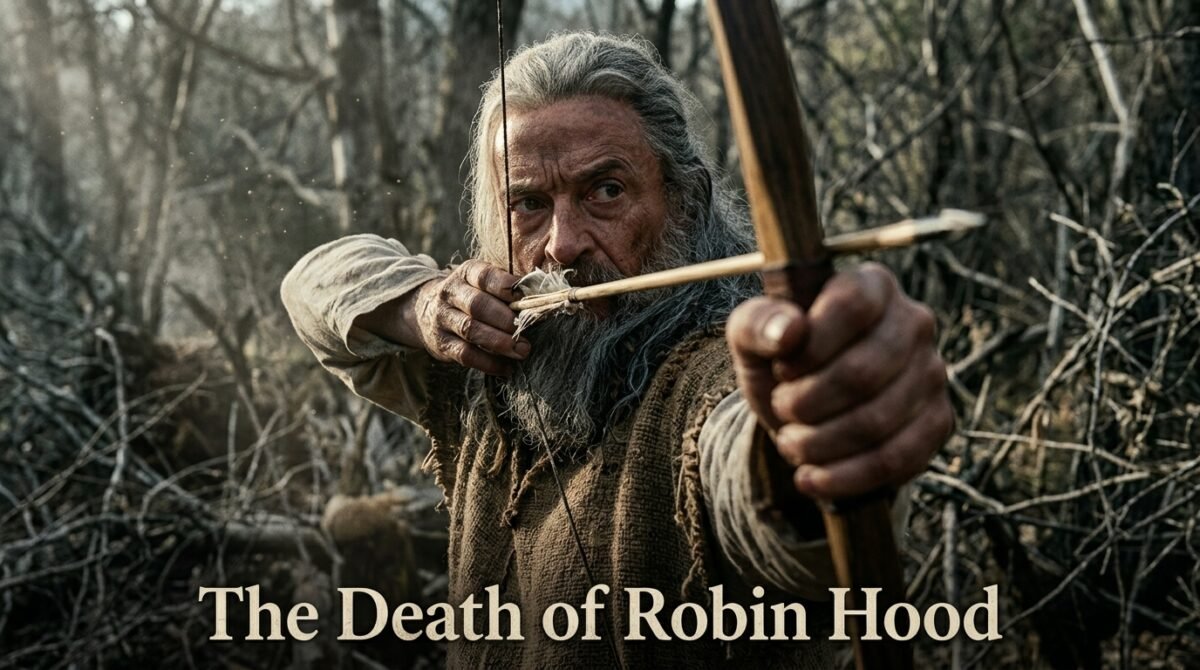
Unlike traditional cinematic adaptations, the Michael Sarnoski A24 drama shows a broken, feral marauder who has spent a lifetime executing brutal crimes. The film pulls apart the classic folk hero to show how a violent man must face the ghosts of his own making once his legendary reputation is stripped away.
To see the true meaning of this sad ending, we have to look at Robin’s final moments in the quiet priory and how his surrender finally breaks the endless cycle of revenge. Understanding The Death of Robin Hood ending explanation reveals why this surrender was necessary.
Quick Answer (Featured Snippet)
TL;DR: The Death of Robin Hood ending explained reveals that the aging outlaw commits a consensual, quiet assisted suicide at the priory. Recognizing that his survival would perpetually expose the peaceful sanctuary to his seeking enemies, Robin prevents Sister Brigid from bandaging his bloodletting wound. He bleeds to death while telling a comforting, heroic lie to young Margaret to shield her from his violent reality. This dramatic sacrifice forms the emotional core of The Death of Robin Hood ending explained.
Inverting the Folklore: Sarnoski’s Revisionist Roots
To understand director Michael Sarnoski’s vision, you have to look past typical Hollywood superhero movies. His story is actually based on a 17th-century poem called “Robin Hood’s Death.” In that old legend, an elderly Robin Hood goes to a priory for a medical treatment called bloodletting, but a cruel prioress betrays him and lets him bleed to death in bed.
Sarnoski took that sad, quiet death and completely flipped the script. Instead of making the prioress a villain, the movie turns her into a kind, patient caregiver who is looking after a violent monster filled with regret.
“A bloody, brilliant reckoning.” (SF Chronicle) Experience Michael Sarnoski’s THE DEATH OF ROBIN HOOD starring Hugh Jackman, Jodie Comer, and Bill Skarsgård – now playing in theaters everywhere. pic.twitter.com/ozMTXE4Io3
— A24 (@A24) June 19, 2026
The director’s approach was also shaped by the medieval Scotichronicon chronicle, which described the legendary outlaw not as a champion of the poor, but as a “senseless murderer”. By grounding the character in these harsh, historically realistic accounts, the film strips away the romanticised nobility of the bandit. In the opening moments of the Michael Sarnoski A24 drama, we meet Robin in the throes of a brutal, cold-blooded existence on the peatlands of Northern Ireland.
He admits that the famous stories about him are completely made up. They were just lies used to trick young, innocent kids into joining his group to help him kill and steal. The movie’s focus on mixing beautiful, holy things with dark, violent things was heavily inspired by Ingmar Bergman’s 1960 classic film The Virgin Spring. It shows how pure spiritual beauty can exist right alongside brutal violence. Any study of The Death of Robin Hood ending explanation must account for these heavy Bergmanesque themes.
Auteur Visual Design & Soundscapes: Aspect Ratios and Folk Score
The stark contrast between Robin’s brutal past and his peaceful final days is beautifully conveyed through the film’s visual and auditory structure. he movie was filmed using real 35mm film in the windy countryside of Northern Ireland. It purposely changes the screen shape (aspect ratio) throughout the story to show how the main character’s feelings and mindset change.
During the muddy, low-light wilderness battles of the first act, cinematographer Pat Scola employs a wide 2.39:1 aspect ratio. The color palette is heavily desaturated, rendering a world of cold mud, hard stone, and swirling snow. To verify Scola’s cinematography techniques, readers can consult the official RogerEbert review by Brandon David Wilson, which highlights the visual transitions. These visual shifts are crucial to analyzing The Death of Robin Hood ending explanation
The Death of Robin Hood | Hugh Jackman, Jodie Comer | A24 @PVRPictures @A24
When Robin hides at the island priory, the screen size shrinks to a narrow 1.66:1 aspect ratio. This makes the movie feel tight and trapped, forcing the audience to sit right there in the small bedroom as Robin deals with his failing body and guilty soul. The sounds are just as detailed, using close-up, satisfying noises like rustling grass, a creaking bowstring, and blood quietly dripping into metal bowls. This sensory constriction is a visual setup for The Death of Robin Hood ending explanation.
This visceral atmosphere is elevated by the Jim Ghedi original soundtrack, released by A24 Music on 23 June 2026. Sarnoski was particularly inspired to invite Ghedi to compose the entire score after listening to the Sheffield singer-songwriter’s older acoustic track, What Will Become of England. The visceral, elegiac score relies on clattering march percussion and droning strings in tracks like Twa Corbies, alongside delicate harps and woodwinds in I Owe This Life To You, perfectly capturing the unromanticised despair of 13th-century England. To explore Ghedi’s musical journey and read track-by-track reviews, see the Song Bar album review of Jim Ghedi’s soundtrack. Ghedi’s score acts as the perfect structural frame for The Death of Robin Hood ending explanation.
The Weathered Metamorphosis: Hugh Jackman’s Striking Metamorphosis
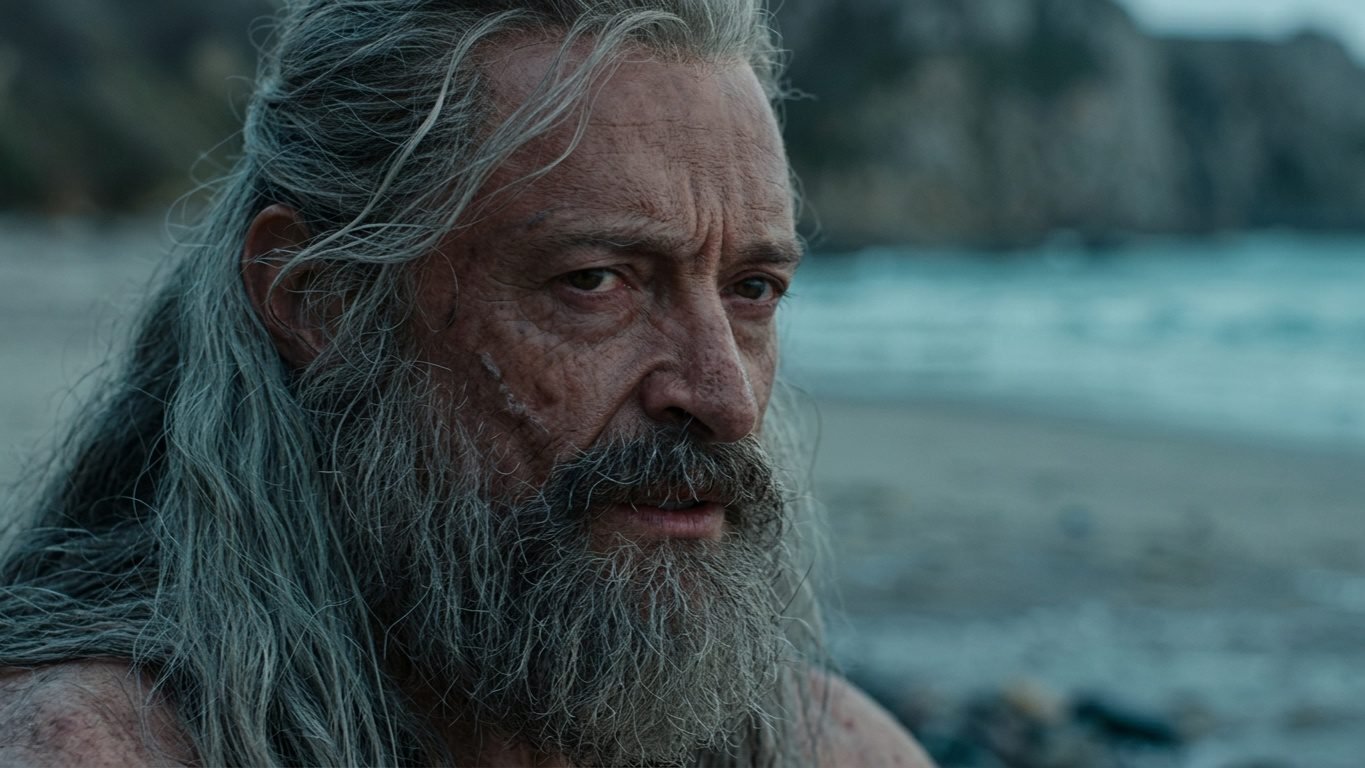
The physical deconstruction of the folk hero is anchored by a remarkable, aged transformation. To play the battle-worn outlaw, Hugh Jackman underwent a dramatic visual makeover, appearing mud-streaked, white-haired, and heavily weathered. The look was so striking that co-star Jodie Comer admitted she did not recognise Jackman when she first saw him on the makeup bus. The shock of his appearance is a recurring theme among viewers discussing The Death of Robin Hood ending explained.
The Death of Robin Hood | Hugh Jackman, Jodie Comer | A24 @PVRPictures @A24
Because of tight filming schedules, Jackman did not have sufficient time to grow a natural beard, making his weathered “medieval Santa Claus” beard a highly realistic fake applied by hairstylist Sean Flanigan and makeup artist Pamela S. Westmore.
The collaboration carries a prestigious historical connection: Westmore’s ancestors were responsible for styling legendary Hollywood Robin Hoods across generations, including Errol Flynn and Douglas Fairbanks. This rich family heritage helped define the visual legacy of the folk hero while allowing Jackman to deliver what critics have hailed as a masterful, career-best performance.
His raw physical look highlights why The Death of Robin Hood ending explanation resonates so deeply with viewers. To read Jodie Comer’s reactions to this visual makeover, view the ANI News report on Hugh Jackman’s transformation. Despite the grim theme, the actors recalled a light and collaborative atmosphere on set in Ireland.
Ending Explained: The Blood Debt Climax and the Paradox of the Lie
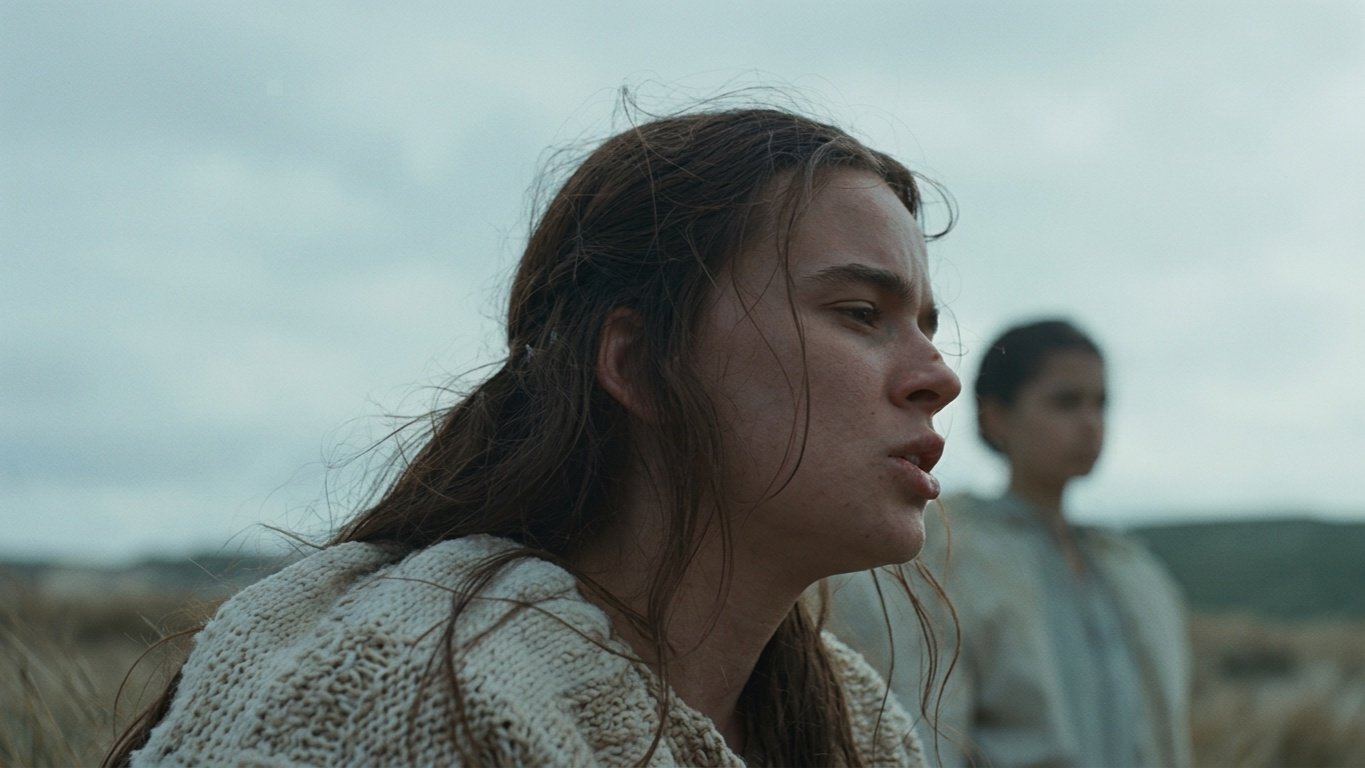
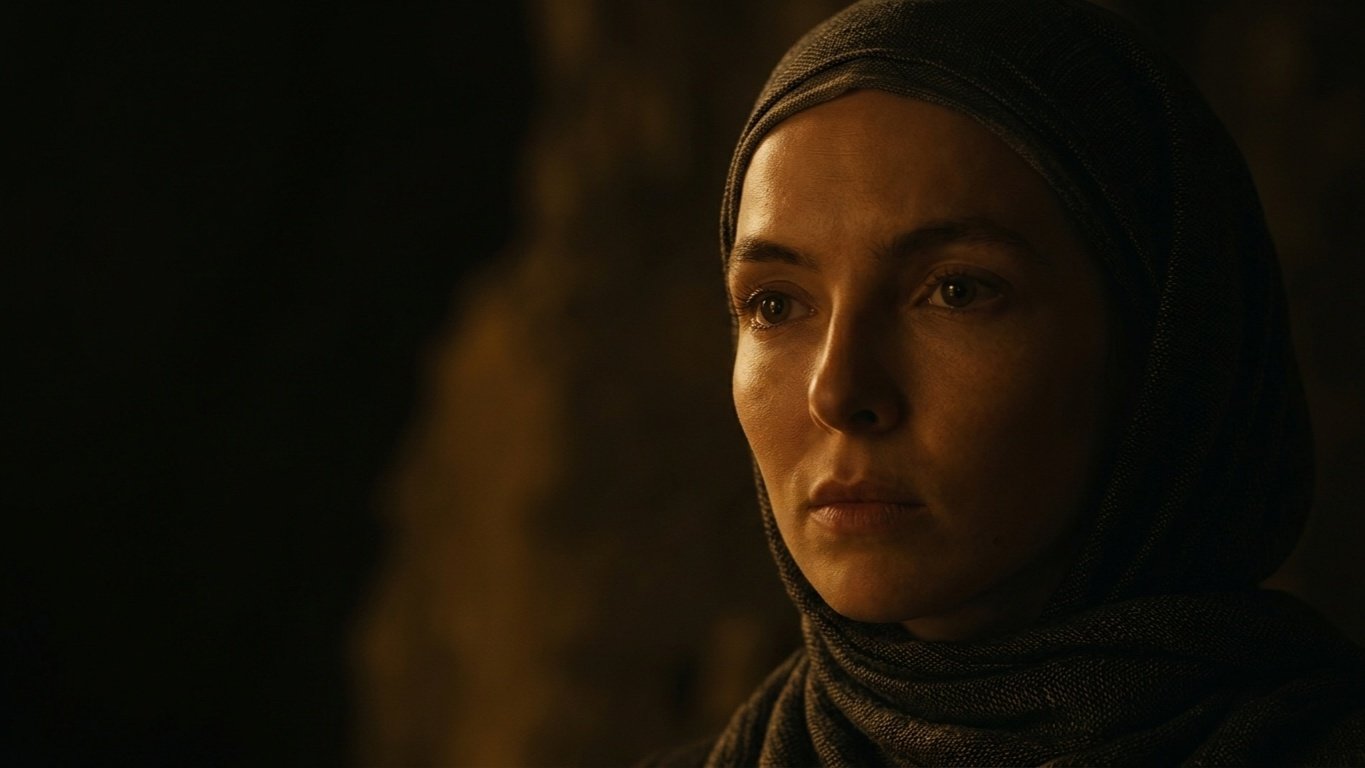
The narrative of the Michael Sarnoski A24 drama reaches its devastating climax during the final thirty minutes of the film. Throughout his rehabilitation under the care of Sister Brigid Jodie Comer, Robin’s coldness slowly melts away. He steps into a protective, paternal role for young, non-verbal Margaret (Faith Delaney), teaching her to skin rabbits and craft a bow. He also faces the living consequences of his past: a young survivor named Godwyn (Noah Jupe) tracks him to the island seeking a “blood debt” for a farm massacre, and a bandaged leper named Tiesto (Murray Bartlett) reveals himself as a victim Robin mutilated decades prior. For an official breakdown of the literary history of this ending, see the Wikipedia entry on the historical Robin Hood’s Death ballad. This historical context adds deep value to The Death of Robin Hood ending explanation.
The Death of Robin Hood | Hugh Jackman, Jodie Comer | A24 @PVRPictures @A24
Instead of staying violent, Robin chooses to show mercy. He convinces Godwyn to go back home, warning him that living for revenge will only leave him feeling empty and ruined inside. Tiesto also shows Robin great kindness by forgiving him for the terrible things he did in the past.
Unable to live with the hypocrisy of a peaceful sanctuary, Robin confesses his darkest secret to Sister Brigid: years ago, he was the bandit who locked her husband and children inside their home and burned them alive. This horrifying confession is the pivotal moment that guides The Death of Robin Hood ending explanation
When Robin requests his scheduled bloodletting treatment to manage his pain, Brigid cuts his vein, struggling with an urge to let him bleed to death in retribution.
she ultimately steps back from the abyss of revenge, realizing that killing him would only perpetuate the endless, generational violence. She moves to bandage his wound to preserve her own moral light. This decision to break the cycle of bloodletting is central to The Death of Robin Hood ending explanation
THE DEATH OF ROBIN HOOD is one of the best films of 2026. Michael Sarnoski has made another tender meditation on mortality, vengeance, & redemption. Hugh Jackman plays Robin like King Lear, & it’s brilliant. Pat Scola’s lens captures the beauty amidst the bleakness. Magnificent. pic.twitter.com/OTiBgcElhe
— Bill Bria (@billbria) June 11, 2026
In the film’s most crucial thematic shift, Robin physically stops her hand. He refuses to be saved, transforming his death into a consensual, quiet assisted suicide. Robin understands that he is fundamentally a creature of violence; as long as he breathes, the relatives of his victims will hunt him, bringing danger to the priory’s innocent orphans and children.
By choosing to bleed out quietly, he claims ownership of his death to protect the ones he has grown to care for. This choice of assisted suicide is the emotional core of The Death of Robin Hood ending explained.
To protect young Margaret from seeing him die, Robin hides his bleeding arm under the blankets, putting up with the pain to keep her safe. He hands her his bow and tells her to shoot an arrow out the window. He then teaches her one last lesson: shooting an arrow isn’t just about letting go of the string—it is about letting go of all the inner pain and guilt you are carrying. This lesson is a key thematic key to The Death of Robin Hood ending explained.
As Margaret releases the arrow, Robin tells her a comforting, heroic lie about her father, ensuring she remembers Edward as a merry adventurer rather than a violent criminal. Robin takes his final breath at the exact moment the projectile flies into the sky.
This is the ultimate “paradox of the lie”: while the film spent two hours stripping away the romanticised fables of Robin Hood, it concludes by showing that civilization requires the comfort of noble legends to survive the harshness of reality. To discuss these final moments with other movie enthusiasts, you can view the r/movies official discussion thread on The Death of Robin Hood. This paradox remains the defining message of The Death of Robin Hood ending explained.
Real-World Movie Specifications Table
| Production & Technical Metrics | Verified Film Specification Details |
|---|---|
| Director & Screenplay Writer | Michael Sarnoski |
| Production Budget | Modest $20 Million estimate |
| Cinematography & Stock | Patrick Scola (Shot entirely on 35mm film) |
| Aspect Ratio Transitions | 2.39:1 / 2.4:1 (Act I Wilderness) shrinking to 1.66:1 (Act II & III Priory) |
| Filming Location Vistas | Rugged, wind-swept landscapes of Northern Ireland |
| Theatrical Run Time | 123 Minutes |
| Motion Picture Rating | Rated R by the MPA for strong bloody violence |
| US Box Office Debut | Grossed $1.11 Million domestically on Juneteenth Friday (19 June 2026) |
| UK Theatrical Release Date | Scheduled for nationwide release on 3 September 2026 |
| Soundtrack Publisher | Original score composed by Jim Ghedi; released by A24 Music |
What you want to know (FAQs)
1. What is the meaning behind the ending of the movie?
The climax depicts Robin Hood committing consensual assisted suicide. This self-sacrifice is the most debated part of The Death of Robin Hood ending explanation. Realizing that his survival will inevitably bring violent vengeance-seekers to the peaceful priory, he stops Sister Brigid from bandaging his wound. He bleeds out quietly to protect the innocent orphans and children from his past blood debts.
2. Why does the aspect ratio shift during the film?
First, The director uses a very wide screen to show the vast, cold outdoors of Northern Ireland. But when Robin goes inside to hide, the screen gets much narrower. This makes the space feel tight and trapped, perfectly matching how Robin feels on the inside as he faces his guilt and past mistakes.
3. Is the A24 film based on a true historical text?
Yes, The Death of Robin Hood ending explanation is heavily inspired by a 17th-century folklore ballad titled “Robin Hood’s Death” (Child Ballad No. 120). In the original story, a family member purposely lets an older Robin bleed to death. The director also got ideas from an old history book that called Robin a mindless killer instead of a hero.
4. Why did Sister Brigid decide to forgive Robin Hood in the end?
AAfter Robin admits to burning her husband and children alive, Brigid realizes that killing him for revenge will only keep the endless cycle of violence going. By choosing mercy, she stays true to her own goodness and finally breaks the chain of killing. This act of forgiveness is highly significant in The Death of Robin Hood ending explanation
5. What is the significance of the final arrow fired by Little Margaret?
Robin tells Margaret that shooting an arrow isn’t just about letting go of the string—it is really about letting go of your inner pain and guilt. As the arrow flies into the sky, Robin takes his last breath, showing that his soul is finally free from his damaged, broken body. This scene of release is a key visual metaphor in The Death of Robin Hood ending.
6. Did Hugh Jackman grow a real beard for his transformation in the movie?
No. Because of tight production schedules, Hugh Jackman did not have sufficient time to grow a natural beard. Hairstylist Sean Flanigan and makeup artist Pamela S. Westmore applied a highly realistic fake beard to complete his weathered, medieval look.
7. Who composed the soundtrack for The Death of Robin Hood, and what is its style?
The score was composed by Sheffield singer-songwriter Jim Ghedi. It is a darkly visceral, elegiac folk-based soundtrack utilizing droning strings, clattering march percussion, harps, and woodwinds, released by A24 Music.
8. How does Sarnoski’s Robin Hood differ from classic Hollywood versions?
Unlike the charming heroes from older movies, Sarnoski’s Robin is a wild, ruthless killer. He admits that “stealing from the rich to give to the poor” was just a made-up lie to hide his violent crimes.
9. Why did the film generate a “pro-rich” debate among online viewers?
Some critics claimed the film was “pro-rich” because it deconstructs Robin’s legendary thefts. but r/movies users clarified that the film is not pro-rich; instead, it highlights that real-life legends are rarely black-and-white, and that Robin lied about his noble deeds in his final moments solely to comfort a dying child. This debate highlights the depth of The Death of Robin Hood ending explanation.
10. Who plays the Leper in the film, and what is his hidden connection to Robin?
The Leper, named Tiesto, is played by Murray Bartlett. When he removes his bandages, he reveals a severed ear, exposing himself as a victim Robin mutilated decades prior. Tiesto chooses to forgive Robin, offering him a quiet, peaceful sanctuary at the priory. This act of grace sets the stage for The Death of Robin Hood ending explanation.
Final Verdict: A Grim Masterpiece of Demystification
Michael Sarnoski’s The Death of Robin Hood is a fresh, important take on a classic story. Instead of the happy fairy tales of Sherwood Forest, it shows the damaged mind of a killer, making you think deeply about life, death, and finding peace. With great acting from Hugh Jackman and Jodie Comer, beautiful camera work, and intense music, the movie makes us rethink the famous legends we thought we knew.
It reminds us that while the reality of our past is often caked in blood and mud, the stories we tell can serve as a vital source of hope and humanity in a cold, confusing world. Indeed, The Death of Robin Hood ending explanation shows the staggering cost of creating a legend. By dismantling the legend piece by piece, The Death of Robin Hood ending explanation achieves something far more profound. This is the final takeaway of The Death of Robin Hood ending explanation.
Also Read:
- Baahubali The Eternal War Animated Movie Release Date and Cast
- Kaleen Bhaiya Returns! Everything We Know About the Mirzapur Movie (Cast, Release Date & Timeline)
- Alliance Reality Show: Full Contestant List & Twists Revealed!
- Next-Gen Icon: How Vedang Raina Swiped Right on Bollywood Stardom
- The Wait Feels Longer Because Yash Isn’t Just Releasing A Film, He’s Returning To An Empire
- Under Fire: Why the Bold Visuals of Yash’s ‘Toxic’ Promo Triggered a Shocking Backlash
- Fast Cash, Faster Crashes: Your Ultimate Preview of Rajkummar Rao and Keerthy Suresh’s Startup Thriller Raftaar Movie.
Image Credits & Disclaimer: Image Credits: Promotional stills, Express Archives, and social media screenshots are the property of their respective owners and production houses. Used under Fair Use for editorial review and informational purposes. Disclaimer: Behind-the-scenes details, real estate valuations, and official statements are based on verified news reports. SpotlightersPost is not affiliated with the individuals or organizations mentioned.