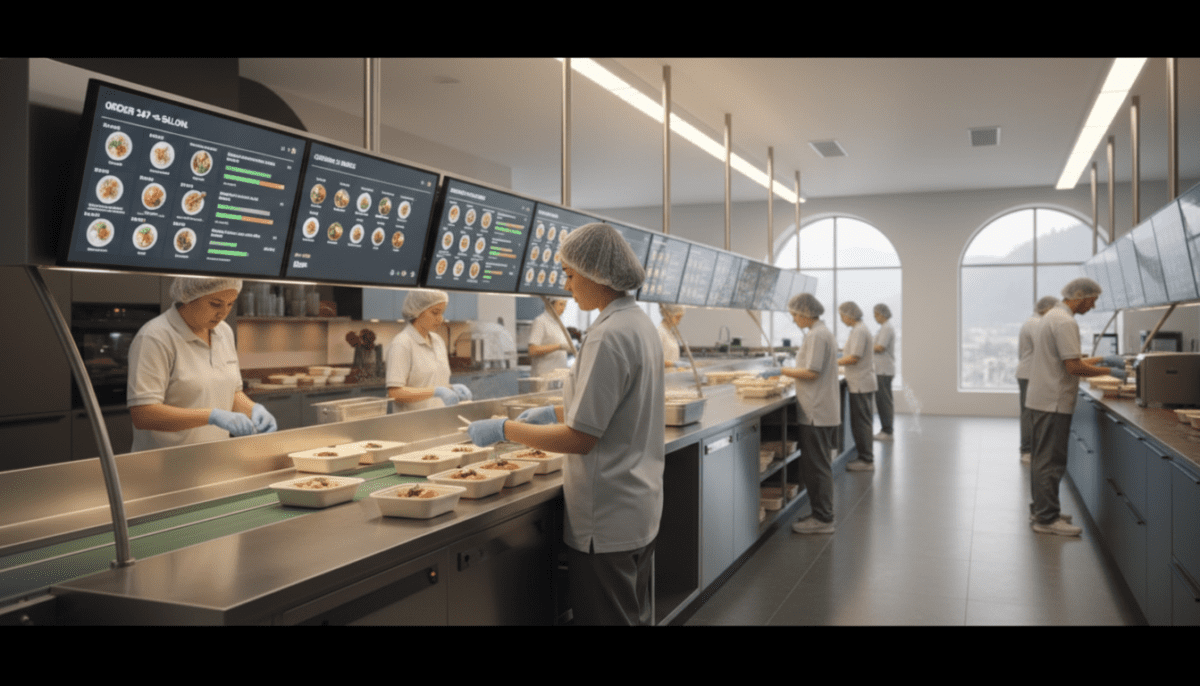
Have you ever ordered a mouth-watering gourmet burger on a delivery app, only to realize the restaurant doesn’t actually exist on a physical map? You are witnessing the absolute forefront of modern gastronomic entrepreneurship. A cloud kitchen business is a highly optimized, commercial food production facility purpose-built exclusively for fulfilling online delivery orders, intentionally eliminating physical dining rooms and front-of-house staff. By operating entirely online, this virtual restaurant model drastically cuts overhead costs and allows ambitious entrepreneurs to rapidly capitalize on evolving food industry trends and consumer behaviors.
The traditional brick-and-mortar restaurant model is currently facing unprecedented challenges. Between skyrocketing commercial real estate leases, unpredictable foot traffic, and chronic staffing shortages, launching a standard dine-in establishment has never been riskier. This is exactly where the cloud kitchen business steps in to democratize the culinary space. By embracing a digital-first approach, chefs and investors can bypass traditional barriers to entry, rapidly prototype entirely new menus, and serve a massive radius of hungry customers directly through third-party delivery aggregators. In this comprehensive guide, we are going to break down the mechanics, the strategies, and the operational secrets behind building a highly lucrative delivery-only restaurants empire.
TL;DR: Quick Summary
- Eliminated Overhead: This delivery-first model removes the need for expensive retail storefronts, waitstaff, and aesthetic interior design, drastically increasing profit margins within the food industry.
- Multiple Brands, One Roof: Operators can run several different virtual restaurant concepts (e.g., a sushi brand and a taco brand) from the exact same physical kitchen space.
- Data-Driven Menus: The delivery-only restaurants model allows owners to instantly tweak menus, adjust pricing, and run promotions based on real-time consumer data.
- Rapid Scalability: Without the burden of building out physical dining rooms, expanding a ghost kitchens operation into new neighborhoods or cities takes a fraction of the time.
- Tech Integration: Success in a ghost kitchen setup relies heavily on automated Kitchen Display Systems (KDS) and seamless API integrations with platforms like UberEats, DoorDash, and Deliveroo.
What Is a Cloud Kitchen Business?
To fully grasp the magnitude of this shift in hospitality, we must look closely at the architectural and operational design of these facilities. This operational model—often used interchangeably with terms like ghost kitchens or dark kitchens—is essentially a centralized cooking hub. Unlike a standard restaurant that relies on heavy foot traffic and street visibility, these kitchens are frequently located in low-rent, high-density industrial or commercial zones. Their absolute sole purpose is to receive digital orders, prepare the food with maximum efficiency, and hand the packaged meals over to a fleet of delivery drivers.
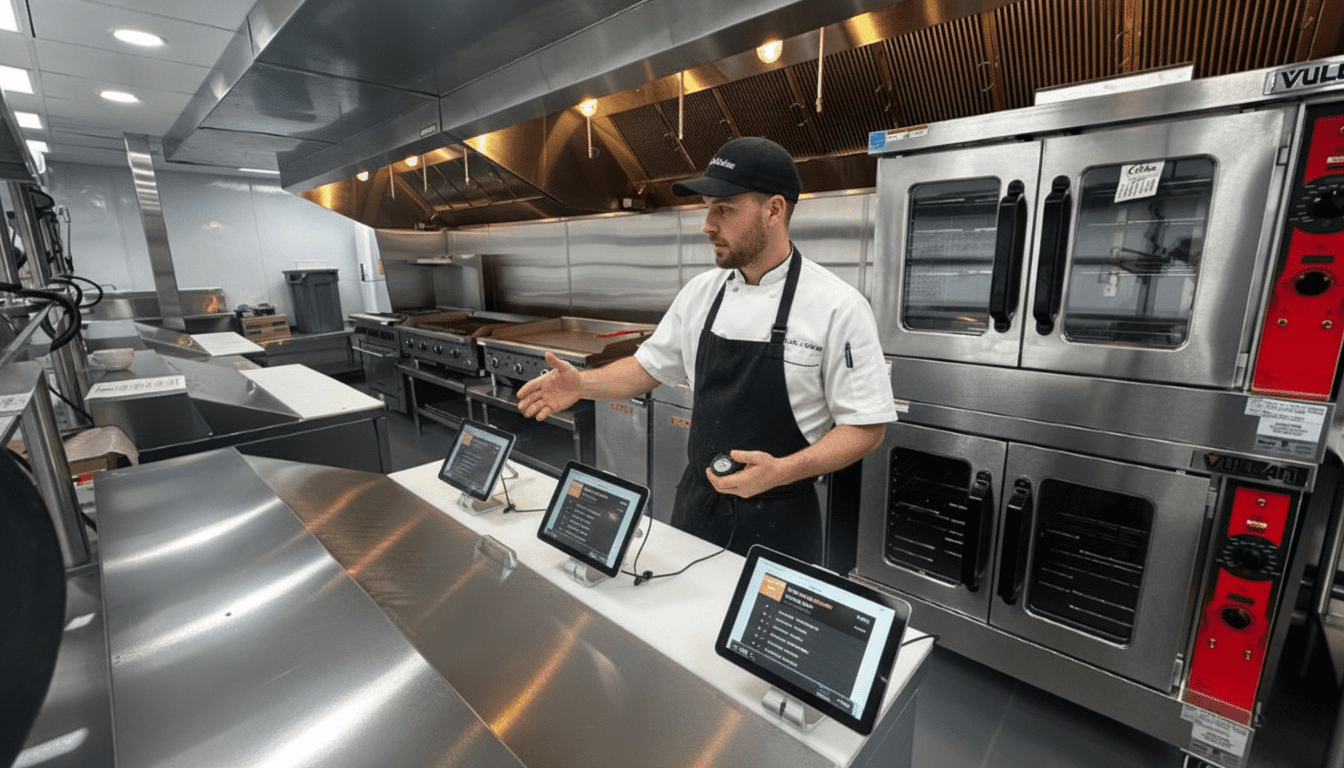
Inside a typical dark kitchen, you will not find host stands, ambient lighting, or public restrooms. Instead, you will find a labyrinth of stainless steel prep stations, high-capacity commercial ovens, and an array of tablets pinging with incoming orders. This hyper-focused environment strips away the hospitality aspect of the restaurant industry and replaces it with pure, unadulterated logistics and culinary production. For an entrepreneur, this means every single square foot of leased space in their virtual facility is dedicated exclusively to revenue-generating activity.
When Did the Virtual Restaurant Model Disrupt Food Industry Trends?
While the concept of food delivery is far from new, the specific, highly structured virtual restaurant ecosystem began to truly gain traction in the late 2010s, driven by the massive proliferation of smartphone delivery applications. However, the global events of 2020 acted as an unprecedented catalyst. When traditional dining rooms were forcibly closed, established chefs and massive fast-food conglomerates alike scrambled to keep their revenue streams alive. They quickly realized that they could rent space in existing ghost kitchens to maintain output without the crushing overhead of their empty dining halls.
Today, as we navigate through 2026, the landscape has entirely matured. The cloud kitchen business is no longer a temporary survival tactic; it is the dominant, preferred launch pad for culinary startups. Modern food industry trends clearly show that consumers now prioritize speed, massive variety, and extreme convenience over the traditional sit-down dining experience for their everyday meals. Millennials and Gen Z, in particular, treat food delivery as a standard, non-negotiable utility rather than an occasional luxury. This permanent shift in consumer behavior has solidified delivery-only restaurants as the most resilient business model in the modern culinary sector.
How Does a Delivery-Only Restaurant Actually Work?
The operational flow of a cloud kitchen business is a masterclass in technological and culinary synchronization. The entire process begins the exact millisecond a customer taps “order” on a consumer-facing delivery app. This digital ticket is instantly routed through an aggregator software platform straight into the virtual restaurant facility’s centralized Kitchen Display System (KDS).
- Order Routing: The KDS immediately breaks down the order, sending specific tasks to different stations (e.g., the grill station gets the burger ticket, the fry station gets the side order ticket) within the cloud kitchen business.
- Synchronized Preparation: Because there are no waiters to manage, the kitchen staff functions like a highly-tuned assembly line. The virtual restaurant menu is intentionally engineered for speed, utilizing ingredients that cook quickly and travel incredibly well.
- Packaging & Handoff: Once the meal is cooked, it moves to an expediting station where it is packed into custom, heat-retaining, tamper-evident packaging designed for delivery-only restaurants.
- Driver Dispatch: The software simultaneously pings the delivery driver, perfectly timing their arrival with the completion of the meal. The driver simply walks up to a dedicated dispatch window of the cloud kitchen business, scans a QR code, grabs the sealed bag, and leaves.
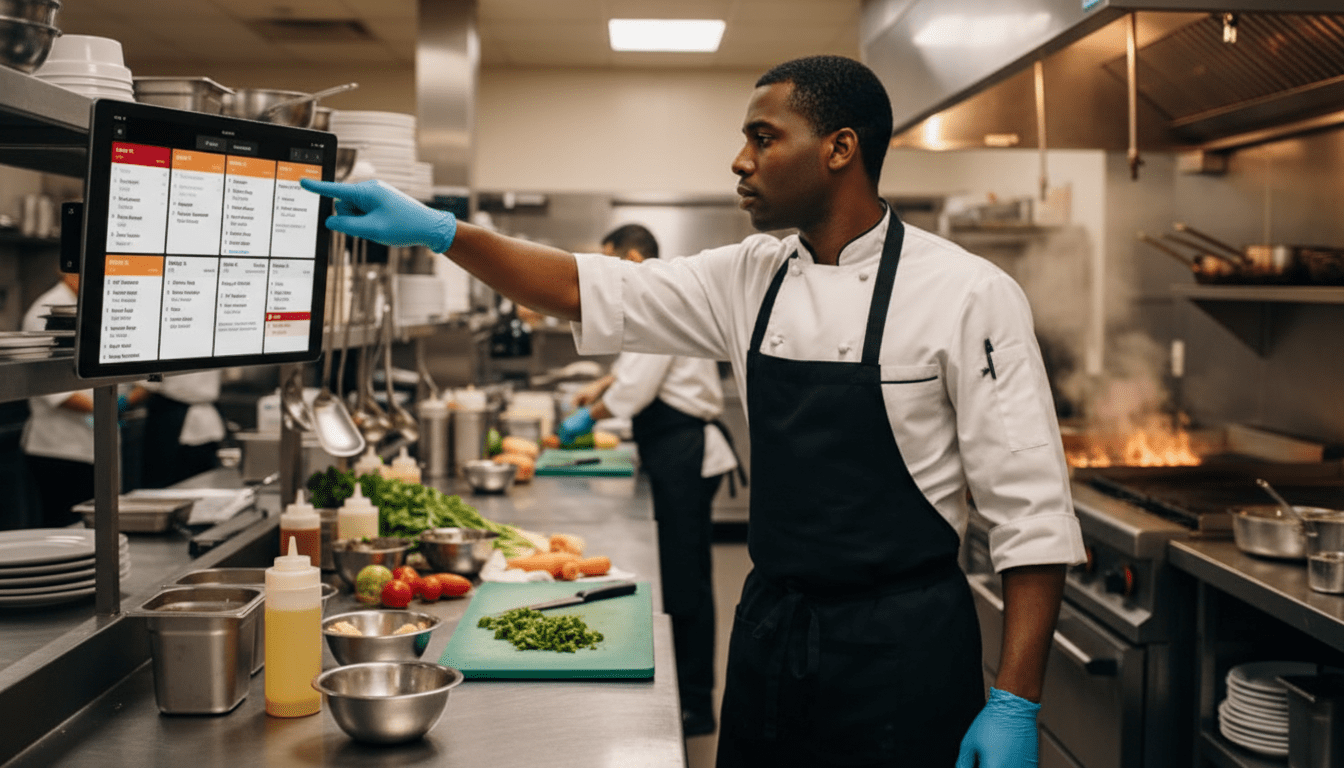
This entire sequence operates with ruthless efficiency, allowing a single cloud kitchen business to output hundreds of orders per hour with a fraction of the staff required by a traditional restaurant.
Who Is Investing in Ghost Kitchens?
The barrier to entry for a cloud kitchen business is remarkably low compared to legacy hospitality models, which has attracted a incredibly diverse range of operators. First, you have ambitious young chefs who possess brilliant culinary concepts but lack the massive capital required to secure a prime downtown lease. For them, a virtual restaurant is the perfect, low-risk testing ground.
Second, massive multinational restaurant conglomerates are heavily investing in ghost kitchens to aggressively expand their delivery radius without building new flagship stores. Finally, astute tech investors and real estate developers are buying up massive, abandoned warehouses and transforming them into “kitchen hotels.” They then lease out these fully-equipped micro-kitchens to independent operators, providing the essential infrastructure, plumbing, and tech stacks required to run a cloud kitchen business in exchange for monthly rent and a small percentage of delivery sales.
1. Step-by-Step Guide: Launching Your Cloud Kitchen Business
Starting a lucrative virtual restaurant requires meticulous planning and a deep understanding of digital logistics. Follow this precise step-by-step guide to navigate the launch of your own delivery-only restaurants culinary empire.
- Analyze Local Delivery Data: Do not guess what people want to eat. Use market research tools to analyze exactly what the highest searched, yet most underserved, food categories are in a specific three-mile radius. If the data shows high demand for vegan comfort food but zero local options, you have found your lucrative niche for a cloud kitchen business.
- Secure the Strategic Location: Your physical location does not need massive street visibility, but it absolutely must be situated near major arterial roads to allow delivery drivers rapid access to dense residential and commercial neighborhoods. Focus on securing a location with excellent parking for a large fleet of driver vehicles.
- Engineer a Delivery-Proof Menu: The most critical step in this operational model is menu design. Your food must look and taste spectacular after sitting in a steamy, vibrating car for twenty minutes. Avoid highly delicate, temperature-sensitive items. Focus heavily on robust bowls, thick-cut fries, and securely wrapped sandwiches suitable for delivery-only restaurants.
- Acquire Permits and Licenses: Operating ghost kitchens requires the exact same rigorous health, safety, and food handling permits as any standard traditional restaurant. Do not skip this step. Ensure your commercial kitchen ventilation, fire suppression systems, and grease traps are fully compliant with local municipality codes.
- Implement the Tech Stack: You cannot afford to run four different tablets for four different delivery apps. Invest in a premium aggregator software system (like Deliverect or Otter) that strictly consolidates all incoming orders from UberEats, DoorDash, and local platforms directly into one unified KDS screen for your cloud kitchen business.
- Launch and Optimize: Once you go live, treat your virtual restaurant exactly like a tech startup. Monitor your delivery times, read every single customer review, and aggressively adjust your recipes and preparation times based on real-world feedback.
The Core Benefits & Features of the Model
Operating a cloud kitchen business fundamentally changes the financial mathematics of the food industry. By stripping away the dining room, operators unlock a suite of powerful advantages that traditional restaurants simply cannot match.
- Drastically Reduced Overhead: You completely eliminate the need for expensive furniture, interior decorators, dishwashers for ceramic plates, and a massive front-of-house payroll in your cloud kitchen business.
- Incredible Brand Agility: If your newly launched virtual restaurant taco brand fails to gain traction after one month, you do not have to close the physical location. You simply delete the logo, change the menu on the app, and relaunch the exact same physical kitchen space as a “gourmet grilled cheese” brand the very next morning.
- Hyper-Targeted Marketing: Because 100% of your transactions occur online, you can track exactly who is buying your food, at what time, and what items they frequently pair together. This allows for highly aggressive, highly effective targeted digital advertising for the cloud kitchen business.
- Maximized Square Footage: In a traditional restaurant, 60% of the leased space is dedicated to seating, which generates zero revenue when empty. In a cloud kitchen business, 100% of the space is entirely dedicated to revenue-generating food production.
Real-World Case Study: “Neon Noodle Box”
To truly understand the immense financial power of the cloud kitchen business model, we need to examine the phenomenal success of “Neon Noodle Box,” a venture launched by two former fine-dining sous chefs in Seattle. They originally wanted to open a traditional pan-Asian fusion restaurant, but balked at the required $500,000 startup capital and the staggering five-year commercial lease terms.
Instead, they pivoted to modern food industry trends and secured a 400-square-foot commercial space inside a larger industrial ghost kitchens facility for a fraction of the cost. Because they possessed exceptional culinary skills but were freed from the distractions of managing waiters and angry dining room guests, they focused purely on food quality and extreme speed. They engineered a menu of heavily stylized, highly photogenic noodle dishes packaged in custom, heat-retaining neon boxes that practically marketed themselves on social media.
Within exactly three weeks of launch, their virtual restaurant became the highest-rated delivery option in their sector. Because their overhead was so remarkably low, they hit full profitability by month two. By month six, they used their profits to launch a completely separate “Neon Dumplings” brand operating out of the exact same 400-square-foot kitchen, using the same staff and the same ingredients, effectively doubling their revenue without increasing their rent by a single dollar, showcasing the true power of the virtual kitchen framework.
Expert Perspectives on Ghost Kitchens
To validate the long-term viability of delivery-only restaurants, we consulted leading authorities actively shaping modern food industry trends.
“We are witnessing the complete unbundling of the restaurant experience. Historically, you paid for the food, the ambiance, and the service all at once. The cloud kitchen business model proves that a massive segment of the population just wants incredible food delivered efficiently. It is the purest distillation of culinary commerce we have ever seen.” – Jonathan Hayes, Lead Analyst at Global Hospitality Insights.
“The true magic of the virtual restaurant is not just in the cost savings; it is in the data. Traditional chefs cook what they think people want. Cloud kitchen business operators look at search volume data and cook exactly what they mathematically know the local neighborhood is actively craving.” – Chef Sarah Lin, Founder of a 12-brand ghost kitchens network.
The Financial Breakdown: Model Comparisons
Understanding the numbers is crucial before entering the market. The following data table clearly illustrates why the cloud kitchen business is currently dominating food industry trends by comparing the core financial metrics of various culinary business models.
| Business Model Type | Average Initial Capital Required | Typical Profit Margin | Time Required to Scale | Primary Revenue Driver |
|---|---|---|---|---|
| Traditional Dine-In | $250,000 – $750,000 | 3% – 8% | 12 to 24 Months | Foot Traffic & Ambiance |
| Cloud Kitchen Business | $30,000 – $80,000 | 12% – 20% | 2 to 4 Months | Delivery App Algorithms |
| Gourmet Food Truck | $70,000 – $120,000 | 8% – 12% | 6 to 12 Months | Event Placement & Weather |
| Pop-Up Food Stall | $5,000 – $15,000 | 15% – 25% | Highly Variable | Social Media Hype |
| Catering Only | $10,000 – $40,000 | 10% – 15% | 8 to 16 Months | Corporate Contracts |
Unique Insight: The “Micro-Testing” Phenomenon
While the massive cost savings of ghost kitchens are widely discussed, there is a hidden, incredibly powerful strategy currently being utilized by elite operators: ultra-fast concept micro-testing. In a traditional setup, launching a new menu concept is a massive financial risk. If it fails, the restaurant suffers greatly.
However, within a cloud kitchen business, operators are creating “weekend-only” virtual restaurant brands. For example, an operator might notice a sudden spike in local internet searches for “authentic birria tacos.” Because they already have the kitchen space, the permits, and the staff, they can quickly design a digital logo on a Friday morning, buy the ingredients on Friday afternoon, and launch a brand new virtual restaurant on UberEats by Friday night. They run the concept solely for 48 hours. If the data shows massive sales and great reviews, they keep the brand alive permanently. If it flops, they simply delete the digital profile on Sunday night, having lost almost nothing but a few hours of prep time. This unprecedented ability to violently and rapidly A/B test entire restaurant concepts with zero physical commitment is the absolute most powerful weapon in the modern cloud kitchen business arsenal.
[Insert Video Placeholder Here]
FAQs About the Virtual Restaurant Industry
1. What exactly is a cloud kitchen business?
A cloud kitchen business is a highly specialized commercial cooking facility that produces food strictly for digital delivery orders. It completely lacks a traditional dining room, storefront, or waitstaff, meaning customers can only interact with the brand through third-party delivery applications or a dedicated online ordering website.
2. Can I run multiple brands from a single ghost kitchen?
Absolutely. This is arguably the most lucrative aspect of the virtual restaurant model. Because the customer never sees the physical building, a single commercial kitchen space can easily host a gourmet burger brand, an artisan vegan salad brand, and a late-night dessert brand simultaneously. This allows a cloud kitchen business to dominate multiple categories on delivery apps using the exact same kitchen staff and equipment.
3. How much capital do I need?
While traditional brick-and-mortar restaurants can easily cost upwards of half a million dollars to build out, a highly efficient ghost kitchen can often be launched for between $30,000 and $80,000. This massive reduction is achieved by leasing pre-built commercial ghost kitchens spaces and avoiding the crushing costs of front-of-house interior design and customer-facing amenities.
4. Do delivery-only restaurants need standard health department licenses?
Yes, unequivocally. Ghost kitchens are legally considered commercial food production facilities. You must pass all the exact same rigorous local health department inspections, fire safety protocols, and food handler certifications as any traditional, high-end dine-in restaurant. There are absolutely no legal shortcuts when it comes to food safety in a cloud kitchen business.
5. How do I market a virtual restaurant without a physical storefront or signs?
Without street visibility, your entire marketing strategy for a cloud kitchen business must shift strictly to digital channels. This involves heavy utilization of targeted social media advertising, massive investment in high-quality, professional food photography, managing incredible online reviews, and paying for sponsored, prioritized placement within the delivery aggregators’ own search algorithms.
6. What specific technology do I need for a cloud kitchen business?
The absolute backbone of your cloud kitchen business operation will be an advanced aggregator software system. This software takes incoming orders from multiple different delivery apps (like DoorDash, Grubhub, and UberEats) and funnels them flawlessly into a single, centralized Kitchen Display System (KDS) screen. You will also need robust digital inventory management tools and data analytics dashboards for your delivery-only restaurants.
7. Will food industry trends eventually shift back to traditional dine-in?
While people will absolutely always seek out traditional dining for special occasions, celebrations, and highly experiential events, the sheer convenience of delivery has permanently altered daily consumer habits. The cloud kitchen business is expertly positioned to permanently capture the massive “everyday convenience” market, ensuring the virtual restaurant model remains a highly dominant, immensely profitable sector for decades to come.
Conclusion & CTA
The landscape of modern gastronomy has fundamentally and permanently shifted. The meteoric rise of the cloud kitchen business proves that consumers heavily prioritize incredible food, rapid speed, and absolute convenience over traditional dining room aesthetics. By intentionally stripping away the massive financial burdens of the legacy restaurant model, astute entrepreneurs can leverage ghost kitchens to rapidly prototype menus, dominate local delivery algorithms, and build highly scalable culinary empires with a fraction of the traditional risk.
Are you truly ready to stop dreaming and start cooking? If you have an incredible culinary concept burning in your mind, there has never been a safer, more profitable time in history to test it. Begin analyzing your local delivery data today, draft your cloud kitchen business plan, and take the very first step toward dominating modern food industry trends! If you found this comprehensive guide valuable, please leave a comment below with your dream virtual restaurant concept, and be sure to subscribe to our digital newsletter for weekly deep dives into the absolute cutting edge of the culinary business world.
Related Article:
- High Protein Diet Foods Fitness Nutrition Trend
- Wellness-Centric Spaces Trend – Homes for Mental Peace
- Fitness Awareness Increase Trend 2026
- Gut Health Foods Probiotics & Fermented Food Trend
- Why Swicy Flavours Are Taking Over 2026 Food Trends
- Third Culture Cuisine Fusion Food Trend Explained
Sources:
Global Hospitality Insights: 2026 Ghost Kitchen Financial Metrics Report.
The Digital Restaurant Guidebook: Optimizing Your KDS for Rapid Output.
Journal of Modern Culinary Entrepreneurship & Food Delivery Logistics.