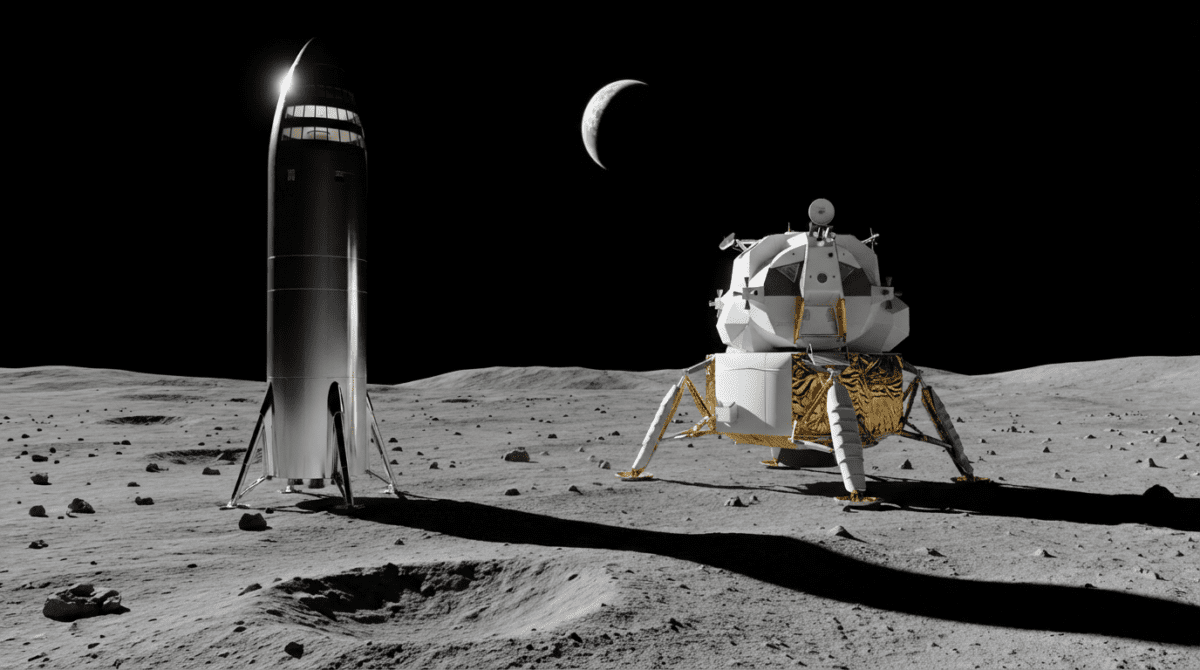
Half a century ago, the global space race was a superpower showdown defined by national pride and limitless government spending. Today, as humanity looks back toward the lunar surface, the narrative has fundamentally changed. The launchpads are still roaring to life, but the vehicles sitting atop them are no longer exclusively designed and owned by the government. Instead, we are witnessing an unprecedented commercial space race fueled by billionaire visionaries, fixed-price contracts, and a radical shift in how we explore the cosmos. The ultimate prize in this modern era is not just planting a flag, but establishing a sustainable, long-term presence on the lunar surface. To do that, the world’s space agencies need a reliable, reusable, and massive private moon landing system.
If you are wondering who will ultimately build the first private moon landing system to return astronauts to the lunar surface, the definitive answer points to Elon Musk’s SpaceX, which holds the contract for the first crewed landing currently slated for the Artemis IV mission in 2028. However, the race is far from a solo endeavor. NASA’s revised Artemis program architecture includes Jeff Bezos’s Blue Origin, which will provide a secondary lander for Artemis V in 2029. Following a massive schedule shakeup in early 2026, NASA plans to use the upcoming Artemis III mission in 2027 to conduct Earth-orbit rendezvous and docking tests with one or both of these commercial landers, turning what was once a solo sprint into a thrilling, high-stakes dual.
TL;DR: Quick Summary
- The Original Winner: SpaceX secured the initial $2.89 billion NASA contract in 2021 to develop the Starship HLS, a massively modified version of its super-heavy launch vehicle.
- The Second Competitor: In 2023, Blue Origin won a $3.4 billion contract to develop its Blue Moon lunar lander for the Artemis V mission, ensuring dissimilar redundancy for the agency.
- A Shifted Timeline: In February 2026, NASA Administrator Jared Isaacman announced that the Artemis III mission will no longer land on the Moon; instead, it will be a 2027 low Earth orbit test for these landing systems, pushing the actual lunar landing to Artemis IV in 2028.
- Technological Hurdles: Both companies must master complex cryogenic propellant transfer in orbit to ensure their landers have enough fuel to reach the lunar surface and return via a private moon landing system.
- Heavy Cargo Goals: Both the SpaceX Starship HLS and the Blue Moon lunar lander are being designed to carry massive human-class cargo payloads of 12 to 15 metric tons to support long-term lunar bases.
What is the New Commercial Space Race?
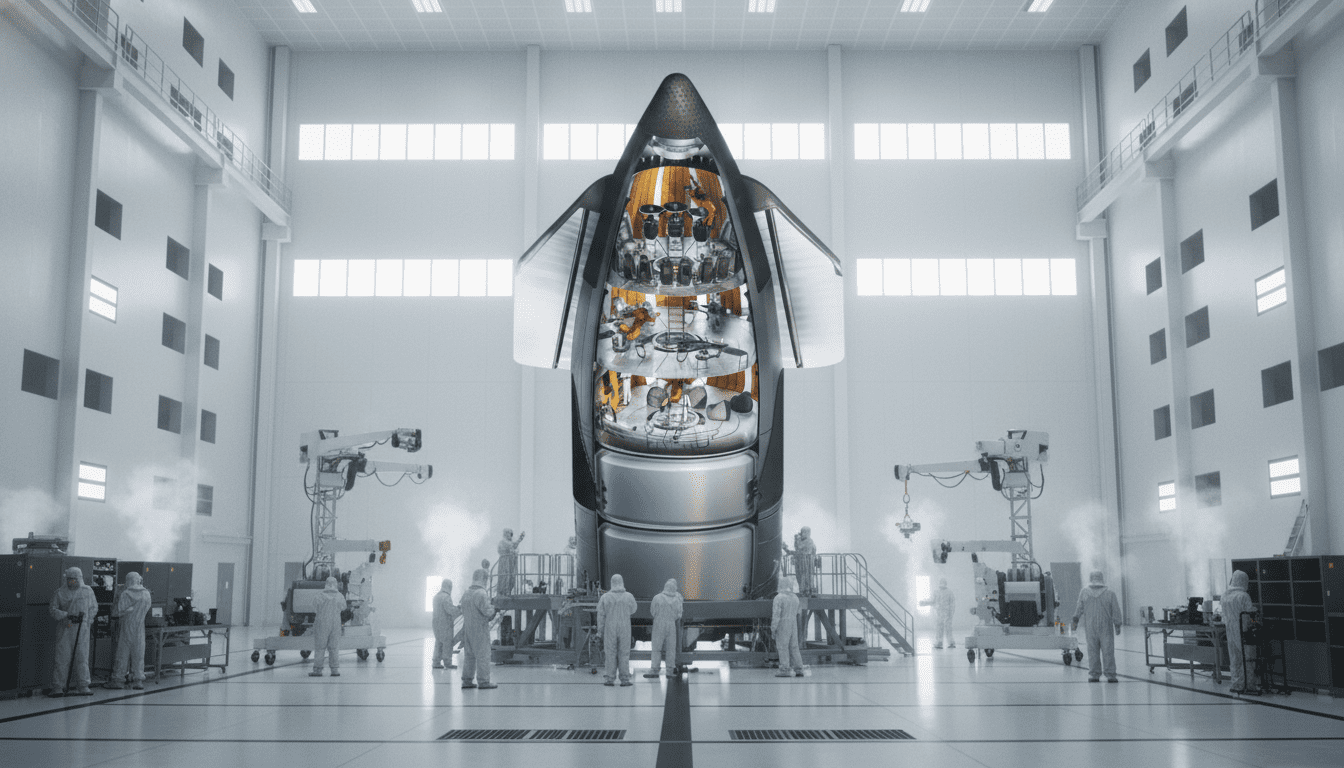
The modern era of spaceflight represents a total paradigm shift. During the Apollo program, NASA owned every nut, bolt, and blueprint of the Lunar Module. Today, NASA is acting as a customer rather than a manufacturer. By utilizing a firm, fixed-price contracting strategy, NASA purchases landing services from commercial aerospace companies rather than buying government-specified spacecraft. This allows the agency to leverage the immense technological leaps the private sector has made in launch capabilities, particularly in the realm of reusability.
The requirement for a private moon landing system is central to the Artemis program architecture. NASA needs vehicles that can safely transport astronauts from an orbital outpost—either the Orion spacecraft in a Near-Rectilinear Halo Orbit (NRHO) or the future Lunar Gateway—down to the lunar south pole, support them on the surface, and launch them back to orbit. Because these vehicles are privately owned, the companies can theoretically use their developed hardware for other commercial ventures, creating an entirely new cislunar economic zone.
When Did NASA Pivot to a Private Moon Landing System?
The competitive landscape for the Human Landing System (HLS) began taking shape in 2019 when NASA solicited proposals from American companies. By April 2020, NASA had selected three teams for preliminary design contracts: SpaceX, Dynetics, and a Blue Origin-led “National Team”.
The aerospace industry was stunned in April 2021 when NASA selected only a single provider—SpaceX—to move forward, citing budget constraints and SpaceX’s outstanding management and low $2.89 billion bid. This sparked severe protests and litigation from Blue Origin, which temporarily halted the program. However, recognizing the need for competition and redundancy, NASA eventually opened a second contract for future missions, officially selecting Blue Origin in May 2023 to develop the Blue Moon lunar lander for the Artemis V mission.
How Will SpaceX Starship HLS Reach the Lunar Surface?
SpaceX’s approach to the private moon landing system is nothing short of audacious. The SpaceX Starship HLS is a heavily modified variant of its massive Starship upper stage. Because it will operate entirely in the vacuum of space between Earth orbit and the Moon, it does not require the heat shield tiles or aerodynamic flaps seen on the standard Starship.
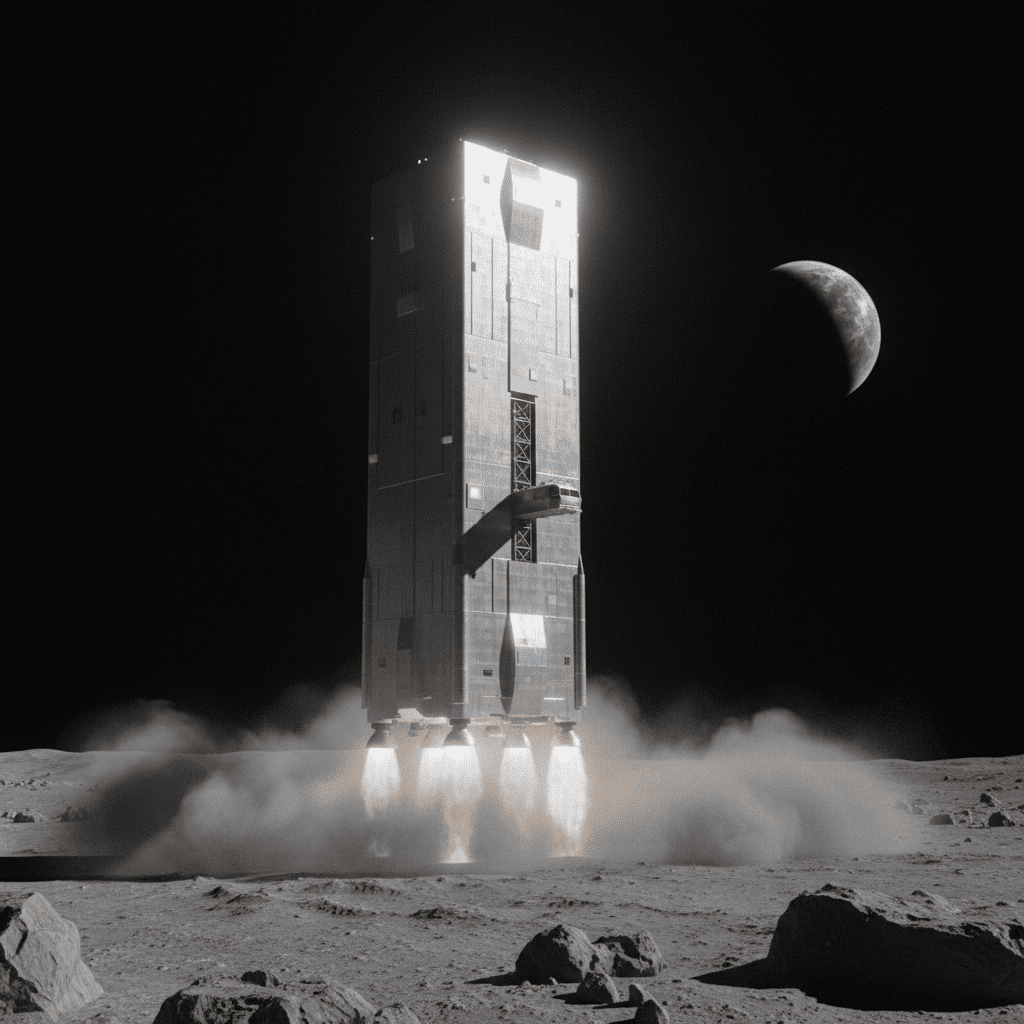
To achieve a lunar landing, SpaceX must solve the complex physics of orbital refueling. The Starship HLS will launch into Earth orbit, where it will be met by a series of Starship “tanker” spacecraft. These tankers will transfer cryogenic liquid oxygen and methane into the HLS vehicle. Once fully fueled, the Starship HLS will burn its Raptor engines to propel itself into lunar orbit, where it will loiter until the crew arrives aboard the Orion capsule. The lander is so tall that astronauts will use a specialized elevator system to travel from the crew cabin near the top of the vehicle down to the lunar surface.
Who is Behind the Blue Moon Lunar Lander?
Blue Origin has taken a highly collaborative approach to the commercial space race. To secure their $3.4 billion contract, they formed the “National Team,” partnering with aerospace heavyweights including Lockheed Martin, Draper, Boeing, Astrobotic, and Honeybee Robotics.
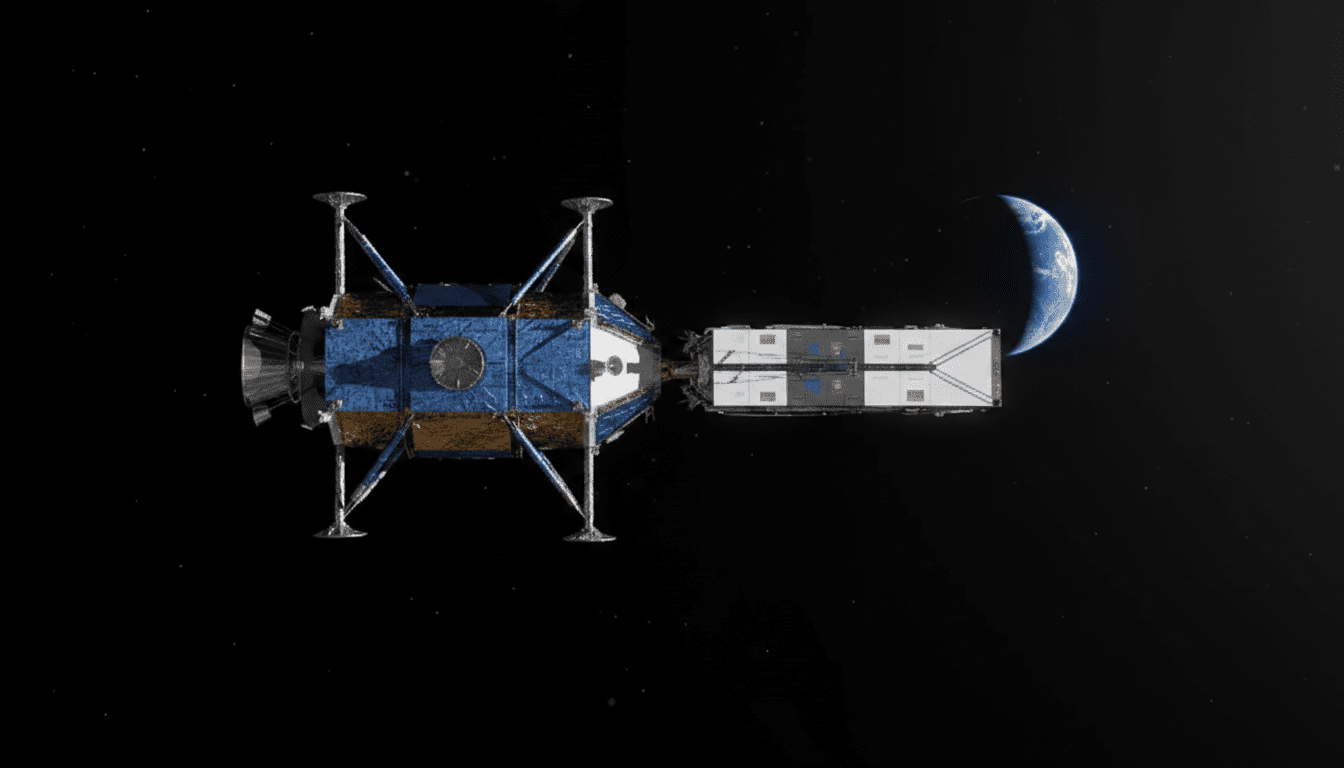
The Blue Moon lunar lander stands 52.5 feet tall and weighs over 99,000 pounds when fully fueled. Unlike SpaceX’s methane-powered engines, Blue Moon relies on liquid oxygen and liquid hydrogen (LOX/LH2) to feed its BE-7 dual expander cycle engines, which generate 10,000 pounds of thrust. Historically, hydrogen boils off quickly in space, but Blue Origin is developing advanced cryogenic storage technologies to make high-performance LOX/LH2 a storable propellant. The lander will be ferried to a lunar parking orbit by a Lockheed Martin-built cislunar transporter, where it will await its crew.
Step-by-Step Guide: How NASA Selects and Tests a Private Moon Landing System
Developing a spacecraft capable of keeping humans alive in the harsh lunar environment is a meticulous process. Here is the step-by-step pathway a commercial provider must follow to achieve a crewed lunar landing using a private moon landing system:
- Design and Certification Baseline Reviews: The commercial provider and NASA agree on a set of standards for human rating requirements, hazard analysis, and software validation. Blue Origin completed its Certification Baseline Review in late 2023.
- Propulsion and Component Testing: Extensive ground testing is required. SpaceX conducts vacuum Raptor cold-start demonstrations to ensure engines will ignite in deep space. Blue Origin tests its BE-7 engines in vacuum chambers at the Air Force Research Lab.
- Orbital Cryogenic Fluid Management: Before heading to the Moon, the provider must demonstrate the ability to transfer cryogenic propellants between two spacecraft in low Earth orbit—a critical hurdle for deep space architecture.
- Uncrewed Lunar Landing Demonstration: The provider must successfully land a complete, uncrewed version of their spacecraft on the lunar surface to check out all hardware, software, and autonomous landing sensors.
- Crewed Rendezvous and Surface Operations: Only after successful demonstrations will the private moon landing system dock with the Orion capsule in lunar orbit, transfer the astronauts, and descend to the surface for extended exploration.
Benefits & Features: Why Commercial Spacecraft Trump Old Apollo Models
The transition to a private moon landing system offers several massive advantages over the legacy models of the 1960s, completely redefining what is possible in the Artemis program architecture:
- Unprecedented Cargo Capacity: Both the SpaceX Starship HLS and the Blue Moon lunar lander are being designed to carry massive payloads. Modified cargo versions of these landers will deliver 12 to 15 metric tons of equipment, rovers, and habitats to the surface.
- Dissimilar Redundancy: By contracting with two different companies using completely different engineering architectures, NASA ensures that if one system experiences a catastrophic failure or delay, the broader lunar program can continue unabated.
- Cost Efficiency for Taxpayers: The firm, fixed-price model means that the commercial companies absorb cost overruns. Blue Origin, for example, is investing well over $1.7 billion of its own capital into the Blue Moon project alongside NASA’s funding.
- Reusability and Sustainability: Unlike the Apollo Lunar Modules which were discarded after a single use, modern commercial landers are designed with reusability in mind, lowering the cost of long-term operations.
Real-World Case Study: The Legal Battle and Dual-Lander Strategy
To truly understand the intensity of the commercial space race, one must look at the legal warfare that erupted in 2021. When NASA originally solicited proposals for a private moon landing system, the agency made it clear they wanted to hire two companies to foster competition. However, Congress appropriated only a fraction of the requested budget for the HLS program. Forced into a corner, NASA selected only SpaceX, whose $2.89 billion bid was roughly half the cost of Blue Origin’s $5.99 billion proposal.
Blue Origin immediately filed protests with the Government Accountability Office (GAO), claiming the evaluation was improper. When the GAO rejected the protest, Blue Origin escalated the fight by suing NASA in the US Court of Federal Claims. The lawsuit temporarily suspended SpaceX’s work for 95 days before a judge ultimately dismissed the case.
While the litigation was highly controversial and frustrating for space enthusiasts, the resulting political pressure for a secondary private moon landing system ultimately worked in the industry’s favor. Congress subsequently authorized additional funding, allowing NASA to open a new competition for sustaining lunar landers. Blue Origin emerged victorious in this second round, securing a $3.4 billion contract in 2023 for Artemis V. This real-world drama solidifies that true innovation requires aggressive, well-funded competition.
“Everybody agrees this is the only way forward. I know this is how Nasa changed the world, and this is how Nasa is going to do it again. We’ve got to get back to basics… we’re going to get there in steps, continue to take down risk as we learn more.” — Jared Isaacman, NASA Administrator, on revising the Artemis timeline.
“We have big goals for the Artemis program — about a mission a year to the lunar surface for stays by our astronauts for up to 30 days. Today’s announcement is about maintaining that cadence. It’s about maintaining our excellence as the world’s top space program.” — Bill Nelson, Former NASA Administrator, on the selection of Blue Origin.
Data Table: SpaceX Starship HLS vs. Blue Moon Lunar Lander
The following table provides a technical comparison of each leading private moon landing system.
| Feature | SpaceX Starship HLS | Blue Moon Lunar Lander (Mk2) | Architectural Significance |
|---|---|---|---|
| Primary Contractor | SpaceX | Blue Origin & National Team | Drives competitive innovation |
| Propellant Type | Liquid Oxygen / Liquid Methane | Liquid Oxygen / Liquid Hydrogen | Methane avoids coking; Hydrogen offers high specific impulse |
| Engine Technology | Raptor Vacuum Engines | BE-7 Dual Expander Cycle | BE-7 optimized for deep space throttling (10,000 lbf) |
| NASA Contract Focus | Artemis III (Test), Artemis IV (Landing) | Artemis V (Landing) | Ensures dissimilar redundancy for the agency |
| Orbital Logistics | Relies on LEO Starship Tanker refueling | Relies on Cislunar Transporter (Lockheed) | Both require mastering cryogenic fluid transfer |
Unique Insight: The Strategic Shift of Artemis III and the Death of the Solo Sprint
One of the most fascinating aspects of the modern commercial space race is how heavily technical reality dictates political ambition. For years, the Artemis III mission was heralded as the triumphant return of humanity to the lunar surface, initially mandated for 2024, then delayed to 2025, and then 2026. However, developing a private moon landing system capable of safely landing humans has proven monumentally difficult.
In a shocking shift in February 2026, NASA Administrator Jared Isaacman announced that Artemis III will no longer aim to land on the Moon. Following blunt criticism from safety advisory panels regarding the massive risks of the current timeline, the mission was repurposed into a low Earth orbit test flight targeted for mid-2027. During this flight, astronauts aboard Orion will test rendezvous, docking, and life support systems with one—or potentially both—of the commercial landers in Earth orbit.
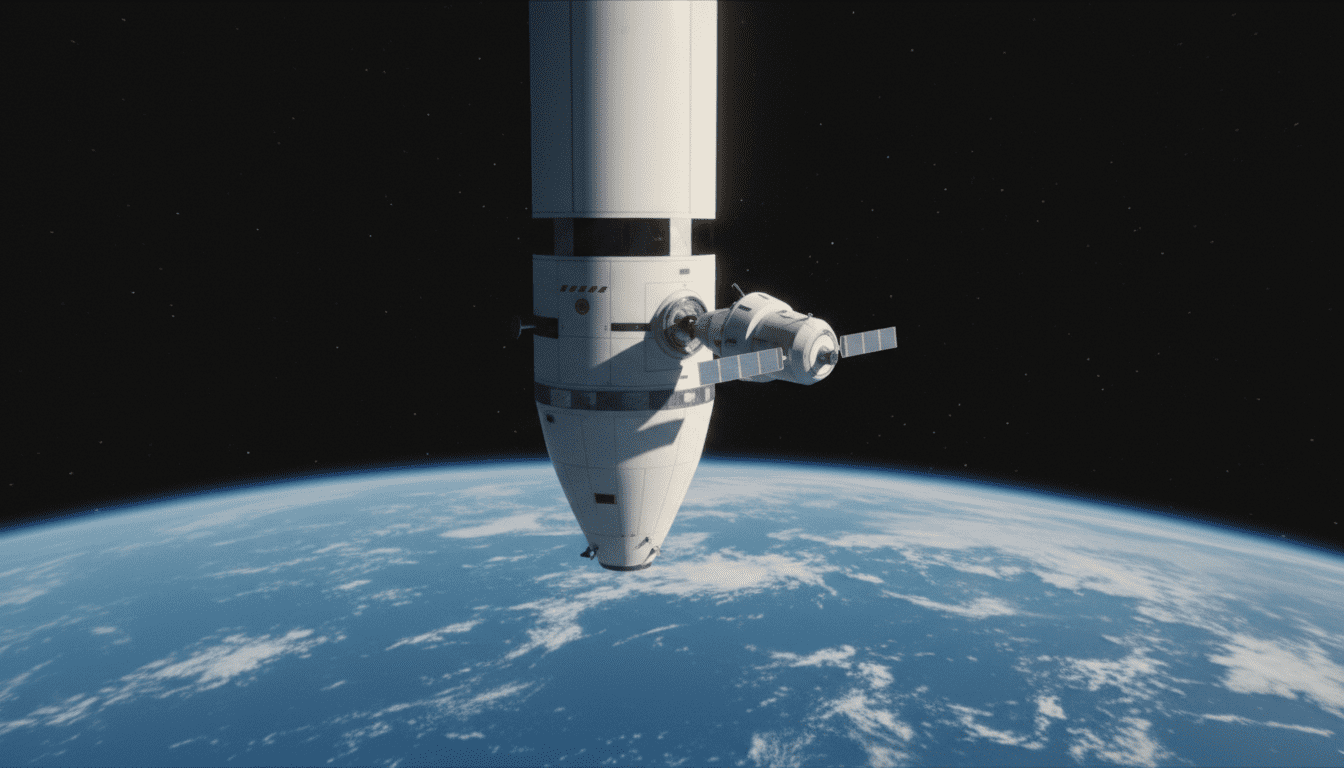
This represents a profound shift in the space race. It means the initial “sprint” to the surface has been abandoned in favor of a highly calculated, methodical testing regime. The actual first crewed landing has been officially pushed to Artemis IV in 2028. By restructuring the timeline, NASA is effectively acknowledging that mastering the deep-space technology of a private moon landing system is far more important than meeting arbitrary political deadlines.
[Insert Video Placeholder Here]
FAQs
What is a private moon landing system?
A private moon landing system is a commercially owned and operated spacecraft designed to transport astronauts and cargo between lunar orbit and the Moon’s surface. Under NASA’s Human Landing System (HLS) program, companies like SpaceX and Blue Origin own the vehicles, while NASA purchases their landing services via fixed-price contracts.
Who won the contract to build the lunar lander?
NASA selected two primary providers to ensure redundancy. SpaceX won the initial $2.89 billion contract to develop the Starship HLS for the first lunar landings. Later, Blue Origin won a $3.4 billion contract to develop its Blue Moon lander for the Artemis V mission.
Why was the Artemis III moon landing canceled?
The Artemis III lunar landing was not canceled entirely, but it was drastically repurposed. In early 2026, due to technological delays and safety concerns regarding spacecraft readiness, NASA shifted Artemis III to be an Earth-orbit docking test scheduled for 2027. The actual lunar landing is now targeted for Artemis IV in 2028.
What makes the SpaceX Starship HLS different from a normal Starship?
Because the Starship HLS will operate exclusively in the vacuum of space between Earth orbit and the lunar surface, it does not require the heavy heat shield tiles or the aerodynamic body flaps that the standard Starship needs to survive re-entry into Earth’s atmosphere.
What is the “National Team” led by Blue Origin?
To build the Blue Moon lunar lander, Blue Origin partnered with several major aerospace contractors to share the engineering workload. The National Team includes Lockheed Martin (building the cislunar transporter), Draper, Boeing, Astrobotic, and Honeybee Robotics.
What engine powers the Blue Moon lunar lander?
The Blue Moon lunar lander is powered by Blue Origin’s BE-7 engine. It utilizes a highly efficient dual expander cycle fueled by liquid oxygen and liquid hydrogen, capable of generating 10,000 pounds of thrust and throttling down deeply for precise lunar landings.
Why is cryogenic fluid transfer so important for the Artemis program architecture?
Both the SpaceX and Blue Origin landers are massive and require huge amounts of fuel. To get them to the Moon with enough propellant to land and take off again, both companies must demonstrate the unprecedented ability to safely transfer super-cold cryogenic propellants (like liquid oxygen and methane/hydrogen) between spacecraft while in orbit.
Conclusion & CTA
The race to build the ultimate private moon landing system is undeniably the most complex and thrilling aerospace competition of the 21st century. As the Apollo-era model of government-owned hardware fades into history, the fierce rivalry between SpaceX’s Starship HLS and Blue Origin’s Blue Moon lander is driving a renaissance in cislunar innovation. While the timeline has shifted—transforming Artemis III into a critical orbital proving ground in 2027 and pushing the monumental lunar touchdown to Artemis IV in 2028—the ultimate goal remains crystal clear. By leveraging the financial power and rapid iterative testing of the commercial sector, humanity is not just visiting the Moon this time; we are building the infrastructure to stay.
Are you Team SpaceX or Team Blue Origin in this modern commercial space race? Every major milestone for a private moon landing system brings us closer to the stars. Share this article with your fellow space enthusiasts, drop your predictions for the 2027 docking tests in the comments below, and subscribe to our newsletter for real-time updates as the Artemis program architecture continues to evolve!
Sources:
Related Articles