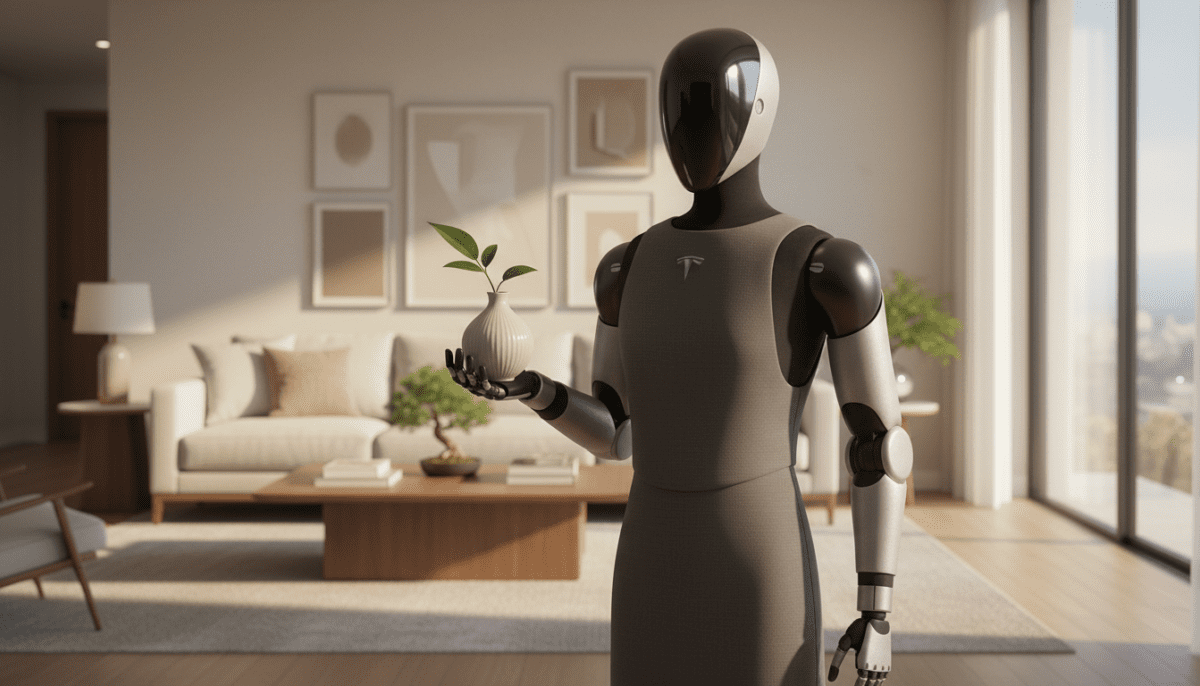
Imagine walking into your living room and casually asking a metallic assistant to carefully fold your laundry, load the dishwasher, or safely handle delicate glassware. For decades, this scenario was strictly confined to the realm of science fiction or clunky, lab-bound prototypes. However, the commercial reality of domestic physical AI is accelerating at an unprecedented pace. While high-profile competitors are loudly battling to construct the most capable mechanical bodies, Mark Zuckerberg’s tech empire has taken a radically different, highly secretive approach to dominating your living space with these advanced autonomous machines.

Meta recently executed a quiet but monumental acquisition of Assured Robot Intelligence (ARI) to accelerate its development of Meta humanoid robots for household assistance. Instead of selling branded hardware, the company is building the “Android of robotics,” creating the core intelligence and tactile software layer that will power machines manufactured by various third-party companies. By owning the invisible “brain” rather than the expensive, hard-to-scale body, the social media giant is positioning itself to capture the most valuable asset in the upcoming automation revolution: real-world data.

TL;DR: Quick Summary
- On May 1, 2026, Meta quietly acquired the robotics startup Assured Robot Intelligence (ARI), integrating its founders into the Meta Superintelligence Labs.
- Rather than becoming a hardware manufacturer, Meta aims to be the “Android of robotics,” providing the underlying AI software for third-party companies to build upon.
- The acquisition brings critical tactile sensor technology and whole-body control AI to the development of Meta humanoid robots.
- The home robotics market raises massive privacy and data security concerns, as these machines must record highly intimate domestic data to learn and function.
- The global race for an AI platform strategy is fraught with geopolitical tension, highlighted by China recently blocking Meta’s $2-billion acquisition of another startup, Manus AI.
What Are Meta Humanoid Robots and the ‘Android’ Approach?
To understand the current trajectory of the tech landscape, we must distinguish between building a product and building a platform. Meta humanoid robots are not destined to be physical, Meta-branded machines sold directly to consumers. Instead, the company is replicating the exact AI platform strategy that Google used to conquer the smartphone era.
When the mobile revolution began, Apple built a tightly controlled, vertically integrated system where they owned both the iPhone hardware and the iOS software. Google, conversely, built Android and gave the operating system away to Samsung, Motorola, and hundreds of other manufacturers. Meta is applying this exact open-ecosystem playbook to physical machines and Meta humanoid robots. The goal is to develop the underlying software, artificial intelligence models, and sensor integrations that allow a robot to walk, grasp objects, and adapt to unpredictable human environments. By providing this foundational intelligence layer, Meta ensures that regardless of which company ultimately manufactures the metal and plastic body in your home, it will be running Meta’s brain.
When Did Meta Acquire Assured Robot Intelligence?
The decisive move that solidified this AI platform strategy occurred on May 1, 2026, when Meta officially closed its acquisition of Assured Robot Intelligence (ARI). The deal was executed quietly, buried in a Friday afternoon news dump to avoid the massive valuation headlines and scrutiny that typically accompany Big Tech artificial intelligence acquisitions for Meta humanoid robots.
While the financial terms remain completely undisclosed, the strategic value of the purchase is staggering. ARI was a highly specialized startup focused exclusively on creating artificial intelligence models that empower robots to understand, predict, and adapt to human behaviors within complex, dynamic environments. Following the buyout, the startup’s core team was immediately absorbed into Meta Superintelligence Labs, the company’s flagship research division for Meta humanoid robots.
How Does Meta’s AI Platform Strategy Work?
The integration of ARI’s specific technologies into Meta’s ecosystem solves two of the most stubborn bottlenecks in modern robotics. First, it brings advanced whole-body robot control models to the table for Meta humanoid robots. Traditionally, robots operate using isolated limb commands—a command for the arm, a separate command for the hand. Whole-body control allows the robot to seamlessly coordinate its entire physical form, maintaining balance and fluid movement in response to real-time sensory input from an unpredictable physical world.
Secondly, the acquisition secures proprietary tactile sensor technology for Meta humanoid robots. ARI developed an innovation called “e-Flesh,” a sensor system utilizing magnets and magnetometers to measure 3D deformations. While modern robots can easily “see” their environment using cameras and lidar, they notoriously struggle to “feel” it. Without tactile feedback, a machine cannot differentiate the grip strength required to hold a heavy bowling ball versus a fragile egg. By mastering this sensory input, Meta ensures its intelligence layer can perform delicate, intricate household chores safely with Meta humanoid robots.

Who is Leading the Push Inside Meta Superintelligence Labs?
The human talent acquired in this deal is just as critical as the software. Assured Robot Intelligence was co-founded by Lerrel Pinto and Xiaolong Wang, both heavyweights in the machine learning and physical simulation space. Pinto previously co-founded Fauna Robotics, a company that Amazon acquired to bolster its own consumer robotics ambitions. Wang, a former researcher at Nvidia, recently won the MLSys 2024 Best Paper Award for his groundbreaking work on AI model optimization for Meta humanoid robots.
Together, they will work alongside Meta Robotics Studio—a dedicated team established in 2025 and led by Marc Whitten, the former CEO of the experimental robotaxi company Cruise. This convergence of talent signals that Meta is dead serious about transitioning its multi-billion dollar research investments from virtual reality headsets directly into the physical world through Meta humanoid robots.
Step-by-Step Guide: How Meta Will Scale Its Meta Humanoid Robots Ecosystem
If you are tracking the evolution of Meta humanoid robots, the company’s roadmap over the next several years follows a very deliberate, Android-style progression. Here is how they intend to scale the ecosystem:
- Acquire Foundational Intelligence: By purchasing Assured Robot Intelligence, Meta bypassed years of internal R&D, instantly securing the whole-body control models and tactile sensor technology required to navigate a messy human living room with Meta humanoid robots.
- Compress the AI for Local Use: A home robot cannot rely entirely on a remote cloud server; it must make split-second decisions locally. Meta will leverage techniques like activation-aware weight quantization to compress massive AI models so they run efficiently on the limited computer chips housed inside the Meta humanoid robots body.
- Open-Source the Brain: Much like their strategy with the LLaMA language model, Meta is highly likely to release its robotic intelligence software as open-source. This will immediately undercut the proprietary software of competitors and entice hardware startups to use Meta’s free, highly advanced platform for Meta humanoid robots.
- Establish the “Open Handset Alliance” of Robotics: Meta will seek formal partnerships with third-party robotic manufacturers—companies that can build incredible mechanical bodies but lack the billions of dollars required to train an artificial intelligence brain for Meta humanoid robots.
- Dominate the Data Flywheel: As millions of partner machines and Meta humanoid robots deploy into homes globally, they will feed behavioral, environmental, and failure-mode data back into Meta’s servers. This massive influx of telemetry will continually train and improve the models, creating an insurmountable advantage over any single vertically integrated competitor.
Key Benefits and Features of Meta’s Intelligence Layer
By aggressively pursuing an AI platform strategy rather than a hardware sales model, Meta unlocks a multitude of unique features and industry-wide benefits for Meta humanoid robots:
- Lower Capital Expenditure: Manufacturing millions of physical machines requires massive factories and immense capital. By strictly providing the software stack for Meta humanoid robots, Meta operates with significantly higher leverage and lower overhead.
- Ecosystem Lock-In: Once a hardware manufacturer designs its robot’s physical architecture around Meta’s specific software interfaces and Meta humanoid robots standards, the switching costs become enormous. Meta becomes the default, irreplaceable brain.
- Enhanced Safety and Adaptability: Integrating ARI’s e-Flesh tactile sensor technology ensures that Meta humanoid robots running Meta’s software can safely handle fragile objects and interact with humans without causing injury.
- Decentralized Data Collection: A platform running across dozens of different robot brands and Meta humanoid robots accumulates real-world training data at a scale that no single company could ever replicate internally.
Real-World Case Study: The Data Flywheel vs. Vertically Integrated Giants
To truly grasp the brilliance of the “Android of robotics” approach, we must look at the current competitive landscape. Today, the humanoid robotics market for Meta humanoid robots is dominated by vertically integrated companies racing to build both the hardware and the software.
For example, Figure AI has successfully deployed its Figure 02 and 03 robots into BMW automotive plants. Similarly, Tesla is heavily investing in converting its Fremont assembly lines to manufacture its in-house Optimus robot. However, these companies face a massive structural limitation: they only learn from their own hardware. Tesla’s AI only gets data from Optimus units; Figure’s AI only gets data from Figure units.
Meta’s strategy flips this paradigm entirely. If Meta’s software is adopted by a wide array of manufacturers, the company will receive telemetry from millions of Meta humanoid robots-hours across diverse environments—from European factory floors to American living rooms. In the realm of machine learning, data volume and diversity consistently trump pure algorithmic sophistication. Meta could ultimately possess the most intelligent Meta humanoid robots system on the planet simply because it learned from everyone else’s hardware.
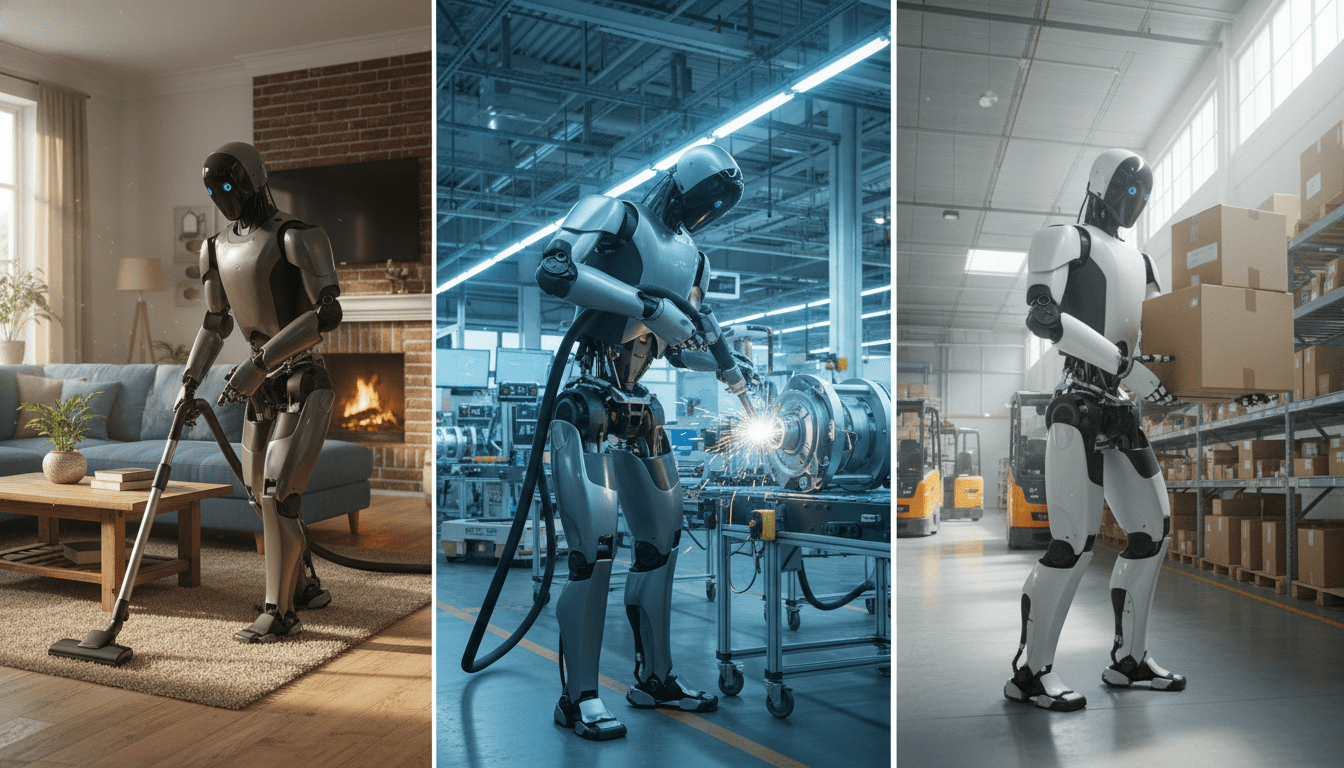
This software dominance also carries massive geopolitical weight. China’s State Grid Corporation recently allocated $1 billion to deploy 8,500 robots for power grid inspections. Controlling the software that operates critical national infrastructure is a matter of profound national security. We have already seen this tension boil over; recently, China forced Meta to completely scrap its $2-billion acquisition of Manus AI, a Chinese-origin general AI agent, citing data security and technology transfer concerns. While Manus AI was a distinct digital agent rather than a physical robotics company, the blocked deal perfectly illustrates the intense international scrutiny Meta faces as it attempts to monopolize the next great computing platform for Meta humanoid robots.
“The core technologies we’ve already invested in and built across Reality Labs and AI are complementary to developing the advancements needed for robotics.” — Andrew Bosworth, Chief Technology Officer at Meta
“Meta is not building the robot, it is building the brain that every other robot will need to license, and the company that controls the intelligence layer will capture more value than any hardware manufacturer in the history of physical computing.” — TechFastForward Editorial Analysis
Humanoid Robotics Market Landscape Data Table
| Company | Core Humanoid Project | Strategic Approach | Key Advantage | Current Deployment Status |
|---|---|---|---|---|
| Meta | Superintelligence Labs | Platform / “Android” Model | Tactile AI & Data Flywheel | Active R&D / Open-Source Intent |
| Tesla | Optimus V3 | Vertically Integrated | Massive Capital & Manufacturing Scale | Internal Factory Use Only |
| Figure AI | Figure 03 | Vertically Integrated | Proven Industrial Commercial Work | Active Deployment at BMW Plants |
| 1X Tech | NEO | Consumer/Home Focus | Early Mover in Domestic Market | Consumer Preorders Open |
| Agility | Digit | Commercial RaaS | High Operational Metric Proof | Active Deployment at GXO Warehouses |
Unique Insight: The Privacy Paradox of Domestic Robots
While the business mechanics of Meta humanoid robots are undeniably brilliant, the application of this technology within the home introduces a severe, almost dystopian privacy paradox. According to robotics researchers, homes are entirely uncontrolled environments, unlike structured factory floors. For a robot to successfully navigate a living room, fold laundry, or load a dishwasher, it requires an immense amount of real-world training data.
This creates a terrifying reality for data security. The very data these machines need to learn includes continuous video, audio, and spatial mapping of the most intimate details of our personal lives. Furthermore, there is the hidden human element. Competitors like 1X, which launched the 168-centimeter-tall Neo robot for home use, openly admit that when their AI encounters a tricky task, a remote human operator wearing a VR headset temporarily takes control of the machine.
If Meta successfully powers millions of domestic machines and Meta humanoid robots, who exactly owns the operational data generated within your living room? Will the data belong to the hardware manufacturer, the end consumer, or Meta’s central servers? The paradox is clear: to build the ultimate, autonomous home assistant, companies must first engage in unprecedented levels of domestic surveillance. As the AI platform strategy scales, navigating consumer trust will become Meta’s greatest challenge, far surpassing any mechanical engineering hurdle for Meta humanoid robots.
Frequently Asked Questions
1. What are Meta humanoid robots?
Meta is not primarily focused on building a branded, physical robot to sell to consumers. Instead, they are developing the underlying artificial intelligence, tactile sensor technology, and software ecosystem required to power humanoid robots manufactured by third-party companies.
2. Who is Assured Robot Intelligence (ARI)?
ARI was a highly specialized robotics AI startup co-founded by Lerrel Pinto and Xiaolong Wang. Acquired by Meta on May 1, 2026, the company specialized in whole-body robot control models and advanced tactile sensors that allow robots to adapt to unpredictable human environments.
3. What does the “Android of robotics” mean?
It refers to a specific AI platform strategy. Much like Google created the Android operating system and allowed Samsung and Motorola to build the physical phones, Meta wants to create the “brain” for humanoid robots and allow various hardware companies to build the mechanical bodies.
4. Will Meta manufacture its own robots to sell?
Current reports and strategic acquisitions strongly indicate that Meta will not sell a branded robot to the public. While they have an internal team building prototypes to test their software, their end goal is to license or open-source the intelligence layer to the rest of the industry.
5. What is tactile sensor technology in this context?
Tactile sensor technology, such as ARI’s “e-Flesh,” allows a robot to physically feel its environment. Using magnets and magnetometers, it measures 3D deformations, giving the robot the ability to discern the difference between gripping a fragile object like an egg versus a hard object like a tool.
6. How does Meta’s strategy differ from Tesla Optimus or Figure 03?
Tesla and Figure AI are vertically integrated; they spend billions building both the physical robot and the software that runs it. Meta’s strategy is purely horizontal; they focus solely on the software, avoiding the massive capital expenditure of scaling hardware manufacturing facilities for Meta humanoid robots.
7. What are the privacy risks of having these robots at home?
Home robots must collect vast amounts of intimate video and spatial data to navigate unstructured environments. Furthermore, many early consumer models rely on remote human operators taking over via VR headsets when the AI fails, introducing severe surveillance and data exploitation risks directly into the home.
Conclusion
The quiet acquisition of Assured Robot Intelligence marks a definitive turning point in the history of physical computing. By aggressively pivoting away from the grueling, capital-intensive race of hardware manufacturing, Mark Zuckerberg is brilliantly positioning Meta to become the undisputed nervous system of the automated future. The vision for Meta humanoid robots relies entirely on a sprawling AI platform strategy—the true “Android of robotics.” If successful, their software will soon be silently organizing our living rooms, powered by cutting-edge tactile sensor technology and an unstoppable data flywheel.
Related Articles:
- Quantum Computing 2026: Where It Stands and What’s Next
- Dark Energy Surprise 2026: DESI Results That Challenge Physics
- Data Storage on Glass: How Scientists Fit Thousands of Years in a Shard
Sources: