Last Updated: 28 July 2026, 10:13 AM IST | Fact Checked By: SpotlightersPost Editorial Team
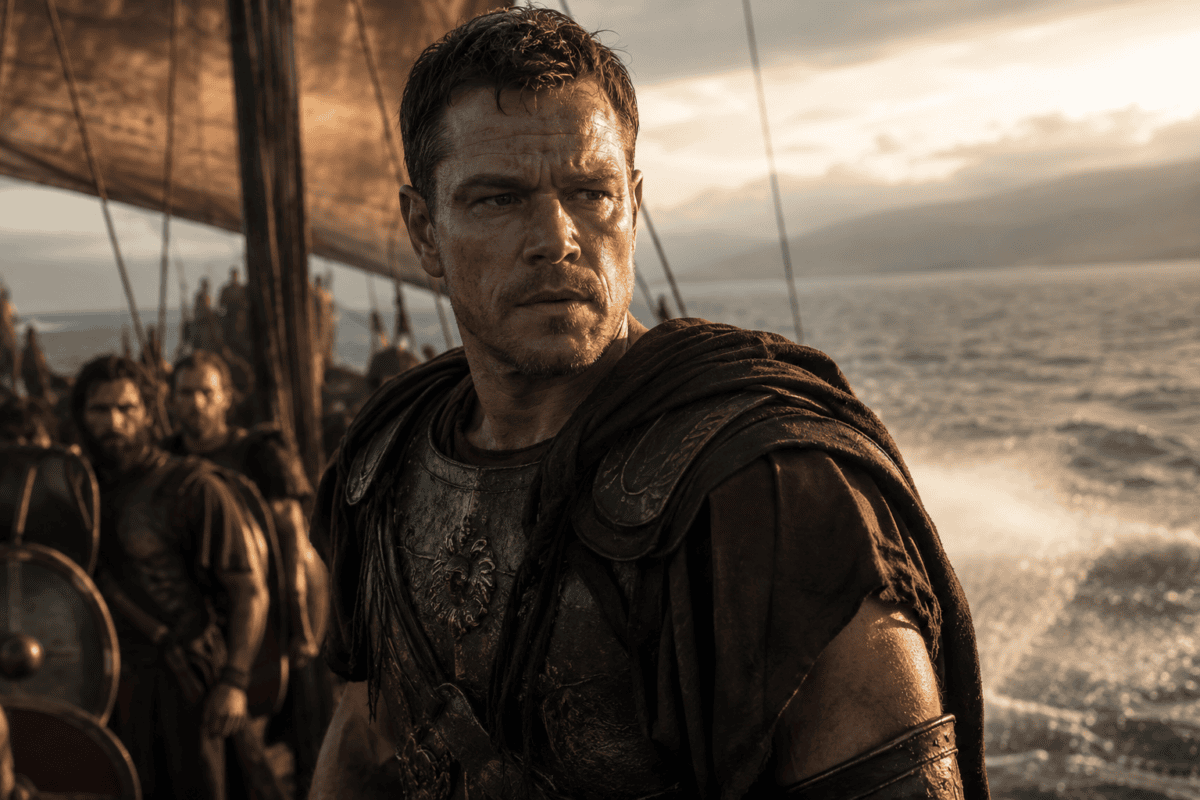
Despite the Odyssey film leak where a perfect, full-length copy of the nearly three hour movie was posted to social media right after the premiere, Universal Pictures took down the illegal upload right away, showing that Hollywood is cracking down hard on online leaks.
Executive Summary: The Odyssey Piracy Incident At a Glance
TL;DR:The unauthorized distribution of The Odyssey on social media represents one of the highest profile film piracy incidents in recent years. While the film continues to dominate theatrical screens and sell out IMAX venues, the leak has sparked a wider conversation about the economic impact of online piracy and the effectiveness of modern studio takedown protocols.
Universal Pictures addressed The Odyssey Film Leak by initiating immediate digital takedown protocols on 25 July 2026.
The Anatomy of a Social Media Breach: How the Full Movie Went Viral
The security breach began on Saturday, 25 July 2026, when a copy of Nolan’s $250 million production appeared online. The ease with which the video was shared and viewed by millions of users highlighted the persistent vulnerability of theatrical releases to online distribution platforms. As a result, The Odyssey Film Leak became an immediate priority for the studio’s cybersecurity division.
2.1 Million Views in 150 Minutes: The Timeline of the Primary Upload
At 2:25 p.m. PT on July 25, an X account published a post reading, “Someone uploaded ‘The Odyssey’ full movie on X. Can you believe it?”.
The post made a complete, clear version of the movie go viral.
Within two and a half hours, the video accumulated over 2.1 million views. As confirmed in the Variety Australia movie news report, Universal’s digital rights team initiated emergency protocols, replacing the stream with a copyright takedown notice and suspending the host account to mitigate the impact of The Odyssey Leaked on X. This initial success was critical in containing The Odyssey Film Leak before it could spread to other mainstream platforms.
Secondary Clones and the Sunday Morning Cleanups
Despite the suspension of the primary account, the piracy battle continued into the following day. On Sunday morning, 26 July 2026, a secondary clone of the film was uploaded to X.
The copy generated nearly 50,000 views within two hours. Universal’s rights team quickly detected the upload and successfully executed a secondary takedown, issuing a formal Universal Pictures Takedown Statement to protect their theatrical window. By releasing the official Universal Pictures Takedown Statement, the studio re-emphasized its zero tolerance policy regarding Christopher Nolan Odyssey Piracy.
Weaponizing Internet Culture: How Fans Used “Rickrolls” to Suppress Bootlegs
An unexpected defense of Nolan’s theatrical window came directly from the film’s fanbase. Film enthusiasts flooded X search directories with decoy files designed to look like authentic links to the movie, complete with official production logos.
Instead of the movie, these links redirected users to the music video for Rick Astley’s 1987 hit “Never Gonna Give You Up,” effectively burying actual pirated links under thousands of “Rickrolls” and curbing the spread of Christopher Nolan Odyssey Piracy. This unique community effort proved remarkably effective in suppressing The Odyssey Leaked on X and protecting the film’s early theatrical window from further exploitation.
Stopping Piracy Early: Australia’s Major Lawsuit to Block Illegal Websites
Universal Pictures’ defensive strategy extended beyond reactive social media takedowns. Just days before the film’s theatrical premiere, the studio executed a major pre-emptive legal strike in the Southern Hemisphere to disable access to prominent piracy networks and head off any potential fallout from The Odyssey Film Leak.
Section 115A and the Interlocutory Application Against 32 Pirate Sites
On 10 July 2026, the Federal Court of Australia granted an urgent interlocutory application filed jointly by Universal City Studios Productions, Columbia Pictures Industries, and Home Box Office (HBO).
Under Section 115A of the Copyright Act 1968, the court ordered the nation’s largest internet service providers, including Telstra, Optus, TPG Telecom, Vocus, Aussie Broadband, and Superloop to immediately block access to 32 target pirate streaming sites. As outlined in the ICLG legal briefing on Australia block, these sites were already advertising forthcoming access to The Odyssey.
The studios established a clear prima facie case that the blockade was necessary to prevent irreparable financial harm before the film’s Australian theatrical release on 16 July 2026. This landmark Australia Pirate Site Blocking Order set a strong precedent. By securing the Australia Pirate Site Blocking Order, the studios demonstrated a proactive methodology to counter Christopher Nolan Odyssey Piracy on a global scale.
The Power of Dynamic Blocking: Stopping Domain Migrations in Real-Time
In handing down the judgment, Justice Stellios recognized that pirate operators frequently attempt to bypass court orders by migrating their content to new servers. To counter this, the court established a streamlined “dynamic blocking” mechanism within the Australia Pirate Site Blocking Order.
This protocol allows the studios to notify internet service providers of newly identified domain names, IP addresses, or URLs used by the target sites, disabling access in real time without requiring the studios to commence fresh legal proceedings. This dynamic feature has been hailed as a crucial tool in preventing a widespread The Odyssey Film Leak in the Australian market.
The Economics of Piracy: Decomposing Cannibalization vs. Promotion
The real-world battle over The Odyssey aligns closely with academic research regarding the financial consequences of film piracy. While some online commentators argue that leaks can serve as free promotion, empirical data proves that the practice remains destructive to overall box-office health. The ongoing discussions about The Odyssey Film Leak have renewed interest in these scientific studies.
Carnegie Mellon’s Hidden Markov Model: The 14% Revenue Loss Formula
A landmark study by researchers Liye Ma, Alan L. Montgomery, and Michael D. Smith from Carnegie Mellon University’s Tepper School of Business analyzed the combined effects of piracy on wide release films.
Utilizing a hidden Markov model, the researchers proved that if piracy were eliminated entirely from the theatrical window, global box-office revenues would increase by 14% to 15% annually.
This loss translates to approximately $1.3 billion lost each year in the U.S. first run theatrical market alone. In the wake of The Odyssey Film Leak, these mathematical projections are being studied closely by Hollywood executives.
Why Ticket Cannibalization Heavily Dwarfs reviews Promotional Buzz
The Carnegie Mellon model separates the impacts of piracy into direct ticket cannibalization (paying moviegoers choosing a free, pirated option) and indirect promotion (unauthorized viewers spreading reviews). The research proves that the negative impact of cannibalization completely dwarfs any positive reviews benefits.
If piracy did not generate any promotional review effects, box-office revenues would experience only an additional 1.5% drop, confirming that the “buzz” generated by piracy fails to offset its direct financial damage. Industry trackers note that occurrences like The Odyssey Leaked on X confirm this reality, as free streams directly cannibalize potential theater audiences.
| Metric / Scenario | Impact on Box-Office Revenue | Economic Reality |
| Complete Piracy Elimination | 14% to 15% Revenue Increase | Would inject $1.3 billion annually back into first-run theaters. |
| Ticket Cannibalization | Massive Revenue Reduction | Paying moviegoers choose free, illegal streams over theatrical tickets. |
| Promotional Word-of-Mouth | Minimal 1.5% Revenue Offset | Helps lessen the impact of cannibalization slightly but never fully recovers the loss. |
The 3% Exception: When Pre-Release Leaks Offer a Tiny Silver Lining
The academic data revealed that in very rare instances accounting for less than 3% of the analyzed films, pre-release piracy could generate a small net increase in box-office revenue compared to a leak occurring at release. This rare exception occurs only under specific conditions: the film must be of exceptionally high quality, possess low advertising budgets, and generate rumors.
However, the researchers emphasized that even these outlier films would have earned significantly higher total revenues if piracy had been eliminated entirely. For major blockbusters, any occurrence resembling The Odyssey Film Leak remains entirely harmful to net commercial revenues.
The IMAX 70mm Fortress: Why a Compressed Web Rip Cannot Kill Nolan’s Vision
Despite the wide availability of the digital leak, The Odyssey has shown unique commercial resilience. Because Christopher Nolan chose to shoot the $250 million film entirely using pristine IMAX 70mm film cameras, a compressed social media stream cannot replicate Hoyte van Hoytema’s expansive cinematography.
Cinema patrons have continued to seek out the premium theatrical experience, with IMAX venues reporting sold-out showtimes extending into the film’s fifth week of release. This physical shield has proved essential in containing the commercial damage of The Odyssey Film Leak.
This immense demand has triggered a strategic release date reshuffling in late summer 2026 across the industry. Independent and mid-budget features are actively shifting windows to avoid being crushed.
Film trackers are looking closely at how major H2 2026 Hindi releases perform at the box office in comparison, especially since movies like Sunny Deol’s Batwara 1947 gets Censor Clearance without cuts are slated to dominate screens later this summer.
Frequently Asked Questions (FAQs)
Q1. When and where was Christopher Nolan’s The Odyssey leaked online?
A bootleg of the entire film was uploaded to the social media platform X (formerly Twitter) on 25 July 2026, as discussed in the Express Tribune entertainment report on viral leak coverage. This event marked a major escalation in the commercial threat of The Odyssey Film Leak.
Q2. How many views did the leaked version of The Odyssey receive?
The primary upload gathered over 2.1 million views in two and a half hours, while a Sunday morning clone generated an additional 50,000 views before being removed. The rapid spread of The Odyssey Leaked on X shocked industry analysts.
Q3. What was Universal Pictures’ official response to the leak?
Universal Pictures immediately initiated takedown protocols, stating that they take copyright infringement seriously and will pursue all appropriate remedies. The studio issued a strong Universal Pictures Takedown Statement promising to pursue all legal options to protect their intellectual property.
Q4. What is a “Rickroll” and how did fans use it to protect the movie?
A “Rickroll” is an internet prank where users are tricked into watching Rick Astley’s “Never Gonna Give You Up” music video. Fans flooded X search feeds with decoy files titled as the movie that redirected to Astley’s video, successfully burying the real bootleg links.
Q5. Why did an Australian court block pirate websites before the movie’s release?
On 10 July 2026, the Federal Court of Australia ordered local internet providers to pre-emptively block 32 pirate sites to prevent irreparable financial harm. The court issued the Australia Pirate Site Blocking Order to protect the film’s theatrical opening.
Q6. What legal tool did the studios use to block these pirate sites in Australia?
The studios secured an injunction under Section 115A of the Copyright Act 1968, which targets foreign hosted online locations that facilitate copyright infringement. This action formed the basis of the pre-emptive Australia Pirate Site Blocking Order.
Q7. Does movie piracy actually help boost ticket sales through free reviews?
No. Empirical scientific research from Carnegie Mellon University proves that the negative impact of direct ticket cannibalization completely dwarfs any minimal promotional review benefits. This research confirms that events like The Odyssey Film Leak are unequivocally harmful to film revenues.
Q8. How much money does movie piracy cost the theatrical industry annually?
According to research published by the Motion Picture Association, theatrical revenues would be 14% to 15% higher, representing over $1.3 billion annually in the U.S. first-run market, if piracy were eliminated.
Q9. Did the viral leak hurt the box office performance of The Odyssey?
No. The film has demonstrated box-office resilience, sailing past $640 million globally in its second weekend, with premium format screenings sold out weeks in advance. Despite the threat of The Odyssey Leaked on X, the film’s IMAX 70mm prints remained a powerful commercial draw.
Q10. Who are the main actors starring in Christopher Nolan’s The Odyssey?
The ensemble cast includes Matt Damon as Odysseus, Tom Holland as Telemachus, Anne Hathaway as Penelope, Robert Pattinson as Antinous, Lupita Nyong’o as Helen of Troy/Clytemnestra, Samantha Morton as Circe, Zendaya as Athena, and Charlize Theron as Calypso.
Final Takeaway: The Unshakable Primacy of the Cinema Screen
Even though a severe leak of the movie The Odyssey went viral on social media, it still became a massive hit at the box office. By filming it in high-quality IMAX, Christopher Nolan proved that people will still pay to watch big, visually stunning movies in theaters. While studios need to stop online leaks, the magical experience of watching a film on the big screen is still their strongest shield against piracy.
Also Read:
- Baahubali The Eternal War Animated Movie Release Date and Cast
- Kaleen Bhaiya Returns! Everything We Know About the Mirzapur Movie (Cast, Release Date & Timeline)
- Alliance Reality Show: Full Contestant List & Twists Revealed!
- Next-Gen Icon: How Vedang Raina Swiped Right on Bollywood Stardom
- The Wait Feels Longer Because Yash Isn’t Just Releasing A Film, He’s Returning To An Empire
- Under Fire: Why the Bold Visuals of Yash’s ‘Toxic’ Promo Triggered a Shocking Backlash
- Fast Cash, Faster Crashes: Your Ultimate Preview of Rajkummar Rao and Keerthy Suresh’s Startup Thriller Raftaar Movie.
- The Death of Robin Hood: Michael Sarnoski’s Grim Stripping of a Folk Legend
- Tom Cruise’s Unrecognisable Transformation in Digger Trailer: Alejandro G. Iñárritu’s Dark Satire Targets Global Collapse
Disclaimer: All images utilized in this editorial are the sole copyright of their respective owners (such as Universal Pictures, ICLG Legal Newsroom Desk, or Tepper School of Business / Motion Picture Association) and are reproduced here under fair use guidelines for critical analysis and trade reporting.