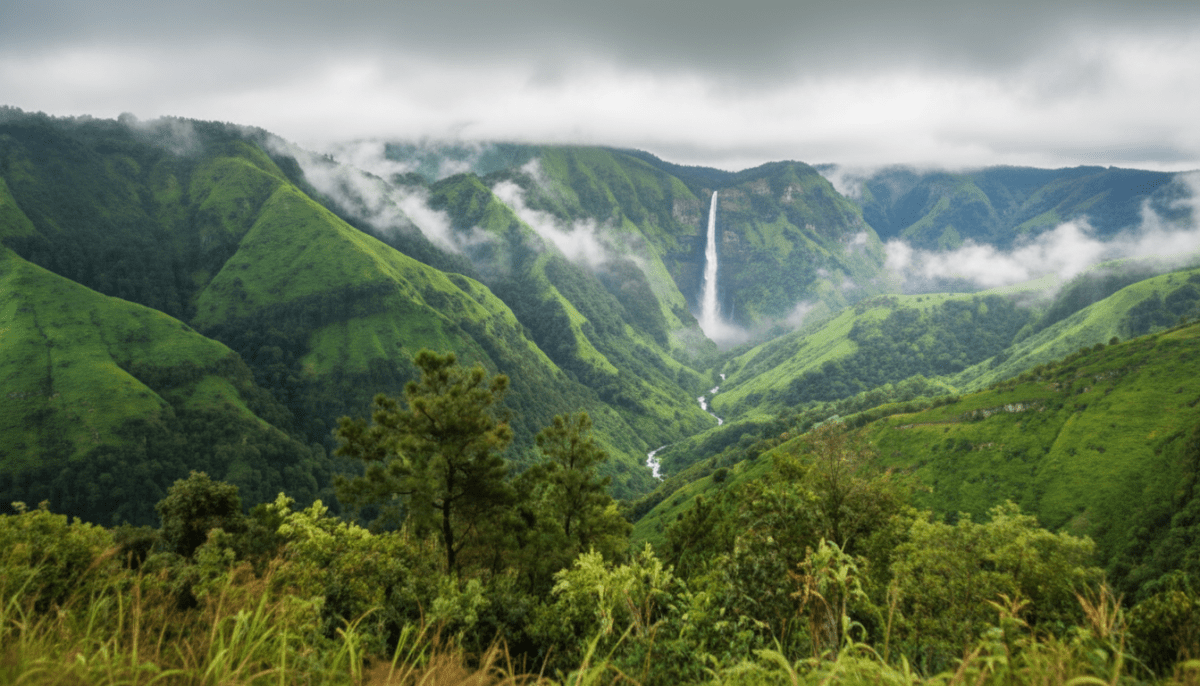
There is a place in Northeast India where the clouds do not just drift across the sky; they physically descend to embrace the lush, rolling hills, creating an ethereal landscape of misty valleys and cascading waterfalls. This Meghalaya travel guide explores the “Abode of Clouds,” a region where nature remains raw and unfiltered. For decades, travelers seeking authentic experiences have looked toward this magnificent state, but planning a journey here requires more than just booking a flight. To truly experience the magic of the Khasi, Garo, and Jaintia hills, you must immerse yourself in a world where bridges are grown instead of built, rivers are as clear as liquid glass, and centuries-old matrilineal traditions dictate the rhythm of daily life.
If you are looking for the definitive answer on how to plan your trip, a comprehensive Meghalaya travel guide involves flying into Guwahati or Shillong and dedicating at least seven days to explore the region’s diverse offerings. Budgeting approximately ₹15,000 to ₹25,000 INR per person will comfortably cover local homestays, private or shared cabs, sampling traditional Khasi cuisine, and experiencing major highlights like the Double Decker Living Root Bridge and Dawki river boating. By embracing the local culture and utilizing community-led tourism, you ensure an unforgettable, eco-friendly adventure into one of India’s most pristine environments.
TL;DR: Quick Summary
- The Ideal Duration: A 7-day itinerary is the sweet spot to comfortably cover Shillong, Cherrapunji (Sohra), Nongriat, Dawki, and Mawlynnong without extreme rushing.
- Living Architecture: The Double Decker Living Root Bridge in Nongriat is a bioengineering marvel created by the Khasi tribe, requiring a rigorous 3,500-step trek to witness.
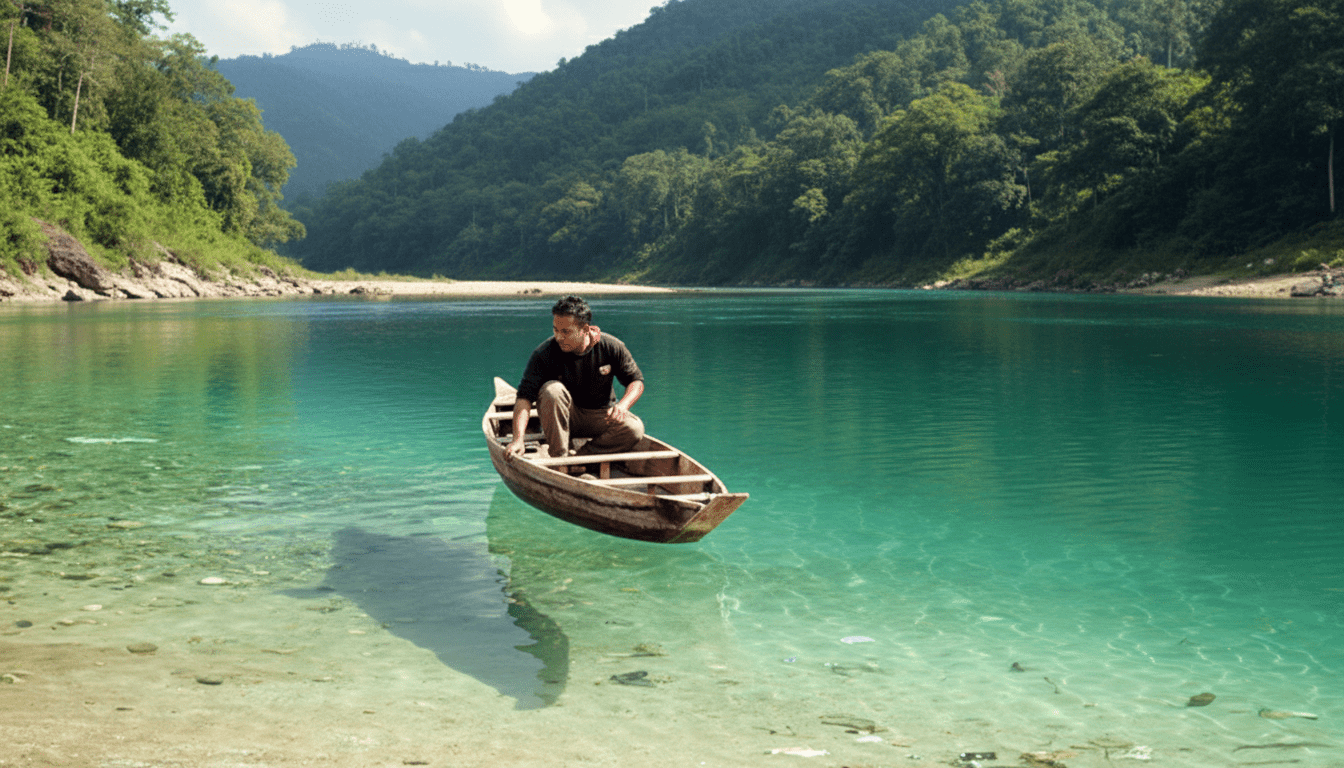
- Crystal Clear Waters: The Umngot River Dawki offers surreal boating experiences where the water is so transparent that boats appear to float in mid-air.

- Cultural Depth: The state is deeply rooted in a matrilineal society where lineage and property pass through women, promoting remarkable gender equality and community strength.
- Culinary Adventures: Traditional Khasi cuisine is a must-try, featuring rustic, flavorful dishes like Jadoh (rice and meat) and Dohneiiong (pork in black sesame sauce).
What Defines the Magic of the Abode of Clouds?
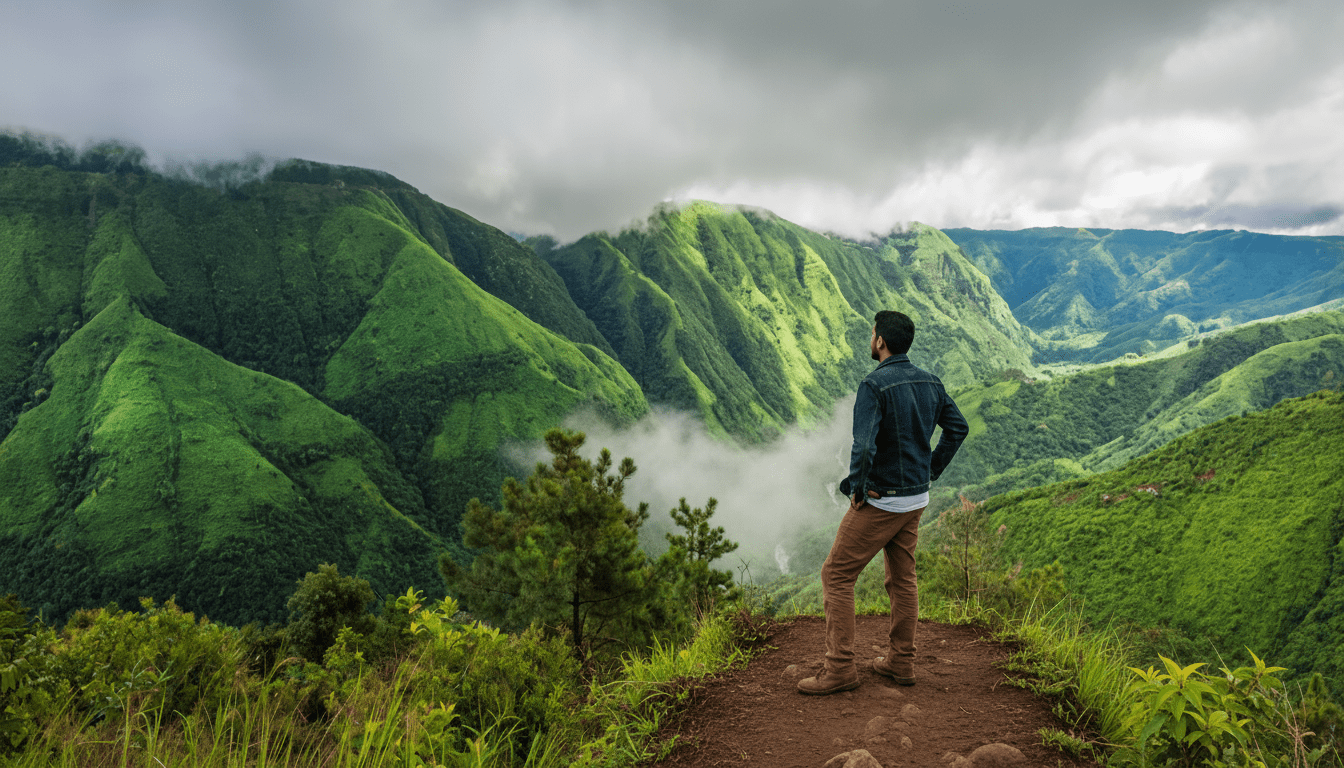
When crafting the perfect Meghalaya travel guide, it is essential to look beyond the standard tourist checkpoints and understand what physically and culturally shapes this land. The state’s geography is defined by the Shillong Plateau, heavily dissected by deep gorges and ravines. This topography is what creates breathtaking viewpoints like the Laitlum Canyon, famously translating to the “end of the hills,” which offers sweeping, uninterrupted panoramas of the deep valleys.
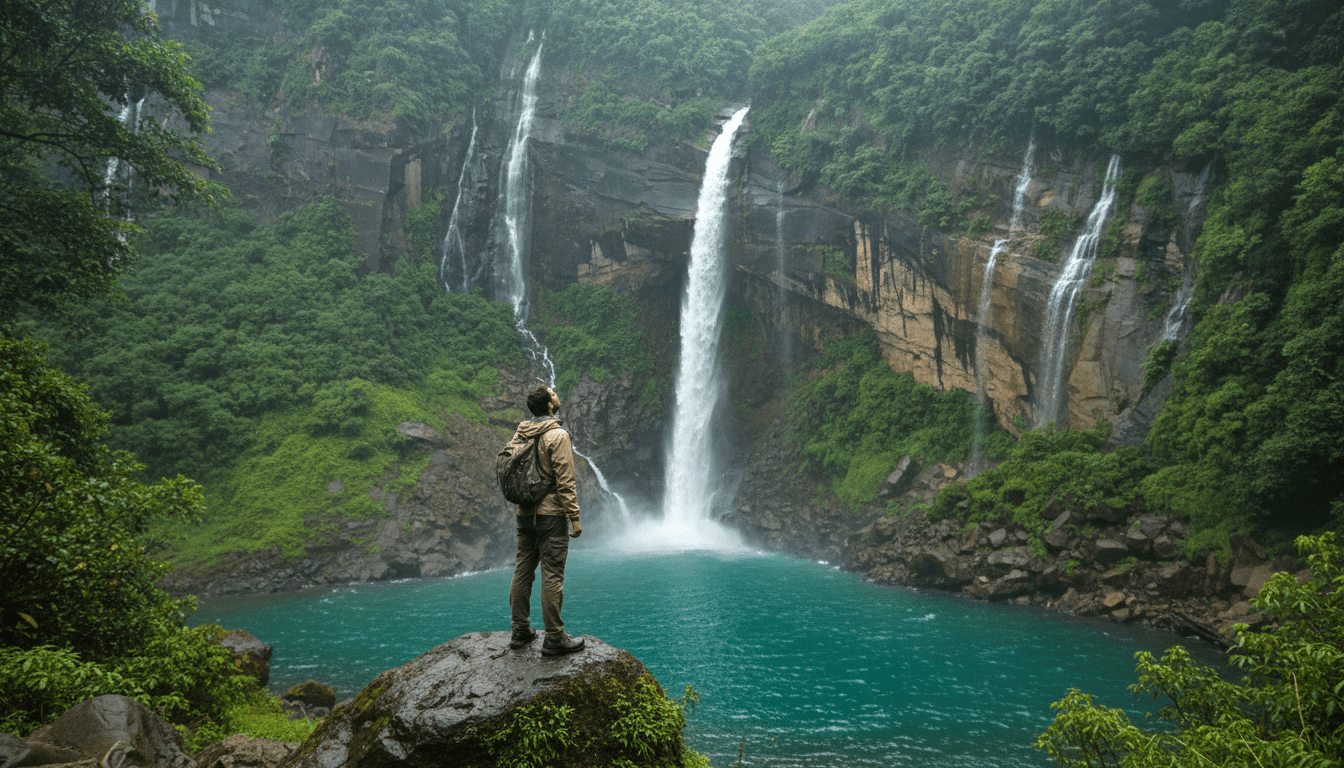
Furthermore, the state is home to some of the most dramatic waterfalls on the planet. The Nohkalikai Falls in Cherrapunji stands as the tallest plunge waterfall in India. During the monsoon season, this rain-fed giant roars with incredible force, plummeting straight off a sheer cliff into a vibrant green plunge pool below. Beyond the waterfalls, the region is a global hotspot for spelunking (cave exploration). The Mawsmai Cave offers a well-lit, accessible introduction to limestone formations, while the Arwah Cave provides a more adventurous, thrilling descent into narrow holes lined with ancient fossils.
When is the Best Time to Follow This Meghalaya Travel Guide?
Timing your visit is arguably the most critical decision you will make. Because Meghalaya hosts places like Cherrapunji and Mawsynram—contenders for the wettest places on Earth—the weather drastically alters the landscape and accessibility. An essential part of any Meghalaya travel guide is understanding how the seasons dictate the clarity of the rivers and the safety of the trails.
For the vast majority of travelers, the optimal window is between October and April. During the winter and spring months, the humidity drops, the skies clear up, and the hiking trails become significantly less slippery, making the descent to the Double Decker Living Root Bridge much safer. Furthermore, this is the only time you can truly appreciate the Umngot River Dawki. Post-monsoon, the river settles and becomes incredibly clear, allowing you to see the rocks and pebbles perfectly on the riverbed.
Conversely, visiting during the monsoon (June to September) is strictly for hardcore adventure enthusiasts. While the landscape transforms into an unbelievably lush, vibrant green and the waterfalls are at their absolute peak, the trails become treacherous, leeches are abundant, and boating in Dawki is often suspended due to muddy, dangerous currents.
How is the Double Decker Living Root Bridge Created?
One of the most fascinating aspects of any Meghalaya travel guide is the story behind its living architecture. The Double Decker Living Root Bridge in Nongriat is not a structure built by machines or concrete; it is a profound testament to indigenous wisdom and bioengineering. As noted in this Meghalaya travel guide, these bridges represent a perfect harmony between humans and the forest.
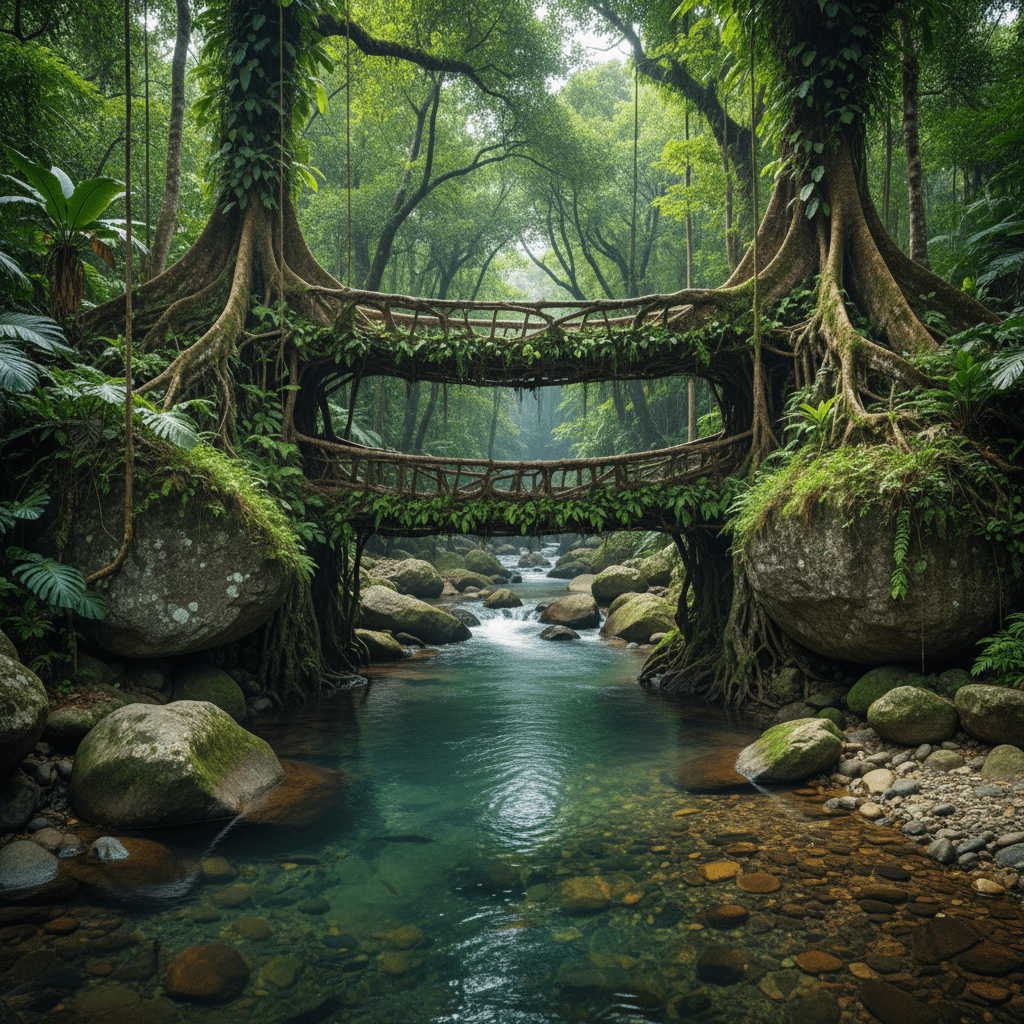
Faced with the challenge of crossing roaring rivers during heavy monsoons, the Khasi tribe developed a genius solution. They took the young, pliable aerial roots of the Ficus elastica (rubber fig tree) and guided them across the rivers using temporary bamboo scaffolding or hollowed-out betel nut trunks. Over a period of 15 to 25 years, these roots naturally grew, thickened, and fused together through a process called inosculation. As long as the parent tree remains healthy, these bridges continually self-renew and strengthen, with some structures capable of holding 50 people and lasting up to 500 years. The bridge in Nongriat is uniquely stacked in two tiers, a design specifically implemented so villagers could still cross safely even when extreme monsoon rains flooded the lower level.
Who is Preserving the Culture and Traditional Khasi Cuisine?
The soul of Meghalaya lies entirely in its people. The Khasi, Jaintia, and Garo tribes are the primary custodians of the land. Uniquely, these communities practice a matrilineal system. In this society, lineage is traced through the mother, and the youngest daughter typically inherits the ancestral property, while men traditionally move into their wives’ homes after marriage. This incredible social structure is a valuable addition to a Meghalaya travel guide, fostering deep community ties and financial independence for women.
This connection to the earth is deeply reflected in traditional Khasi cuisine. The food is unapologetically authentic, utilizing minimal oil and relying heavily on roasting, steaming, and fresh local herbs. Pork is a massive dietary staple. If you visit local eateries like Trattoria in Shillong, you must order Jadoh, a rustic dish of rice cooked with meat, turmeric, and bay leaves. Pair this with Dohneiiong, tender pork chunks slow-cooked in a rich, nutty black sesame sauce, or brave the pungent, earthy flavors of Tungrymbai, a fermented soybean paste cooked with ginger and garlic. Every meal is a direct reflection of the surrounding forests and the seasons, making traditional Khasi cuisine an unforgettable part of your trip.
Step-by-Step Guide: The Perfect 7-Day Meghalaya Itinerary
If you want to experience everything from Asia’s cleanest village to the depths of ancient caves, follow this structured week-long Meghalaya travel guide itinerary:
- Day 1: Arrival in Guwahati to Shillong: Fly into Guwahati by 1:00 PM. Hire a shared sumo (approx. ₹200) or a private cab (₹2,000) for the 3-hour scenic drive to Shillong. Spend the evening exploring Police Bazar and cafe-hopping to enjoy the city’s legendary rock music scene.
- Day 2: Explore the Scotland of the East: Spend the day visiting local Shillong highlights. Take a boat ride on the vast Umiam Lake, walk the horseshoe-shaped Ward’s Lake, and visit the Don Bosco Museum (entry ₹100) to understand Northeast Indian indigenous cultures.
- Day 3: Transfer to Cherrapunji (Sohra): Drive 2 hours to Cherrapunji. Visit the majestic Nohkalikai Falls and explore the stunning limestone stalactites inside Mawsmai Cave. End the day with a thrilling walk through the fossil-lined Arwah Cave.
- Day 4: The 3,500-Step Nongriat Trek: Take a cab to Tyrna village (₹500). Begin the grueling but beautiful 3,500-step descent into the jungle. Cross suspension bridges over turquoise pools until you reach the Double Decker Living Root Bridge. Stay overnight in a local eco-homestay.
- Day 5: Dawki River Boating: Trek back up to Tyrna (hire a porter for your luggage if needed). Hire a cab directly to Dawki. Experience a magical 45-minute boat ride (₹700 – ₹1,000) on the crystal-clear Umngot River Dawki near Shnongpdeng, floating above the rocky riverbed.
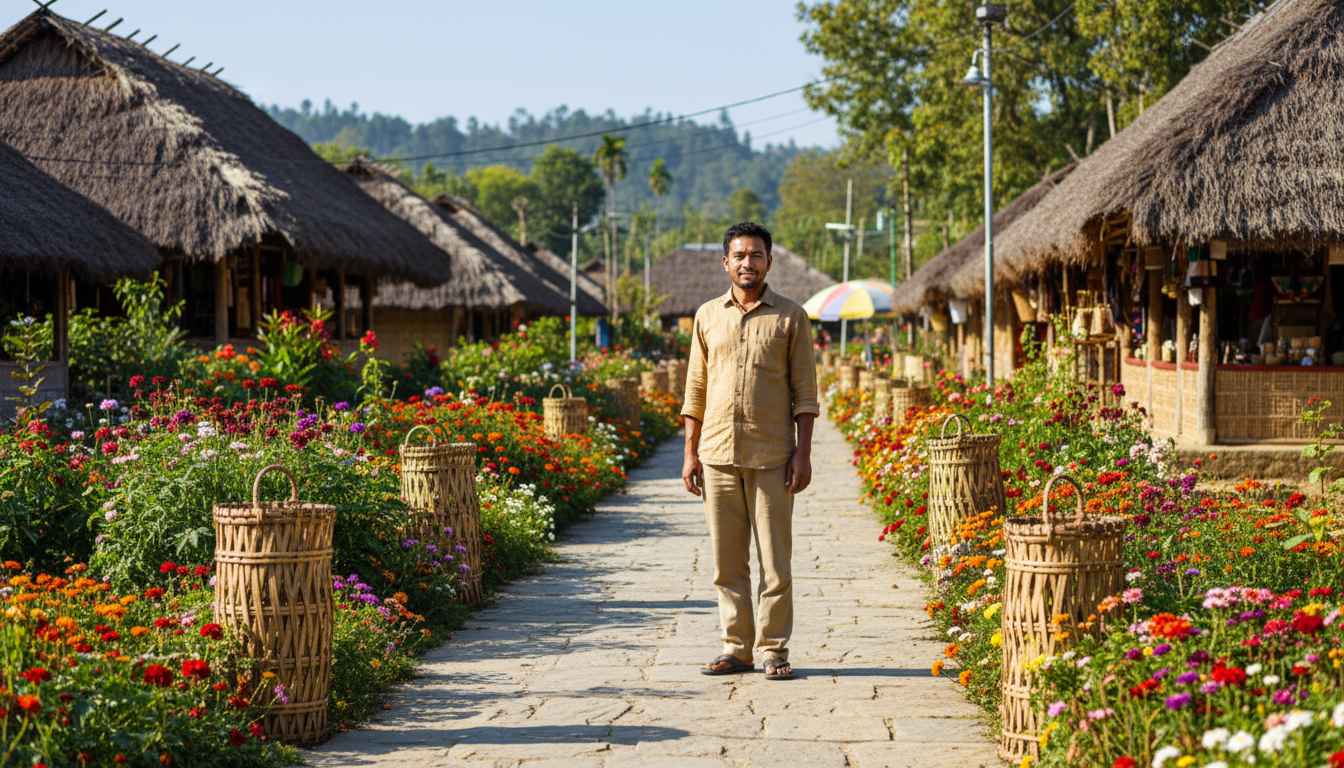
- Day 6: Discover Asia’s Cleanest Village: Drive to Mawlynnong, famously known as Asia’s cleanest village. Walk the spotless, flower-lined stone pathways, visit their single living root bridge, and climb the bamboo Sky View Tower to gaze across the plains of Bangladesh.
- Day 7: Return to Reality: Drive back from Mawlynnong to Shillong, and proceed to the Guwahati airport. Aim for an evening flight to ensure you have plenty of buffer time for the mountain roads.
Benefits & Features of Eco-Tourism in Meghalaya
Following a conscious Meghalaya travel guide offers incredible advantages for both the traveler and the local environment. This Meghalaya travel guide emphasizes the importance of community impact and sustainable exploration:
- Empowering Local Economies: By staying in community-run village homestays and hiring local guides, your tourism dollars go directly to the families preserving these environments, rather than massive international hotel chains.
- Sustainable Infrastructure: Villages heavily promote eco-friendly practices. In Asia’s cleanest village, Mawlynnong, plastic is actively discouraged, and organic waste is religiously turned into compost in bamboo dustbins.
- Digital Detox: Because mobile networks (like Jio and Airtel) are highly unreliable deep in the valleys of Nongriat and Dawki, travelers are forced to disconnect from their screens and genuinely connect with nature and their fellow hikers.
- Physical Conditioning: The sheer verticality of the terrain, specifically the 6-kilometer round trip of the Nongriat trek, offers an intense, rewarding cardiovascular workout amidst pristine air.
Real-World Case Study: The Harmonious Triumph of Mawlynnong
To truly grasp the cultural discipline highlighted in this Meghalaya travel guide, one must look closely at Mawlynnong, globally celebrated as Asia’s cleanest village. This title was not achieved through a sudden government mandate; it is the result of a philosophy passed through generations.
In this village of roughly 900 Khasi residents, cleanliness is deeply ingrained in their identity. Every morning, villagers step out to sweep not just their own homes, but the public stone pathways. Bamboo dustbins are strapped to almost every tree, ensuring zero littering. Unlike many rural areas struggling with sanitation, 100% of the homes in Mawlynnong have functioning toilets. The village also operates on a strict no-plastic policy, utilizing reusable baskets and cloth bags. What makes Mawlynnong so profound is that this is not a performance for tourists; it is an authentic rhythm of life. When you walk through the village, past the beautiful Church of the Epiphany and the curious Balancing Rock, you realize that true sustainability does not require advanced technology—it requires community unity and unwavering respect for the environment.
“For over a hundred years, you have maintained a culture that respects nature and fosters sustainable mobility—even finding ways to connect across rivers without violating the living trees. At a time when the world is searching for sustainable solutions… it is extraordinary how local indigenous solutions can serve as global examples.” — Nirmala Sitharaman, Finance Minister of India, upon visiting a living root bridge.
“Mawlynnong proves that when individuals take ownership of their surroundings, lasting transformation becomes not only possible but inevitable… Sustainable living doesn’t require complex technology or massive funding.” — Club Mahindra Travel Review.
Data Table: Quick Reference Destination Costs & Vibe
| Destination | Primary Attraction | Difficulty / Vibe | Est. Experience Cost (INR) | Ideal Time Spent |
|---|---|---|---|---|
| Shillong | Ward’s Lake, Don Bosco Museum | Easy / Cosmopolitan & Musical | ₹100 – ₹500 (Entry Fees) | 1 to 2 Days |
| Cherrapunji | Nohkalikai Falls, Mawsmai Cave | Easy to Moderate / Misty & Raw | ₹30 – ₹100 (Caves/Falls) | 1 to 2 Days |
| Nongriat | Double Decker Living Root Bridge | High (3,500 steep steps) | ₹50 Entry + ₹600 Guide | 1 Full Day / Overnight |
| Dawki (Shnongpdeng) | Umngot River Dawki Boating | Relaxed / Scenic & Calming | ₹700 – ₹1,000 (Per Boat) | 4 to 6 Hours |
| Mawlynnong | Asia’s Cleanest Village, Sky Tower | Very Easy / Peaceful & Floral | ₹50 (Viewpoint Entry) | Half to 1 Full Day |
Unique Insight: The Dark Legend and the Whistling Village
While the lush green landscapes evoke peace, Meghalaya is a land steeped in intense, sometimes dark folklore. The most iconic waterfall in the state, Nohkalikai, carries a deeply tragic legend. The name translates to “Jump of Ka Likai.” According to local oral history, Ka Likai was a widow who remarried. Her new husband, insanely jealous of the love she gave her infant daughter, murdered the child while Ka Likai was at work and cooked the infant into a meal. Returning exhausted, the mother ate the food, only to discover the horrific truth shortly after. Overcome with unspeakable grief, she ran to the edge of the plateau and threw herself off the cliff where the waterfall now plunges. Knowing this story completely transforms the way you view the roaring waters, adding a vital layer of depth for any Meghalaya travel guide.
On a much lighter, yet equally fascinating cultural note, lies Kongthong, known as the Whistling Village. Located in the East Khasi Hills, the residents here practice a tradition called Jingrwai Iawbei. Mothers compose a unique, whistled melody for their children at birth. Throughout their lives, villagers call out to each other across the valleys using these specific tunes instead of spoken names, creating a living, breathing symphony that echoes through the hillsides. It is these hidden, deeply human elements that make a Meghalaya travel guide so much more than just a list of coordinates.
[Insert Video Placeholder Here]
FAQs
How do I physically reach Meghalaya?
The most convenient way to reach Meghalaya is to fly or take a train to Guwahati in Assam. From there, you can hire a private taxi (approx. ₹2,000) or take a shared sumo/bus (approx. ₹200) for a 3-hour scenic drive up into the hills to reach the capital city, Shillong. Alternatively, there are limited direct flights into Shillong Airport from major hubs like Kolkata.
What is the Double Decker Living Root Bridge?
It is a unique, two-tiered pedestrian bridge located in Nongriat village, bioengineered by the indigenous Khasi tribe. They carefully guided the aerial roots of the Ficus elastica (rubber fig tree) across a river over 15 to 25 years. It requires a rigorous 3,500-step trek to reach.
When is the best time to do Umngot River boating?
To experience the famous crystal-clear waters of the Umngot River Dawki where boats look like they are floating in mid-air, you must visit between October and April. During the monsoon season (June to September), heavy rains turn the river muddy and dangerous.
Is traditional Khasi cuisine overly spicy?
No, traditional Khasi cuisine is generally much milder than mainstream Indian food. It relies heavily on natural flavors, minimal oil, and unique ingredients like black sesame paste and fermented bamboo shoots. However, if you love heat, you can easily request a side of spicy bhoot jolokia (ghost pepper) chutney.
What makes Mawlynnong Asia’s cleanest village?
Mawlynnong, celebrated as Asia’s cleanest village, earned this title through a generational, community-led effort. Cleanliness is a deeply ingrained habit; residents collectively sweep public pathways daily, use abundant bamboo dustbins, enforce a strict no-plastic policy, and ensure that 100% of the households have functioning toilets.
Do I need to hire a guide for the Nongriat trek?
While the path to the Double Decker Living Root Bridge is well-marked with stairs, hiring a local guide (approx. ₹600 – ₹1000) is highly recommended for first-timers. They provide safety on slippery paths, share cultural insights, and can take you to hidden natural pools like Rainbow Falls that are difficult to find alone.
What should I pack for a trip to Meghalaya?
Due to unpredictable weather, always pack light rain gear (a waterproof jacket or umbrella), even in winter. Sturdy, anti-slip trekking shoes are absolutely essential for navigating wet stone stairs. Additionally, carry enough physical cash, as mobile networks and UPI payments frequently fail in remote villages.
Conclusion & CTA
Meghalaya is not a destination you simply visit; it is a profound environment that you experience with every single sense. From the cardiovascular triumph of descending to the Double Decker Living Root Bridge, to the surreal calm of floating on the Umngot River Dawki, and the deep, rustic flavors of traditional Khasi cuisine, the Abode of Clouds offers a transformative escape from the modern world. By traveling respectfully, supporting local homestays, and honoring the matrilineal traditions of the Khasi people, you become part of a sustainable ecosystem that values nature above all else.
Are you ready to pack your waterproof boots and step into the mist? Bookmark this comprehensive Meghalaya travel guide for your upcoming adventure, and share it with your favorite travel partner! Let us know in the comments below which part of this magical state you are most excited to explore first.
Related Articles:
- Travel to Tungnath: 7 Ultimate Tips for the Perfect Trek
- The Ultimate Varkala Travel Guide: Discovering Kerala’s Cliffside Paradise
- A Soulful Guide to Munnar: Budget, Hidden Gems, and the Magic of the Mist
Source: