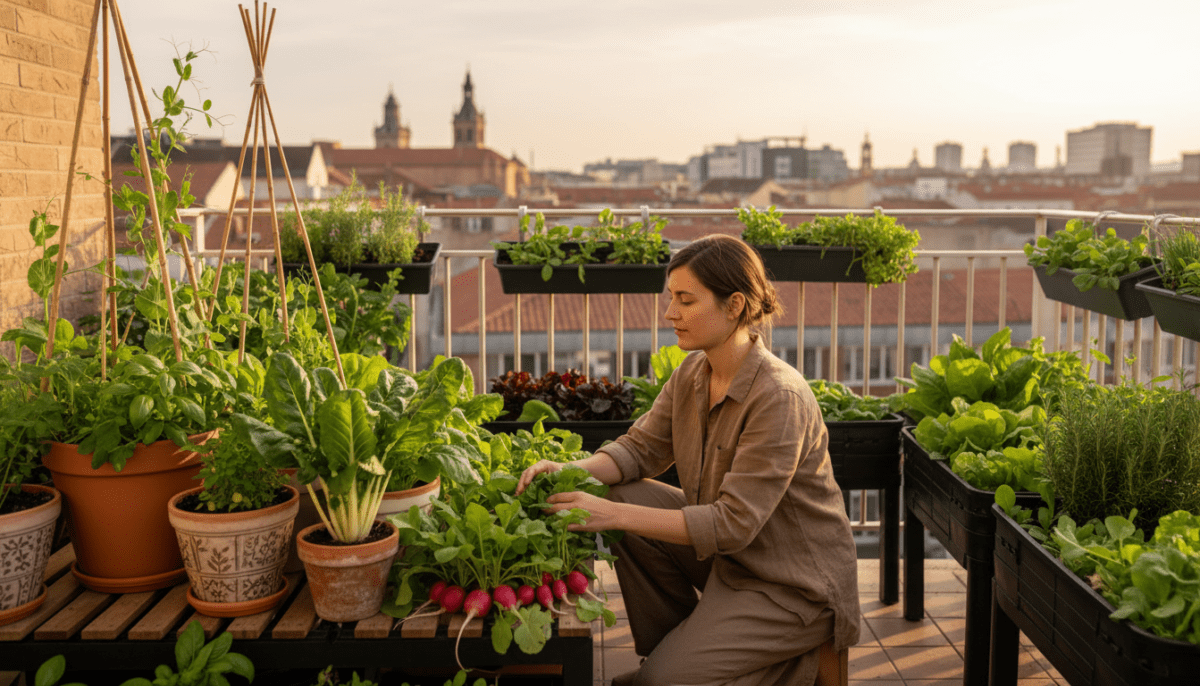
Have you ever looked at your empty apartment balcony and wished you could transform it into a lush, edible oasis? You are definitely not alone. Across major cities, the trend of turning small urban spaces into thriving mini-farms is booming. However, many beginners struggle to know exactly what to plant when the spring season hits, often buying the wrong seedlings or planting them at the wrong time. If you want to maximize your harvest and avoid common beginner mistakes, you need to choose the right crops, specifically european vegetables for balcony plants, that naturally thrive in limited soil, withstand the wind of higher floors, and adapt to fluctuating urban temperatures.
There are many european vegetables for balcony plants that thrive during the spring season include cold-resistant leafy greens like lettuce, spinach, and arugula, alongside fast-growing root vegetables like radishes and compact dwarf peas . Once the mid-May frosts have passed, you can easily transition your pots to heat-loving crops like cherry tomatoes, peppers, and zucchini . By combining these specific plants using smart spacing and timing, you can establish a continuous, productive harvest cycle right outside your window without needing a traditional backyard plot .
TL;DR: Quick Summary
- You can successfully cultivate a highly productive balcony vegetable garden by planting european vegetables for balcony plants and cold-hardy spring greens in April and transitioning to heat-loving vegetables after mid-May .
- Dwarf peas, such as the Snowbird and Little Marvel, are ideal vertical climbers and european vegetables for balcony plants that fix nitrogen in the soil without taking up horizontal space .
- Fast-growing salad greens like arugula and spinach provide massive yields when you utilize the cut-and-come-again harvest method .
- Salad radishes are perfect container gap-fillers and european vegetables for balcony plants, germinating in days and ready to eat in under a month .
- Smart permaculture combinations—like planting tall peas, surface-covering lettuce, and quick-harvest radishes in a single pot—maximize your balcony’s yield while protecting the soil .
What Are the Best European Vegetables for Balcony Plants?
When planning your urban oasis, selecting the right varieties is half the battle. A successful balcony vegetable garden requires plants that do not mind cramped root systems. Fortunately, the rich heritage of European agriculture offers a massive variety of compact, high-yielding european vegetables for balcony plants perfectly suited for this environment.
First, focus on leafy greens. Looseleaf lettuce, dense head lettuce (like Romaine or Butterhead), spinach, arugula, and Swiss chard are absolute staples . These european vegetables for balcony plants have shallow root systems, making them incredibly adaptable to window boxes, balcony tubs, and shallow planters . They grow fast and prefer the cool weather of early spring.
Next, incorporate legumes that are bred specifically for small spaces. Dwarf peas are some of the best european vegetables for balcony plants to grow in containers because their bushy, vigorous vines are compact but highly productive . Varieties like the Snowbird Pea (a snow pea that can be eaten whole), the Little Marvel (an old British heirloom shelling pea), and the Blue Bantam Dwarf are excellent choices . Some of these reach only 40cm to 60cm in height, meaning they only require very short vertical supports or a mini bamboo teepee .
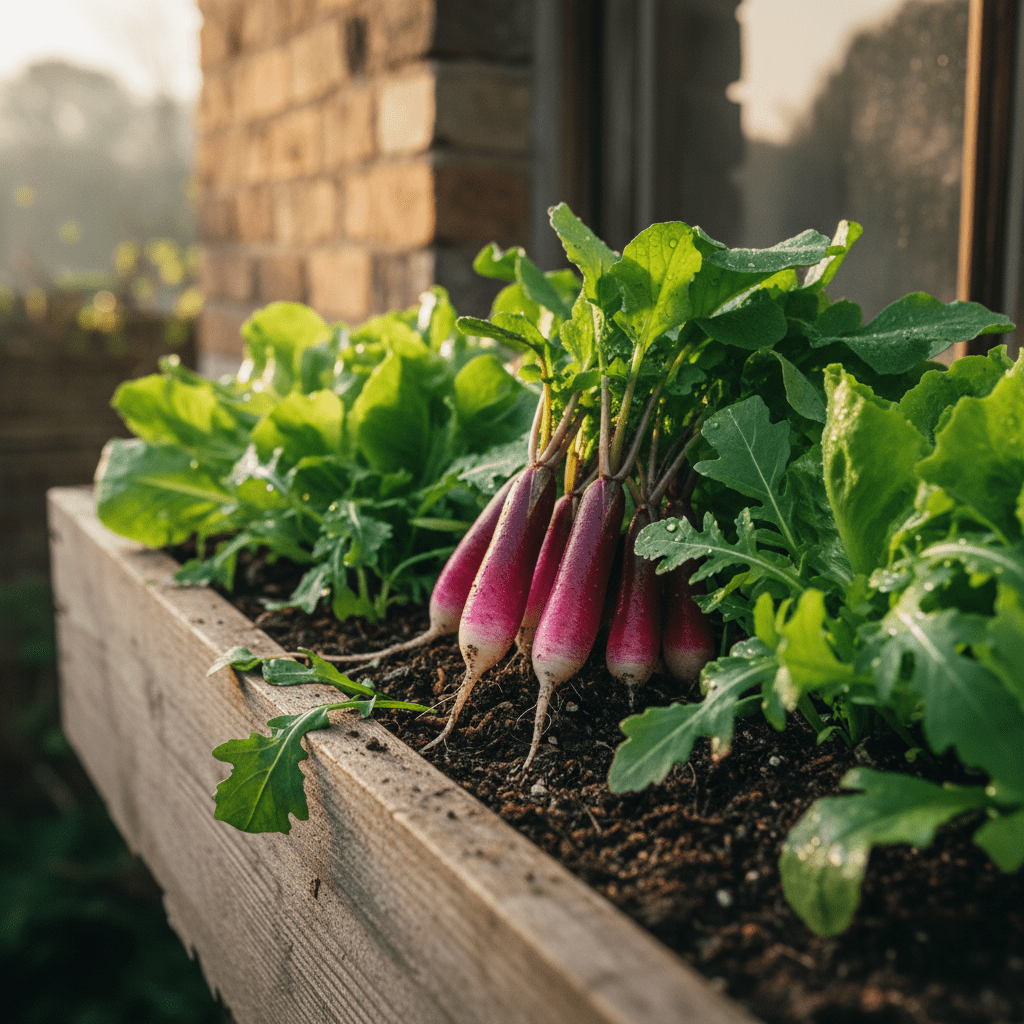
Finally, no spring garden is complete without radishes. Salad radishes like the Scarlet Globe, the purple-hued Amethyst, or the cylindrical French Breakfast 4 Francis are some of the most rewarding european vegetables for balcony plants for balcony farming . They form small, succulent roots in just four weeks and add a wonderful peppery crunch to your spring salads .
When Is the Right Time to Start Your European Vegetables for Balcony Plants?
Timing is arguably the most critical element of urban gardening. The end of April and the entirety of May are the ultimate seasonal windows for growing european vegetables for balcony plants because they allow you to do two things simultaneously: establish quick-growing spring crops for containers while preparing your heat-loving plants .
In April, your balcony organization should divide into two parallel streams. You should immediately directly sow cold-resistant european vegetables for balcony plants—like lettuce, spinach, arugula, chives, and peas—outside . These specific species actually prefer cooler soil temperatures to germinate and will rapidly enter their harvest phase .
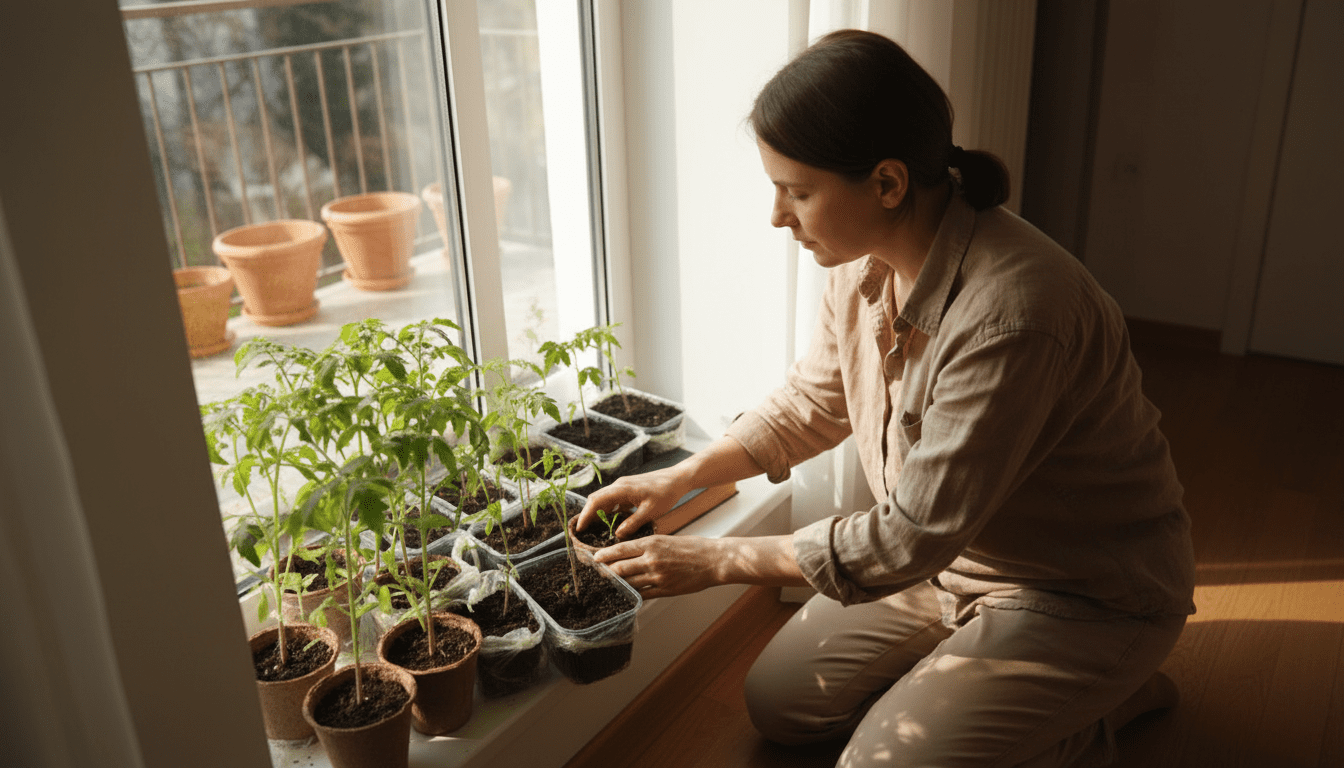
Simultaneously, you should be starting your tomatoes, peppers, and basil indoors . Why? Because of a meteorological phenomenon known in Europe as the “Ice Saints” (typically spanning from May 11 to May 13) . Before you move tender european vegetables for balcony plants outside, remember that during this window, late frosts can still unexpectedly strike and decimate young, tender plants . Heat-loving plants become highly stressed at temperatures below 10°C, leading to a physiological standstill where their growth completely stops, roots fail to develop, and future yields are ruined . It is only after mid-May, once the Ice Saints have passed, that you should confidently transplant your tomatoes, zucchini, and cucumbers into their permanent outdoor pots .
How Does Balcony Permaculture Work for European Vegetables for Balcony Plants?
A traditional garden has the natural ability to self-regulate its moisture and pest populations, but a balcony is an entirely isolated, human-dependent system . Therefore, rather than viewing your balcony as a random collection of individual pots, you must treat it as a functioning ecosystem. A permaculture balcony focusing on european vegetables for balcony plants is a matter of strict organization where every single plant serves a distinct function .
The secret lies in combination planting. Instead of dedicating one whole pot to a single crop, you mix species of european vegetables for balcony plants that utilize different resources and spatial layers. For example, in a large, deep planter, you should plant dwarf peas right in the center . They will grow vertically, utilizing the empty airspace without casting too much shade on the lower plants . Around the base of the peas, plant a thick border of leafy greens like lettuce or spinach . These leafy european vegetables for balcony plants act as a living mulch, covering the soil surface and drastically reducing water evaporation from the sun and the wind . Finally, around the very edge of the container, sow your radish seeds . Radishes occupy a very shallow soil layer and are harvested in just a few weeks, meaning they exit the ecosystem before the peas or the lettuce ever need that extra space .
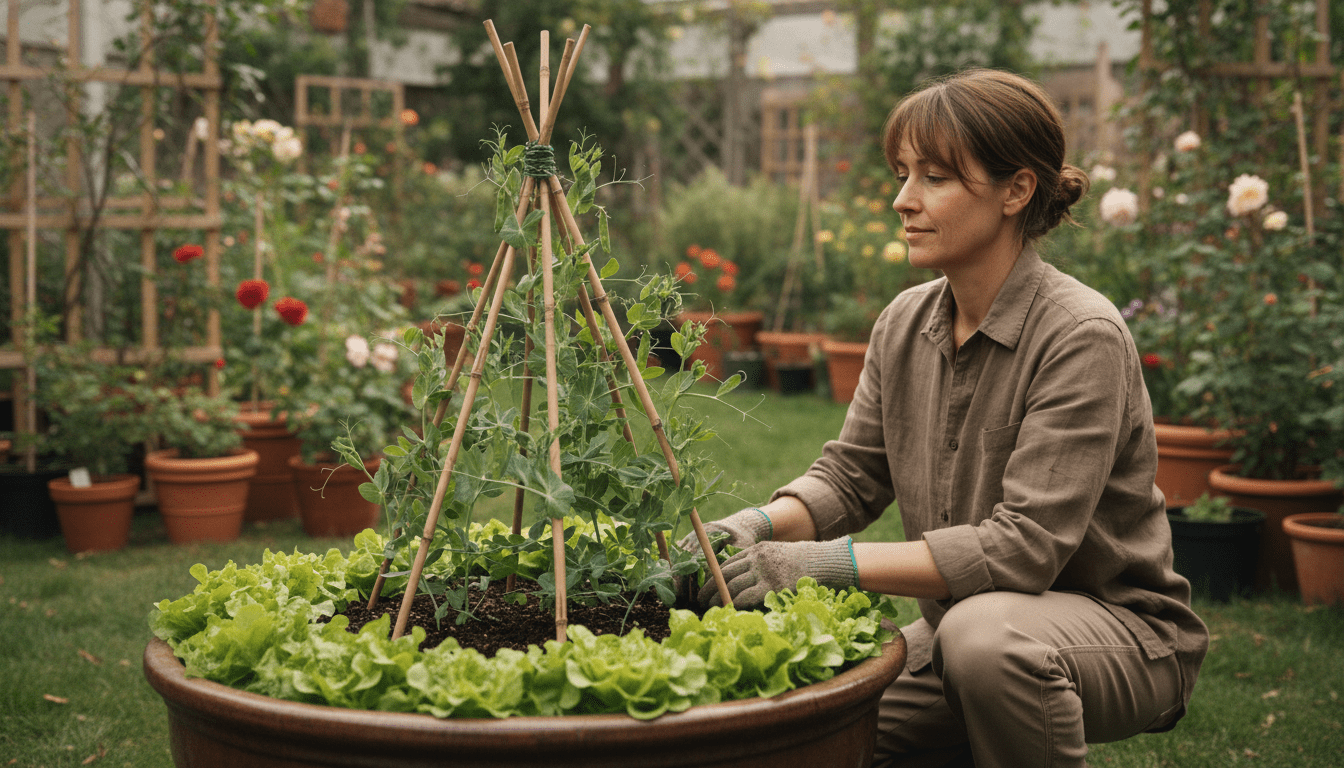
This sophisticated layout guarantees that your plants never directly compete for the same space or nutrients at the same time, leading to healthier crops and a more robust balcony vegetable garden with european vegetables for balcony plants .
Who Should Utilize These European Vegetables for Balcony Plants Tips?
Anyone with a sliver of outdoor space can become a successful urban farmer, provided they understand their specific microclimate. Your success with european vegetables for balcony plants heavily depends on the orientation of your balcony vegetable garden, which dictates light exposure and heat retention.
- South and West-Facing Balconies: These receive intense, direct sunlight and warmth . Spring crops like spinach and lettuce will finish their life cycle much faster here (and may bolt or turn bitter if it gets too hot) . These balconies are perfect for european vegetables for balcony plants and sun-worshipping crops like cherry tomatoes, peppers, and even eggplants .
- East-Facing Balconies: Offering gentle morning sun and afternoon shade, eastern orientations allow you to keep your delicate leafy crops producing much longer into the summer before you need to transition to tomatoes .
- North-Facing Balconies: While challenging for tomatoes or zucchini, north-facing spaces are absolutely ideal for the continuous, summer-long production of shade-tolerant leafy european vegetables for balcony plants, fresh herbs, and dwarf peas .
Step-by-Step Guide: How to Start and Maintain Your European Vegetables for Balcony Plants
Transforming an empty terrace into a thriving food source requires a methodical approach. Follow these expert container gardening tips to guarantee a bountiful spring harvest of european vegetables for balcony plants.
- Select the Right Containers and Substrate: Because balconies lack natural groundwater, your soil needs to be perfect. Choose large, deep pots (at least 30cm wide and deep for root european vegetables for balcony plants and peas) equipped with drainage holes . Mix a high-quality, peat-free potting compost with organic fertilizer and a porous material like Perlite to ensure excellent water absorption and aeration .
- Sow Your Seeds Strategically: For rewarding european vegetables for balcony plants like salad mixes, simply broadcast (scatter) the seeds lightly across the surface of the soil and cover them with a quarter-inch of compost . For radishes, sow the seeds 1cm deep and strictly space them 2.5cm apart to give the roots enough room to swell without overcrowding .
- Water with Precision: Balcony pots dry out incredibly fast due to wind exposure . You must keep the soil consistently moist. Inconsistent watering will cause your european vegetables for balcony plants like radishes to split open, while dry soil will cause your lettuce to wilt and turn yellow . Water the soil directly, ideally in the early morning, using a fine mist to avoid damaging delicate seedlings .
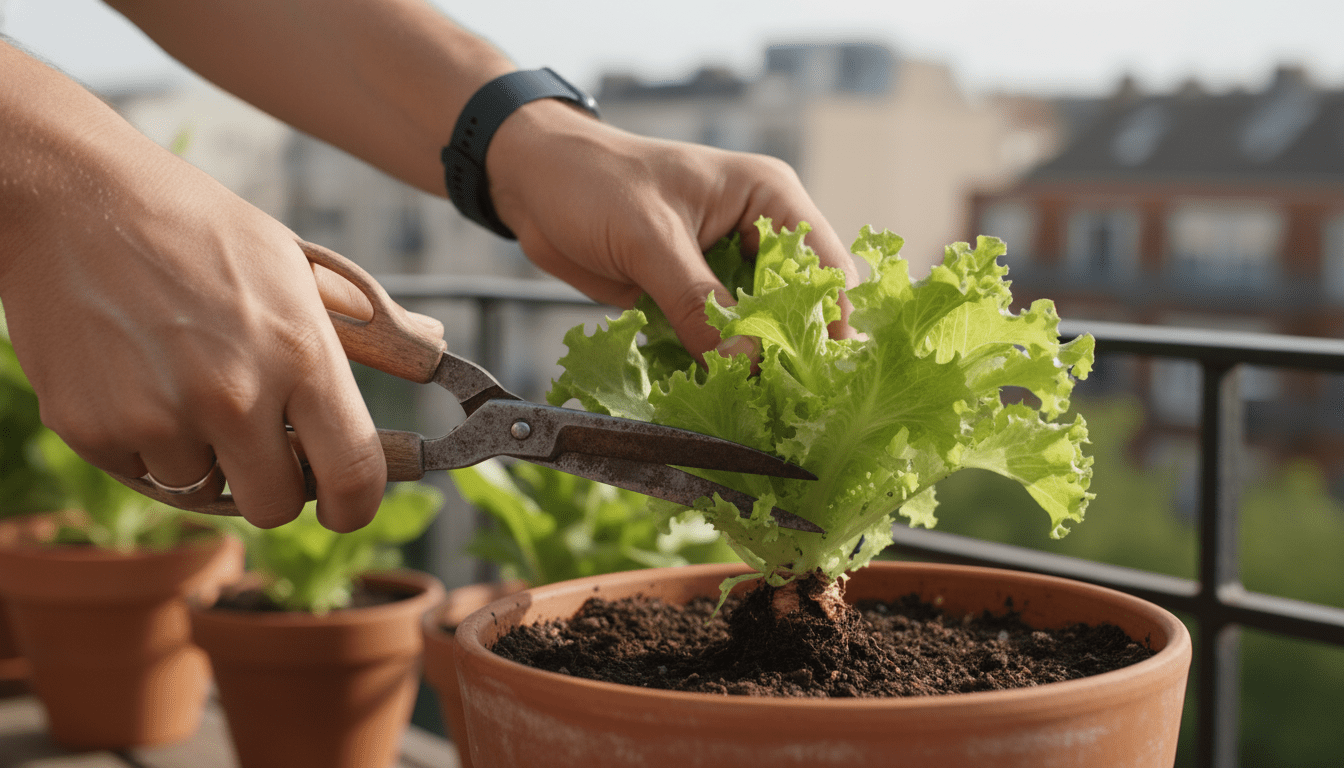
- Execute the Cut-and-Come-Again Harvest: To maximize your leafy european vegetables for balcony plants, never pull the whole plant out of the dirt. Wait until the leaves are 3 to 4 inches tall. Using sharp garden scissors, cut a handful of leaves about 1 inch (2.5 cm) above the soil line . Be careful not to cut into the central crown of the plant . By leaving the base intact, the leaves will magically regrow in just 7 to 10 days, allowing you to repeat the harvest multiple times .

- Wash and Store Professionally: Harvest your greens early in the morning when they are cool and crisp . Immediately plunge them into a large tub of cold water (you can add a splash of diluted vinegar to remove soil bacteria) . Never store greens wet; run them through a salad spinner until they are completely dry, then store them in an airtight container in the fridge . This keeps european vegetables for balcony plants sweet and crisp for over a week .
The Benefits and Features of European Vegetables for Balcony Plants
Embracing the cultivation of european vegetables for balcony plants offers a multitude of lifestyle and environmental advantages that extend far beyond simply having fresh ingredients for dinner.
- Continuous Food Supply: By mastering the cut-and-come-again harvest technique and practicing successional sowing (planting a new batch of seeds every two weeks), you guarantee a non-stop supply of european vegetables for balcony plants from April through October .
- Massive Cost Savings: A single seed packet of mesclun mix costs just a few dollars but can yield weeks of fresh, organic salad greens, drastically cutting down your grocery bills .
- Pest Control Without Chemicals: In a controlled balcony setting, you can easily implement organic defenses. Planting aromatic herbs like chives or edible flowers like Indian carnations and nasturtiums acts as a natural magnet that draws aphids away from your precious european vegetables for balcony plants .
- Nutritional Superiority: Homegrown greens are harvested at peak ripeness and consumed immediately, meaning they retain significantly higher vitamin content compared to store-bought greens that degrade during long transit times .
Real-World Case Study: Yields of European Vegetables for Balcony Plants
To truly understand the power of balcony permaculture, consider the scenario of a third-floor apartment in a bustling European city. The resident, dealing with strong afternoon winds and limited square footage, wanted to grow european vegetables for balcony plants but had failed in previous years by planting demanding crops too early.
This spring, they shifted their strategy. In late April, they set up three large, 40-liter containers for growing european vegetables for balcony plants. In the first container, they planted a perimeter of French Breakfast radishes and filled the center with a mesclun salad mix. Within 28 days, the radishes were perfectly crisp and ready to pull, which naturally aerated the soil and freed up space just as the salad mix needed to expand its roots.
In the second container, they constructed a small bamboo teepee and planted Snowbird dwarf peas . Around the base, they planted spinach. The peas climbed upward, utilizing the vertical airspace, while their roots fixed essential nitrogen into the soil, acting as a natural fertilizer for the spinach below . By the time mid-May rolled around and the Ice Saints had passed, the resident had already enjoyed three weeks of fresh salads from their european vegetables for balcony plants. They were then able to confidently introduce a cherry tomato plant into their third container, knowing the weather was finally warm enough to support it without causing physiological stagnation.
Expert Perspectives on European Vegetables for Balcony Plants
“A permaculture balcony is not a matter of aesthetics, but of organization: each plant has a function, and the entire layout can be organized for continuous production.”
“The best way to wash greens is by plunging them into cold water and diluted vinegar solution… Cold water is the key to fresh, crisp, and sweet-tasting greens. If the lettuce and greens are coated in water when they are stored, they will wilt and become slimy after a couple of days.”
European Vegetables for Balcony Plants Growth Matrix
| Crop Type | Recommended Variety | Days to Harvest | Ideal Orientation | Container Depth |
|---|---|---|---|---|
| Dwarf Pea | Snowbird / Little Marvel | 55 – 65 Days | South, West, North | Deep (30cm+) |
| Salad Radish | French Breakfast / Amethyst | 25 – 35 Days | South, East, West | Medium (15cm+) |
| Leafy Greens | Buttercrunch / Arugula | 30 – 40 Days | North, East | Shallow (10cm+) |
| Cherry Tomato | (Post-Frost Planting) | 60 – 80 Days | South, West | Deep (40cm+) |
The Hidden Danger to European Vegetables for Balcony Plants
When new gardeners set up a balcony vegetable garden, they obsess over sunlight and watering schedules, but they almost entirely ignore the most destructive invisible force in growing european vegetables for balcony plants: the wind.
Unlike a ground-level backyard that is protected by fences, higher-floor balconies act like wind tunnels . Constant wind exposure dramatically accelerates transpiration, where plants rapidly lose water through their leaves . This means that a potted plant on a windy balcony might need twice as much water as the exact same plant sitting in a quiet ground-level garden. Furthermore, the wind strips the top layer of moisture from the potting soil within hours. This is why planting “living mulches”—like allowing low-lying spinach or lettuce to cover the bare soil—is a critical mechanism for protecting your european vegetables for balcony plants from drying out and dying .
[Insert Video Placeholder Here]
Frequently Asked Questions
What are the fastest european vegetables for balcony plants?
Radishes are the undisputed champions of speed. Varieties like the Scarlet Globe germinate in just a few days and are ready to be harvested in roughly four weeks . Leafy greens like baby spinach and arugula are a close second, often ready for their first cutting in about 25 to 35 days .
What are the “Ice Saints” and why do they matter for european vegetables for balcony plants?
The “Ice Saints” refer to a period in mid-May notorious in European agricultural folklore for sudden, late-season frosts . You should wait until this period has completely passed before moving heat-loving european vegetables for balcony plants like tomatoes and basil onto your balcony to prevent cold stress .
How does the cut-and-come-again harvest work for european vegetables for balcony plants?
Instead of pulling a whole head of lettuce, you cut a handful of leaves about 1 inch above the soil line, being careful not to damage the central crown . The plant will regenerate new leaves, giving you another harvest in 7 to 10 days .
Can I really grow european vegetables for balcony plants like peas in a small pot?
Yes, absolutely! The key is to specifically purchase “dwarf” pea seeds. Varieties like Snowbird and Little Marvel have been selectively bred to grow as compact bushes (reaching only 40cm to 60cm), making them perfect european vegetables for balcony plants .
Conclusion & Next Steps
Growing your own food is one of the most rewarding experiences imaginable, and lacking a backyard is no longer a valid excuse to miss out. By carefully selecting the right european vegetables for balcony plants—such as fast-growing radishes, cut-and-come-again salad greens, and robust dwarf peas—you can effortlessly transform a sterile concrete slab into a vibrant, edible jungle.
Remember, the key to urban farming is seeing your balcony as a dynamic, interconnected system. Group your plants smartly, respect the timeline of the spring frosts, and never underestimate the power of a deep container and a daily watering schedule. Are you ready to harvest your first homegrown spring salad? Grab a few pots, order some european vegetables for balcony plants like dwarf pea and radish seeds today, and start building your very own sky-high permaculture paradise!
Related Article:
- Why Swicy Flavours Are Taking Over 2026 Food Trends
- Third Culture Cuisine Fusion Food Trend Explained
- The Ultimate Guide to Launching a Profitable Cloud Kitchen Business in 2026
- Functional Drinks Trend 2026: Why Matcha and Healthy Energy Alternatives Are Taking Over
- From Matcha to Ube: How Social Media is Shaping the Viral Food Trends 2026 Brings to Our Tables
- Transforming Waste into Wealth: How Cashew Apple Pulp and Juice Can Boost Farmers’ Income
Sources: