
Walk through a cashew plantation anywhere in the world just after the harvest season, and you will witness a staggering economic tragedy unfolding on the ground. Millions of vibrant red and yellow fruits—the raw material for cashew apple pulp and juice—are left to rot under the treMillions of vibrant red and yellow fruits—the cashew apples—are left to rot under the treeses, with only grazing goats paying them any attention. For generations, the agricultural industry has been obsessively fixated on the cashew nut, completely ignoring the fact that the fleshy apple attached to it constitutes a massive 75% of the total harvest. We are looking at a global scenario where an estimated 10 billion kilograms of highly nutritious cashew apples simply go to waste every single year. However, a quiet revolution is taking place, driven by smart food processing technologies and innovative agribusiness strategies that are turning this neglected byproduct into a lucrative cash cow.

Cashew apple pulp and juice can boost farmers’ income by transforming a traditionally discarded agricultural waste product into a range of highly profitable consumer goods. By implementing accessible preservation techniques and utilizing specialized extraction machinery, farmers can successfully remove astringent tannins and commercialize the juice, ultimately reducing poverty levels among rural processing groups by over 135%.
This is no longer just a theoretical concept discussed in academic food science journals. From the rural cooperatives of West Africa to the coastal farms of southern India, agricultural researchers and tech-savvy farmers are proving that cashew value addition is the key to rural economic stability. By harnessing a proper tannin removal process and scaling up with modern equipment, the modern farmer can unlock a year-round revenue stream using cashew apple pulp and juice.
TL;DR: Quick Summary
- Globally, nearly 10 billion kilograms of nutritious cashew apples are wasted annually because farmers lack the awareness and infrastructure to process them.
- Cashew apples are nutritional powerhouses, containing six times more Vitamin C than traditional citrus fruits.
- The primary obstacle to consumption is high astringency, which can be effectively neutralized using a tannin removal process that employs Modified Cassava Starch (MCS) or gelatin.
- Economic studies in Benin reveal that cashew apple processors earn enough income to pull themselves entirely above the poverty line, recording a 135.8% reduction in poverty.
- In India, grassroots farmers are successfully commercialising cashew apple pulp and juice using minimal investment, proving that cashew value addition is viable for smallholders.
- Modern extraction relies on specialized hardware, such as a cashew apple processing machine manufactured of food-grade stainless steel, ensuring high yields and hygienic commercial production.
What is the Potential of Cashew Apple Pulp and Juice?
To truly grasp the economic potential of this fruit, we must first understand its immense nutritional profile. Cashew apple pulp and juice are not merely sugary fruit derivatives; they are potent, health-boosting functional foods. The juice is packed with essential nutrients, including Vitamins B1, B2, and B3, as well as crucial minerals like calcium and iron. It is highly rich in beta-carotene and antioxidants, making it a valuable addition to diets aiming to prevent malnutrition, especially in developing regions.

The commercial potential of cashew value addition extends far beyond fresh cashew apple pulp and juice. When properly extracted and preserved, the pulp can be processed into a highly diverse portfolio of products. These include cashew apple squash, concentrated syrups, jams, jellies, and even bioethanol and animal feed. In regions like Goa, India, the fermented juice is distilled to produce “Fenny,” an alcoholic beverage that successfully secured a Geographical Indication (GI) tag in 2009. When farmers shift their mindset from “nut harvesting” to “whole fruit utilization,” they open the doors to multiple dynamic markets.
When Did Cashew Value Addition Gain Global Momentum?
The global shift toward utilizing the entire cashew fruit has been a gradual awakening. Brazil has been the undisputed pioneer in this space. Brazilian farmers and processors recognized the potential decades ago, successfully utilizing around 15% of their cashew apples to produce value-added items including high-quality cashew apple pulp and juice. In Brazil, cashew apple juice—locally celebrated as “suco de caju”—is an incredibly popular and highly commercialized, healthy beverage enjoyed by millions.
Seeing Brazil’s success, international organizations began taking notice. Initiatives like the African Cashew initiative (ACi), backed by TechnoServe and GIZ, started running feasibility studies and training local cooperatives in West African nations like Burkina Faso and Benin to upscale juice processing. Simultaneously, in India, institutions like the ICAR-Directorate of Cashew Research (DCR) began actively promoting the processing of non-alcoholic products from the apple to help domestic farmers increase their baseline earnings.
How Does the Tannin Removal Process Work?
If the cashew apple is so nutritious, why is it overwhelmingly discarded? The answer lies in the chemical composition of the fruit used for cashew apple pulp and juice. The skin and flesh of the fruit contain high levels of tannins (approximately 191 mg TAE/100mL). Tannins are water-soluble polyphenolic compounds that act as an evolutionary defense mechanism for the plant. When a human consumes raw cashew juice, these tannins aggressively react with salivary proteins, forming a complex that creates a harsh sensation of friction and intense astringency in the mouth. Furthermore, tannins act as antinutrients by inhibiting the body’s ability to digest starches and proteins efficiently.
Therefore, a robust tannin removal process is absolutely critical for the commercialization of cashew apple pulp and juice. Food scientists have developed several highly effective chemical methods to neutralize this issue:
- Modified Cassava Starch (MCS): This is highly effective. When MCS is added to the juice at a concentration of 3 g/L and allowed to react for 30 minutes at a pH of 3, it successfully removes up to 41.34% of the tannins from cashew apple pulp and juice. The amylose in the starch creates a hydrophobic core that traps the phenolic compounds, which are then precipitated out of the liquid.
- Gelatin Treatment: Utilizing gelatin at 2 g/L for 30 minutes can reduce tannin content by approximately 34.31%. Gelatin carries a positive charge that binds seamlessly to the negatively charged tannin molecules, creating a solid complex that is easily filtered out.
- Polyvinylpolypyrrolidone (PVPP): This synthetic polymer is widely used in the broader beverage industry. Treating cashew juice with 4 g/L of PVPP for 30 minutes at pH 4 yields a tannin reduction of about 32.45%.
While these chemical treatments slightly reduce the overall vitamin C and sugar content, the trade-off is absolutely necessary to create a highly palatable, commercially viable beverage.
Who is Providing the Hardware and Technology?
Transitioning from a conceptual idea to a profitable business requires reliable industrial hardware to process cashew apple pulp and juice. A significant player bridging this gap is Mariya Engineering Works, based in Coimbatore, Tamil Nadu. They specialize in manufacturing robust, commercial-grade equipment specifically tailored for this industry.
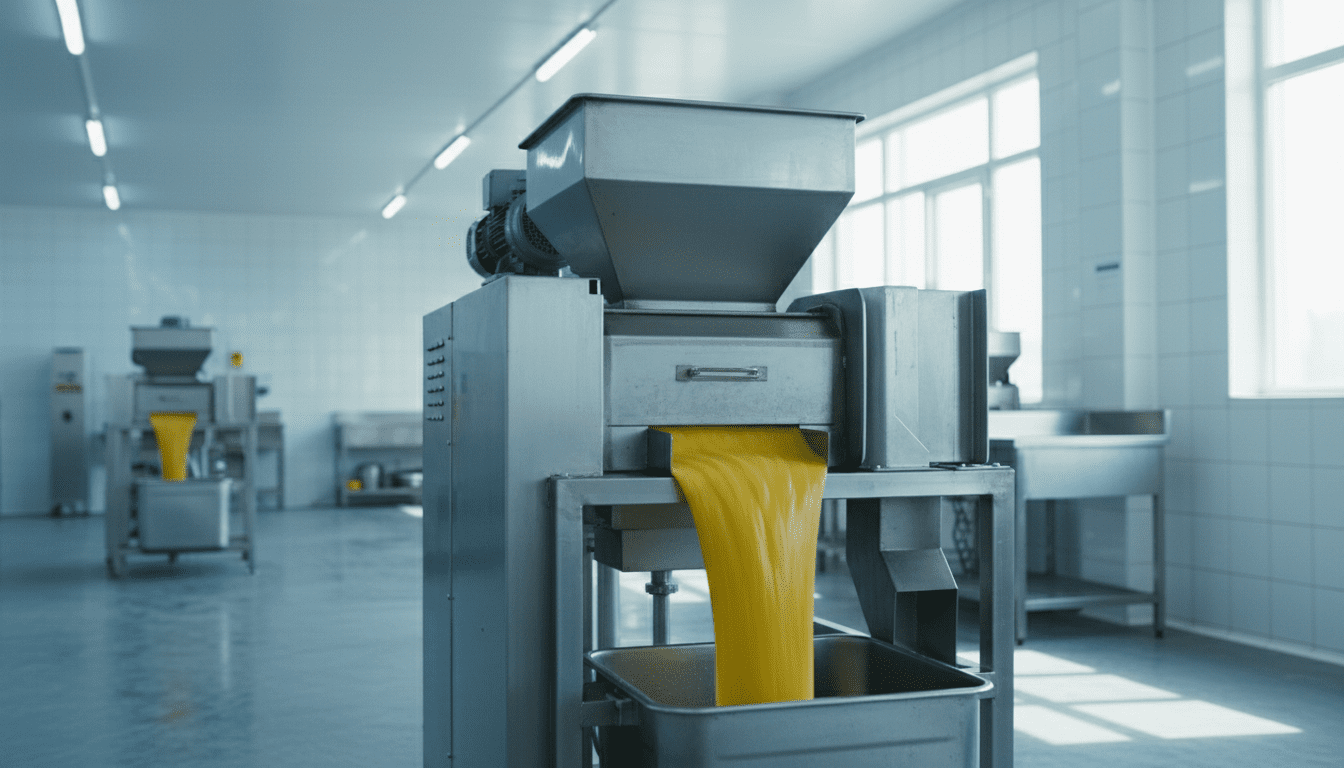
For farmers looking to establish a production line, investing in a dedicated cashew apple processing machine is essential. Mariya offers a high-performance Cashew Juice Extractor capable of processing 50 kg/hr, constructed entirely from food-grade SS304 stainless steel to guarantee hygienic operation and prevent corrosion. This machine uses screw-type juicing technology to ensure maximum yield of cashew apple pulp and juice with minimal waste. For large-scale cooperatives aiming for mass production, they provide a fully automated 500 LPH (Liters Per Hour) processing plant equipped with single-screw press designs and integrated filtration systems. Furthermore, establishing a complete processing line requires a specialized Fruit Crusher Machine, which breaks down the fibrous cashew apples uniformly without damaging the seeds, preparing the pulp perfectly for subsequent juice extraction.
Step-by-Step Guide: Launching a Cashew Value Addition Business
For agricultural entrepreneurs looking to ensure that cashew apple pulp and juice can boost farmers’ income, following a structured processing methodology is crucial. Here is how to build a scalable operation:
- Harvesting and Rapid Sorting: Cashew apples are highly perishable and begin to ferment within 24 hours at ambient temperatures. This is the first step in creating high-grade cashew apple pulp and juice. Collect the fallen fruits quickly, sorting out any that are damaged or heavily contaminated by soil.
- Immediate Preservation: If processing cannot happen immediately, utilize low-temperature storage. Storing the apples between 1 to 5°C with 85-90% relative humidity can extend their physical integrity up to 25 days. Alternatively, osmolytes like sugar solutions (40 to 60°Brix) can be used to dramatically reduce the moisture content of the fruit for dehydrated products.
- Crushing and Extraction: Feed the clean apples into a cashew apple processing machine. Utilize a heavy-duty fruit crusher to break down the cellular structure, followed by a mechanical screw-press extractor to separate the raw cashew apple pulp and juice from the fibrous pulp.
- Executing the Tannin Removal Process: Transfer the raw juice into mixing tanks. Introduce your preferred clarifying agent (such as 3 g/L of Modified Cassava Starch) and agitate the mixture for exactly 30 minutes to allow the tannin-starch complexes to form and precipitate. Filter the juice through a press to remove the sediment.
- Thermal Processing and Bottling: To ensure a long commercial shelf life for cashew apple pulp and juice, subject the clarified juice to thermal pasteurization (heating to 90°C for one hour). For added security against yeast and mold, incorporate chemical preservatives like sodium benzoate and citric acid at 0.01% concentrations before hot-filling the liquid into sterilized bottles.
Powerful Benefits & Features of Cashew Value Addition
Embracing the total processing of the cashew harvest into cashew apple pulp and juice triggers a massive ripple effect of benefits that impact both the local economy and global sustainability goals.
- Transformative Poverty Reduction: Data clearly proves the financial viability of this sector. In Benin, individuals engaged in cashew juice processing saw their poverty levels reduced by a staggering 135.8%, effectively pulling their households completely out of monetary poverty.
- Empowerment of Rural Women: Cashew apple processing is a highly inclusive industry. In numerous African cooperatives, the processing units are primarily operated and managed by women, directly strengthening the regional socio-economic fabric.
- Maximizing Land Profitability: Farmers no longer rely on a single, highly volatile commodity (the raw nut). By monetizing the cashew apple pulp and juice, they secure a secondary, diverse income stream without needing to acquire additional acreage or plant more trees.
- Drastic Waste Reduction: By establishing local processing centres, communities actively combat global food waste. Converting a rotting, ignored agricultural byproduct into syrups, squashes, and wines represents the ultimate triumph of a circular agricultural economy.
- Global Export Potential: High-quality processed cashew apple pulp and juice commands international demand. In the Collines department of Benin alone, an impressive 71% of the cashew apple juice produced is successfully exported to WAEMU countries, Germany, France, and Israel.
Real-World Case Study: Economic Triumphs in Benin and India
To understand the tangible impact of cashew value addition, we can analyze the contrasting, yet equally successful, ecosystems of the Collines Department in Benin and the Dakshina Kannada district in India. In West Africa, the Collines Department acts as the epicentre of Benin’s cashew juice processing. An extensive economic analysis involving 110 participants across 30 groups during the 2020-2021 season painted a phenomenal picture of wealth generation for cashew apple pulp and juice at every step of the supply chain.
The study analyzed the margins at every step of the supply chain. While harvesting raw apples offered an 86.66% profitability margin, it was the actual processing of the juice that radically transformed livelihoods. Processors achieved a 76.75% profitability margin, generating enough net revenue to obliterate their poverty status by 135.8%. The sheer scale of the operation created 12,875 working days of employment, injecting over 143 million FCFA in income into the local economy.
Thousands of miles away in Kasargod, India, a micro-scale version of this success is unfolding. Farmer Vishwakeshava Kuruveri, who manages a five-acre farm with 900 cashew trees, received specialized training in cashew apple value addition from the ICAR-DCR. Realizing the massive waste happening on his property, he and his wife Navyashri initiated the trial production of cashew apple pulp. They circumvented massive industrial investments by using basic equipment—a deep freezer and zip-lock bags—to store the pulp for year-round production of squashes and juices. By establishing their own digital storefront (kuruveri.com), they have proven that even smallholder farmers can aggressively cut out the middlemen and directly monetize cashew apple pulp and juice to dramatically boost farmers’ income.
“Farmers need to buy only a deep freezer, and a few zip-lock covers. Cashew apple fruit is available for only a few months but using pulp, farmers can extract juice, squash etc throughout the year and earn profit.” — Shree Padre, Editor of Adike Patrike.
“What we gave to the animals just a short time ago allows me to repair the roof of our house after the rainy season now – I am absolutely convinced by the production of cashew apple juice.” — Cooperative Worker, Burkina Faso.
Economic & Operational Breakdown Table
| Value Chain Entity | Primary Activity / Equipment | Profitability / Cost | Operational Region |
|---|---|---|---|
| Cashew Harvester | Raw Apple Harvesting | 86.66% Profitability Margin | Collines, Benin |
| Juice Processor | Cashew Juice Extraction | 76.75% Profitability Margin | Collines, Benin |
| Local Retailer | Cashew Juice Marketing | 15.64% Profitability Margin | Collines, Benin |
| Mariya Engineering Works | 50 kg/hr Cashew Juice Extractor | Rs 1,05,000 (Purchase Price) | Tamil Nadu, India |
| Mariya Engineering Works | 500 LPH Cashew Processing Plant | Rs 8,50,000 (Purchase Price) | Tamil Nadu, India |
| Vishwakeshava Kuruveri | Artisan Pulp Processing & E-commerce | High ROI (Minimal Setup) | Kasargod, India |
Unique Insight: The Tannin Paradox in Food Science
The cashew apple presents one of the most fascinating paradoxes in modern nutritional science. The very compound that makes the fruit virtually inedible in its raw form—tannin—is simultaneously one of its most powerful health assets. Tannins are heavily criticized for causing an intensely unpleasant astringency and binding to digestive enzymes to act as antinutritional factors. Consequently, the entire processing industry is geared toward an aggressive tannin removal process.
However, hydrolyzable tannins are incredibly potent natural antioxidants. Clinical studies have shown that these specific compounds exhibit high anti-cancer, anti-inflammatory, and anti-ulcerative activities. The unique insight here is that food engineers walk a remarkably tight rope: if they remove too much tannin, they strip the juice of its profound biological and pharmaceutical value. If they leave too much, the consumer rejects the product due to the harsh mouthfeel. The mastery of cashew value addition lies not in total eradication, but in precise chemical balancing—using exact measurements of Modified Cassava Starch to perfectly calibrate the mouthfeel while retaining the superfood status of cashew apple pulp and juice.
[Insert Video Placeholder Here]
How exactly can cashew apple pulp and juice boost farmers’ income?
By utilizing cashew apples—which are otherwise left to rot in the fields—farmers create a secondary stream of revenue from the exact same harvest. Processing the apples into marketable juices, squashes, and syrups adds immense monetary value. Studies in Benin show that engaging in this processing can reduce an agricultural worker’s poverty level by over 135% through the sale of cashew apple pulp and juice.
Why are cashew apples traditionally thrown away?
Cashew apples are incredibly perishable, typically spoiling within 24 hours of falling from the tree. Furthermore, they contain exceptionally high levels of polyphenolic compounds called tannins. When eaten raw, these tannins cause a severe, highly unpleasant astringent feeling in the mouth, leading most farmers to view them as useless waste.
What is the most effective tannin removal process?
Food science has identified several chemical clarifying agents. The most effective involves using Modified Cassava Starch (MCS). When 3 grams of MCS per litre is added to the juice for 30 minutes at an acidic pH of 3, it can safely precipitate and remove over 41% of the astringent tannins without destroying the juice’s natural vitamins.
What kind of cashew apple processing machine is required?
For commercial production, a heavy-duty juice extractor is required. Machines like those manufactured by Mariya Engineering Works use a screw-type juicing technology constructed from SS304 food-grade stainless steel to ensure maximum juice yield, minimal fibrous waste, and total compliance with food safety hygiene standards.
How long can fresh cashew apples be stored before processing?
At standard ambient temperatures, they last barely a day. However, using low-temperature storage (between 1 to 5°C with 85-90% humidity), the shelf life of raw cashew apples can be successfully extended up to 25 days, giving farmers a crucial window to transport and process the fruit.
Are there preservation methods that do not use chemicals?
Yes. Aside from chemical preservatives like sodium benzoate, juice can be preserved using thermal processing. This involves heating the liquid to 90°C for an hour and hot-filling it into sterile packaging. Advanced methods also include High-Pressure Processing (350 MPa for 7 minutes) which kills microbes without degrading the heat-sensitive Vitamin C.
What are some other value-added products derived from cashews?
Beyond direct juice consumption, the pulp and liquid can be transformed into cashew apple squash, highly concentrated syrups, jams, cashew fenny (a traditional distilled alcohol), cashew wine, and even bioethanol and specialized animal feeds.
Conclusion
The narrative surrounding the cashew industry is undergoing a profound and incredibly lucrative transformation. It is abundantly clear that cashew apple pulp and juice can boost farmers’ income, shifting the agricultural paradigm from one of massive global waste to one of total resource utilization. By implementing a scientifically backed tannin removal process and investing in a reliable, commercial-grade cashew apple processing machine, agricultural cooperatives can unlock a highly profitable, year-round revenue stream.
Whether you are a micro-farmer looking to utilize a deep freezer to sell pulp online, or a large-scale agricultural cooperative aiming to export pasteurized juice to European markets, the tools and methodologies are now highly accessible. It is time for the global farming community to stop letting 10 billion kilograms of superfoods rot in the soil. Take action today: research local food processing training programs, invest in small-scale extraction equipment, and start turning your discarded cashew apple pulp and juice into liquid gold.
Related Article:
- Why Swicy Flavours Are Taking Over 2026 Food Trends
- Third Culture Cuisine Fusion Food Trend Explained
- The Ultimate Guide to Launching a Profitable Cloud Kitchen Business in 2026
- Functional Drinks Trend 2026: Why Matcha and Healthy Energy Alternatives Are Taking Over
- From Matcha to Ube: How Social Media is Shaping the Viral Food Trends 2026 Brings to Our Tables
Sources:
- Current Research in Nutrition and Food Science Journal – Detannying in Cashew Apple Juice (Anacardium occidentale L.) by Chemical Agents
- Open Access Library Journal – Economic Analysis of Cashew Apple Value Chain within the Collines Department of Benin
- The New Indian Express – Cashew apple pulp and juice can boost farmers’ income