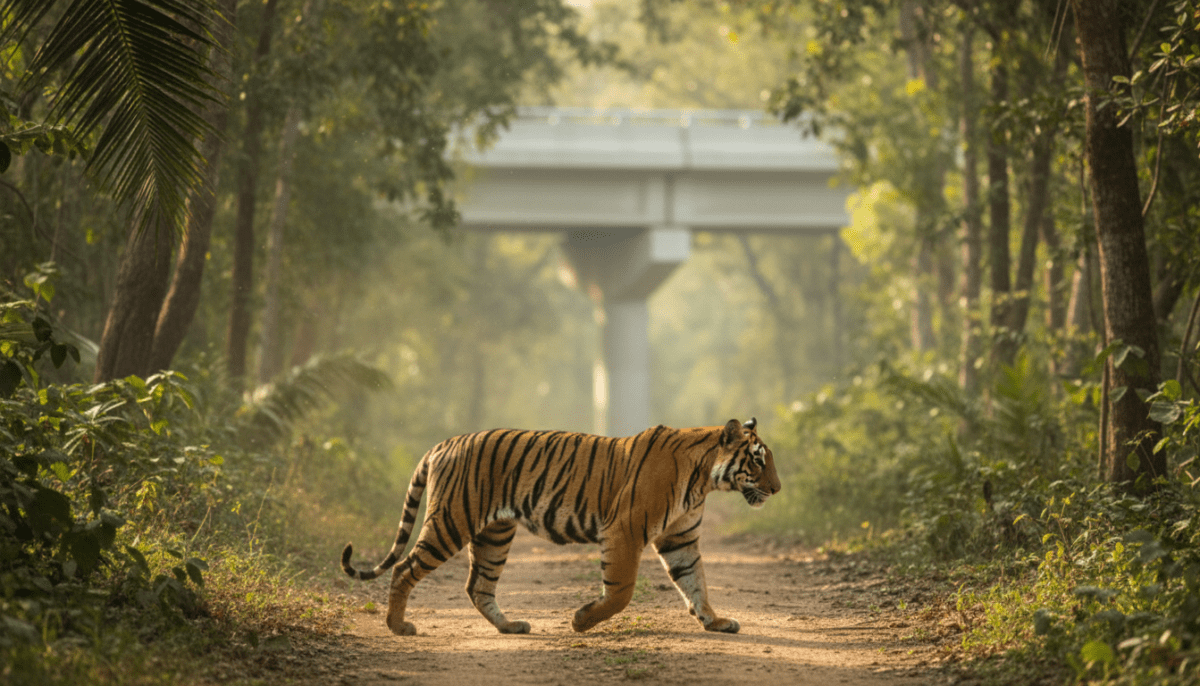
When the latest wildlife census numbers are broadcast across the globe, the headlines paint a picture of an absolute, triumphant victory for nature. We see majestic striped predators roaming through lush green forests and elusive ghosts of the mountains navigating snowy Himalayan peaks. Behind these celebratory images, however, lies a deeply unsettling paradox for Big Cat Conservation. The animals are surviving, but the ground beneath their paws is literally vanishing. Apex predators are increasingly trapped in shrinking, fragmented “islands” of protected forests, surrounded by a rapidly industrializing world that threatens their long-term genetic survival.
To provide a definitive answer to the vital question of our time: we are currently just delaying the decline of these apex predators rather than permanently saving them. While the India tiger population and high-altitude Snow Leopard habitats have shown promising growth on paper, rampant linear infrastructure development is severing vital migration corridors, leading to isolated gene pools and skyrocketing human-wildlife conflict. True Big Cat Conservation requires holistic, landscape-scale connectivity and peaceful coexistence with local communities, rather than just fencing off isolated reserves and hoping for the best.
TL;DR: Quick Summary
- The Illusion of Numbers: While population counts for tigers and snow leopards have risen, these animals are increasingly confined to fragmented habitats, threatening their long-term genetic viability and the future of Big Cat Conservation.
- The Infrastructure Threat: Massive linear infrastructure development—such as highways, railways, and irrigation canals—is cutting directly through critical wildlife corridors in the Central Indian and Eastern Ghats tiger landscapes.
- Rising Conflict: As habitats shrink, human-wildlife conflict escalates. Over 302 people have died in tiger attacks over a recent five-year period, alongside a surge in unnatural tiger deaths.
- Snow Leopard Realities: The first comprehensive assessment in India revealed 718 snow leopards, primarily in Ladakh, but their fragile high-altitude ecosystems face immense pressure from climate change and human encroachment.
- Policy Disconnect: Government authorities have faced criticism for restricting the official recognition of tiger corridors to “minimal pathways,” severely undermining natural animal dispersal patterns.
What is the Ground Reality of Big Cat Conservation Today?
At first glance, the success of India’s Project Tiger is nothing short of miraculous. Decades of dedicated protection have resulted in a significant rebound in the India tiger population. The National Tiger Conservation Authority (NTCA) has established strict protocols for tiger reserve management, implementing comprehensive standard operating procedures for everything from security audits and forest fire management to handling straying tigers in human-dominated landscapes.
However, the biological reality of Big Cat Conservation for a tiger dictates that it cannot survive in a vacuum. A single male tiger requires a massive territory, and a population needs vast, interconnected forests to maintain a healthy gene pool. Today, the Central Indian and Eastern Ghats tiger landscape—one of the most critical global strongholds for the species—is under severe siege. We are witnessing a surge in linear infrastructure development. Hundreds of proposed road widenings, railway expansions, and irrigation projects are actively slicing through the very forests these cats rely on to migrate. When a tiger cannot disperse naturally to find a mate or establish territory, the population faces a genetic bottleneck, rendering the species highly vulnerable to disease and eventual localized extinction.
When Did the Focus Shift to Snow Leopard Habitats?
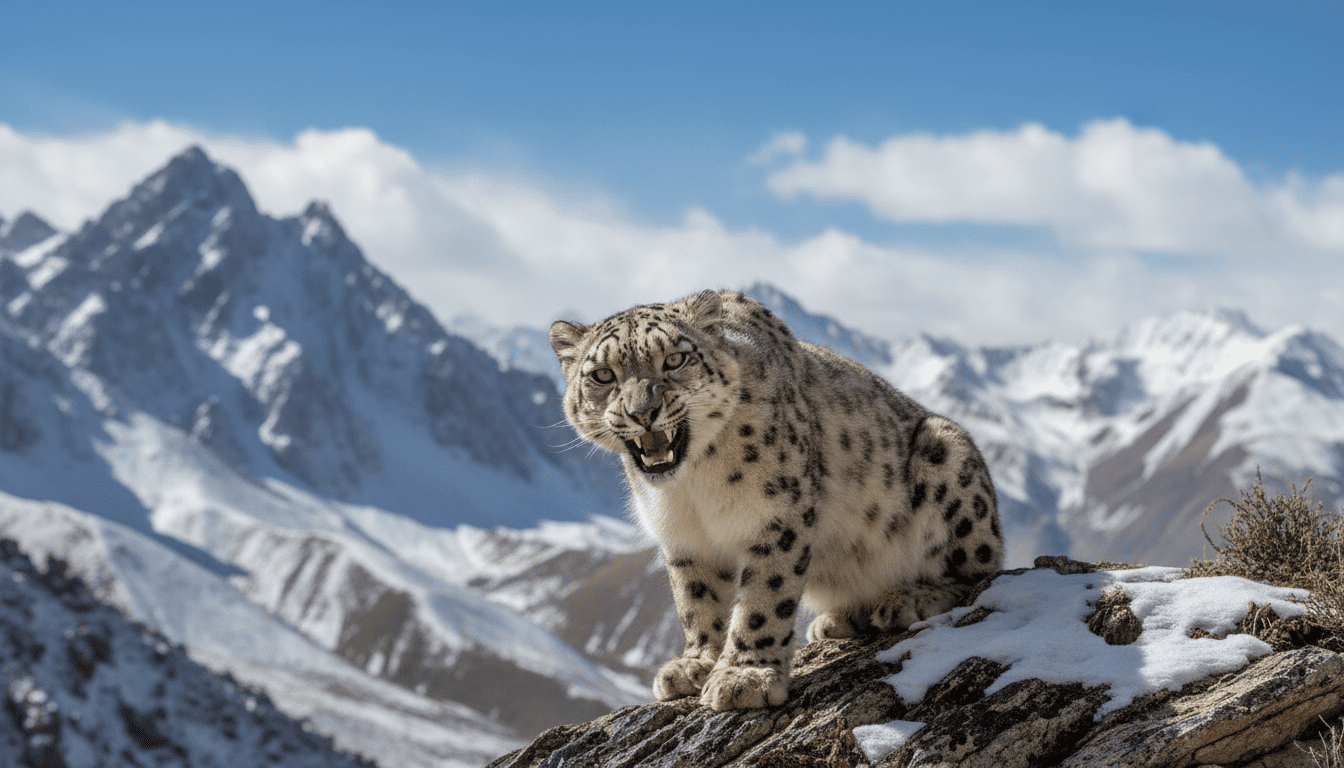
While tigers dominate the lowland narrative, the narrative surrounding high-altitude Big Cat Conservation has recently experienced a monumental breakthrough. For decades, the snow leopard was an ecological ghost, nearly impossible to track or count accurately across the treacherous, freezing terrain of the Himalayas.
This changed dramatically with the release of the recent Snow Leopard Population Assessment in India. Utilizing a robust framework of spatial distribution evaluation, camera trapping, and advanced occupancy modeling, researchers finally documented the elusive cats. The assessment identified 241 unique individuals through camera traps, leading to an estimated total population of 718 snow leopards across the country. This milestone assessment highlighted that the vast majority of these cats reside in Ladakh, with smaller populations in Himachal Pradesh, Uttarakhand, Arunachal Pradesh, and Sikkim. Understanding these numbers is crucial, as Snow Leopard habitats are arguably the most fragile ecosystems on the planet, rapidly deteriorating due to retreating snowlines and unregulated high-altitude human activity.
How is Linear Infrastructure Development Threatening the India tiger population?
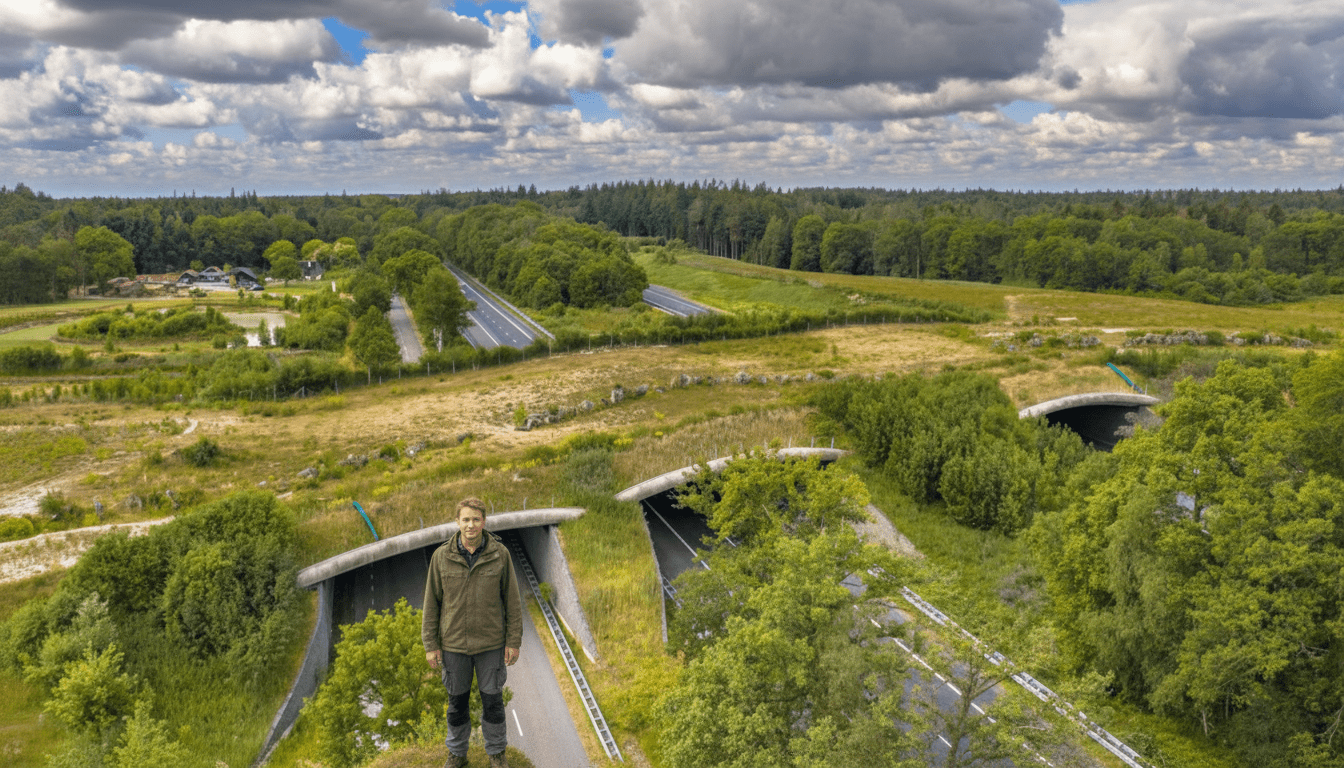
The conflict between economic expansion and Big Cat Conservation is most visible on the asphalt that cuts through India’s wilderness. To truly grasp the severity of the situation, one must look at the sheer volume of development proposals pending environmental clearance.
In states like Madhya Pradesh, Maharashtra, and Odisha, extensive lists of road and railway projects are slated to pass directly through eco-sensitive zones and critical wildlife corridors. For example, the expansion of the National Highway network and the introduction of new broad-gauge railway lines frequently bisect ancient animal migration routes. When a highway is widened without adequate ecological mitigation—such as building expansive wildlife underpasses or overpasses—the road becomes a literal death trap for Big Cat Conservation. Animals attempting to cross are frequently struck by speeding vehicles, leading to tragic, unnatural deaths that undermine years of conservation efforts. Furthermore, the noise, light pollution, and human activity associated with these corridors actively deter big cats from utilizing their historical habitats.
Who is Responsible for Mitigating Human-Wildlife Conflict?

As linear infrastructure development shrinks and fragments available forests, apex predators are inevitably forced into closer proximity with human settlements. This overlap breeds severe human-wildlife conflict. When a tiger’s natural prey base is depleted or its territory is destroyed, it will inevitably turn to domestic livestock or, tragically, encounter humans.
The NTCA bears the massive responsibility of managing this friction. They have established specific guidelines and standard operating procedures to deal with emergencies arising due to straying tigers, depredation on livestock, and the rehabilitation of orphaned tiger cubs. Yet, the human cost remains devastatingly high. Data reveals that 302 people died in tiger attacks over a five-year span. Simultaneously, retaliatory killings by fearful or economically devastated villagers—often through the poisoning of cattle carcasses—remain a primary driver of unnatural tiger deaths. True Big Cat Conservation cannot succeed through top-down enforcement alone; it requires empowering and financially compensating the local and indigenous communities who bear the daily, dangerous burden of living alongside apex predators.
Step-by-Step Guide: How to Implement Smart Green Infrastructure for Big Cats
If we are to move beyond simply delaying the decline of these magnificent animals through Big Cat Conservation efforts, we must radically rethink how we build our modern world. Implementing smart, wildlife-friendly infrastructure is the only viable path forward:
- Acknowledge the Entire Corridor: Policymakers must stop restricting recognized wildlife corridors to narrow, minimal pathways. Planners must utilize comprehensive GIS-based decision support databases to map out broad, functional migration routes before plotting any new infrastructure.
- Mandate Cumulative Impact Assessments: Rather than evaluating the environmental impact of a single road or railway in isolation, governments must mandate Cumulative Impact Assessments (CIA) to understand how multiple projects combined will suffocate a specific tiger meta-population.
- Design for Connectivity Early: Mitigation strategies, such as animal underpasses, overpasses, and canopy bridges, must be integrated into the Detailed Project Report (DPR) during the initial design phase of linear infrastructure development, not as an expensive afterthought.
- Enforce Speed and Night Restrictions: On existing roads passing through vulnerable corridors—like the Chandrapur-Mul road—authorities must strictly enforce speed limits and implement night traffic bans for commercial heavy vehicles to drastically reduce roadkill.
- Empower Local Guardians: Shift away from “fortress conservation” models that evict indigenous populations, such as the Adivasi farmers. Instead, integrate local communities into the conservation economy through community-led eco-tourism and rapid livestock compensation programs.
Benefits & Features of Holistic Big Cat Conservation
Transitioning from isolated reserve management to landscape-scale conservation provides profound, systemic advantages for both the environment and humanity:
- Genetic Vigor: Protecting broad, unhindered migration corridors ensures that tigers and snow leopards can mix their gene pools, preventing inbreeding depression and ensuring robust, disease-resistant populations.
- Ecosystem Service Protection: Apex predators regulate herbivore populations. By saving the tiger and the snow leopard, we inadvertently protect the vast forests and vital Himalayan watersheds that provide clean air and water to over a billion people.
- Reduced Human Fatalities: Implementing smart green infrastructure and functional buffer zones drastically lowers the instances of human-wildlife conflict, saving both human lives and the lives of the predators.
- Economic Empowerment: When managed ethically, Big Cat Conservation drives sustainable eco-tourism, providing stable, long-term livelihoods for indigenous communities and forest dwellers who act as the ultimate guardians of the land.
Real-World Case Study: The Chandrapur-Mul Road Tragedy
To completely understand the fatal intersection of linear infrastructure development and Big Cat Conservation, we must examine the reality of the Tadoba-Kawal tiger corridor. This specific forest patch is absolutely critical for the movement of tigers and other wildlife between major protected areas in Central India.
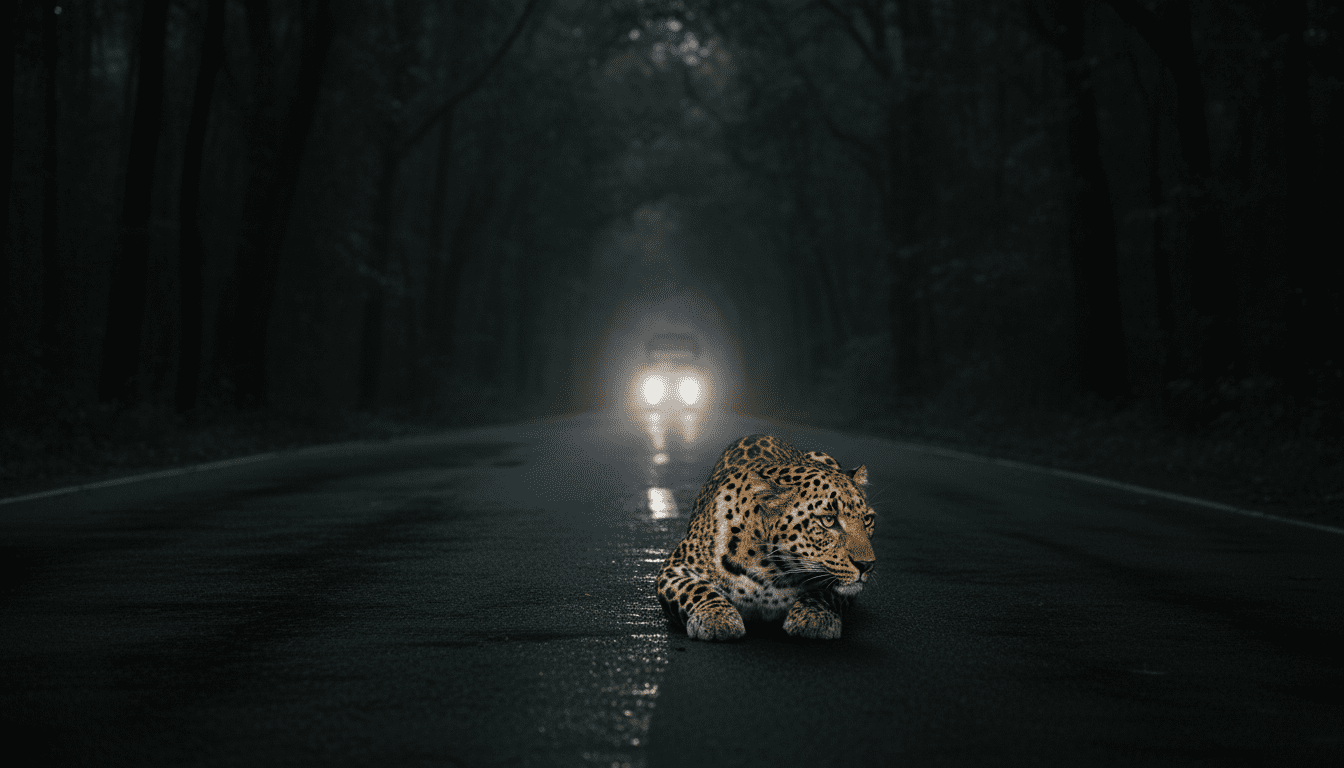
However, the Chandrapur-Mul road violently bisects this essential corridor. The road was proposed for massive expansion into a national highway, a move that prioritizing human transit speed over ecological survival. The tragic results of such infrastructure are well documented; powerful photographs capture the grim reality of a fully grown leopard forced to scavenge on a cattle carcass directly on the asphalt of this very road in the dead of night, exposed to speeding trucks and blinding headlights. When we pave over the wilderness without integrating structural mitigation like eco-bridges, we effectively turn ancient migration routes into slaughterhouses. This case study perfectly encapsulates why focusing solely on the India tiger population numbers inside the reserves is a dangerous illusion for Big Cat Conservation if we simultaneously allow the connective tissue between those reserves to be paved in asphalt.
“At the end, I would like to emphasise that conservation of tigers is not a choice. It is an imperative.” – Honourable Prime Minister of India Shri Narendra Modi.
“The first ever range-wide population estimation of riverine dolphins is completed… A comprehensive plan ‘Project Lion: Lion @47 vision for Amrutkal’ has been prepared and shared with the State Government of Gujarat.” – Ministry of Environment, Forest and Climate Change, Annual Report.
Data Table: Snow Leopard Population Distribution in India
To understand the geographical challenges of protecting Snow Leopard habitats, we must look at the distribution of the 718 individuals recorded during the recent comprehensive population estimation in India.
| State / Union Territory | Estimated Snow Leopard Population | Primary Ecosystem Landscape | Key Infrastructure / Conservation Threat |
|---|---|---|---|
| Ladakh | 477 | Trans-Himalayan cold desert | Border infrastructure, unregulated tourism, climate change |
| Uttarakhand | 124 | High-altitude alpine meadows | Habitat fragmentation, retreating snowlines |
| Himachal Pradesh | 51 | Steep, rugged mountain terrain | Hydroelectric projects, human-wildlife conflict |
| Arunachal Pradesh | 36 | Eastern Himalayan broadleaf | Deforestation, poaching pressures |
| Sikkim | 21 | Alpine tundra | Military border infrastructure, climate warming |
Unique Insight: The “Detection Bias” of Conservation Success
There is a fascinating, often ignored psychological phenomenon driving our current understanding of Big Cat Conservation: detection bias. When we hear that the India tiger population has doubled, or that we suddenly have exactly 718 snow leopards in the mountains, we naturally assume the environment is rapidly healing.
However, much of this “growth” is actually a triumph of human technology rather than a purely biological explosion. The widespread deployment of advanced Phase III Camera Trapping Protocols and sophisticated GIS spatial mapping allows us to finally see the cats that were always there, but previously invisible to older, flawed counting methods like pugmark tracking. While the populations are indeed stabilizing in protected cores, the celebratory numbers mask the simultaneous, rapid destruction of their broader historical habitats. If we mistake enhanced technological detection for complete ecological salvation, we risk complacency, allowing industrial development to quietly erase the corridors these newly counted cats desperately need to survive tomorrow.
[Insert Video Placeholder Here]
FAQs
What does Big Cat Conservation actually involve?
Big Cat Conservation goes far beyond simply stopping poachers. It involves a massive, coordinated effort to protect vast ecosystems, maintain healthy prey bases, establish robust anti-poaching security audits, and crucially, secure the vital forest corridors that allow apex predators like tigers and snow leopards to migrate and breed safely.
Why is the India tiger population considered a success story?
India’s Project Tiger has successfully brought the species back from the brink of extinction. Through the establishment of strictly protected Tiger Reserves and rigorous, camera-trap-based monitoring, the population has grown significantly, making India home to the vast majority of the world’s remaining wild tigers.
What are Snow Leopard habitats like?
Snow leopards reside in some of the most extreme environments on Earth, primarily the steep, freezing, high-altitude alpine and sub-alpine zones of the Himalayas and Central Asia. In India, they are predominantly found in the cold deserts of Ladakh, Spiti Valley, and the upper reaches of Uttarakhand and Sikkim.
How does linear infrastructure development harm wildlife?
Linear infrastructure development—such as the construction of highways, railways, and large irrigation canals—physically slices contiguous forests into isolated fragments. This cuts off historical animal migration routes, leading to fatal road accidents, genetic isolation, and increased human-wildlife conflict as animals are forced into human-dominated landscapes.
What is human-wildlife conflict?
Human-wildlife conflict occurs when the needs and behavior of wildlife impact negatively on human goals, or when human goals negatively impact the needs of wildlife. For big cats, this usually manifests as livestock depredation, attacks on humans (resulting in hundreds of tragic fatalities), and the subsequent retaliatory poisoning or killing of the predator by affected villagers.
What are wildlife corridors and why are they important?
A wildlife corridor is a strip of natural habitat that connects two or more larger blocks of protected forest. They are biologically essential because they allow animals to disperse, find new mates, and prevent inbreeding. If corridors are destroyed by development, the isolated populations inside the reserves will eventually face genetic collapse.
How can we build roads without killing big cats?
The solution lies in “smart green infrastructure.” This involves designing and building extensive animal underpasses (tunnels) and overpasses (vegetated bridges) across new and existing highways. This allows humans to travel at speed while ensuring wildlife can safely cross beneath or above the traffic without fear of collision or unnatural death.
Conclusion & CTA
The narrative of Big Cat Conservation is currently standing on a razor’s edge. We possess the technology to track every snow leopard in Ladakh and the dedication to foster the India tiger population back from the brink of oblivion. Yet, if we continue to prioritize relentless, unmitigated linear infrastructure development over the absolute necessity of ecological connectivity, we are merely building beautiful, highly monitored cages for a species destined to genetically stagnate. True conservation is not about counting the cats inside the core; it is about fiercely defending the vital, wild corridors that connect them.
Are you passionate about ensuring a wild, unfragmented future of Big Cat Conservation for our apex predators? The fight to save our big cats relies entirely on public awareness and demanding accountability for smart green infrastructure. Share this comprehensive breakdown with your network, support community-led conservation initiatives that prioritize coexistence over human-wildlife conflict, and let us know your thoughts on the future of India’s wildlife corridors in the comments below!
Related Articles:
- Travel to Tungnath: 7 Ultimate Tips for the Perfect Trek
- The Ultimate Varkala Travel Guide: Discovering Kerala’s Cliffside Paradise
- A Soulful Guide to Munnar: Budget, Hidden Gems, and the Magic of the Mist
- The Double-Edged Sword of Wildlife Photo Tourism: Balancing Conservation and Catastrophe
Sources: